All loved up
Tatler · December 2005
- Magazine
- Tatler
- Published
- December 2005
- Interview by
- Geordie Greig
- Country
- United Kingdom · English
At a glance
Geordie Greig’s Tatler cover story, December 2005, at Home House in London: the riding accident on her birthday, I’m Going to Tell You a Secret and Channel 4, Kabbalah, “Material Girl” and irony, marriage to Guy Ritchie, Confessions on a Dance Floor and “Hung Up”, her early years in New York, dance, her father and her mother’s death.
The interview
For all her talk of quiet family life in the country, Madonna is still our dancing queen – with plenty of surprises up her sleeve. Geordie Greig meets one sexy mama
Three years shy of 50, Madonna – mother of two, devoted wife, London resident, Kabbalist, dancer, poet, children’s author and reigning pop icon – has lost none of her ability to startle. A few minutes into her new video diary, one of her entourage tells her a joke: ‘What’s the good thing about fucking 28-year-olds?’ Answer: there are 20 of them. And Mrs Guy Ritchie, née Miss Ciccone of Pontiac, Michigan, rocks with laughter before telling the joker that his paedophiliac one-liner is very bad. But it remains in I’m Gonna Tell You a Secret, her documentary of 2004’s Re: Invention tour which airs on Channel 4 next month. ‘I like to wake people up,’ says Madonna quietly as she sips a glass of iced tea on the balcony of Home House, the private London club where she has previously entertained Demi Moore, Gwyneth Paltrow, Alexander McQueen and other friends at a Kabbalah book launch. And something else that will wake people up is her new album, Confessions on a Dancefloor.
With these two packages comes a new Madonna. She’s come a long way from the Midwest suburbs, where she was little Nonnie, the third of six children. The queen of all that is mad, bad and most deliberately dangerous to know, she has always set out to destabilise the status quo. A whole generation of women has felt liberated by her attitudes to sex, religion, fashion and lifestyle. She gave voice to the notion that anything goes. To traditionalists she not only broke through the glass ceiling, she smashed and shattered it, spreading mayhem. To Madonna this was just one small step for feminism. ‘If I had an aim,’ she says, ‘it was to show that you could be sexy and have a brain. It was always going to be a wake-up call.’
The gender war may not be over but leading its charge from one side is a happy mother, contented wife, political agitator and advocate of spiritual peace – a woman seeking humility who has renounced her once out-of-control ego to broadcast a message of kindness, forgiveness and knowledge. The fire is still in her belly and the rebel has not gone away – but she has found a cause. Finally, Madonna is more in tune with her namesake. Goodness is on the menu and her new album celebrates love. ‘I want to be exuberant and joyous and explore that, so all my new music is dance music,’ she explains.
On this warm early-autumn afternoon, Madonna’s arm is still in a sling from her riding accident in August. Wearing a black tracksuit and baseball cap, she is direct, relaxed, curious, quick-witted and occasionally ironic, with a sexually charged charisma. Her hair is unfussily arranged under her cap and the make-up is minimal. Beyond vanity or convention, she looks as if she is just off to the gym. She is also small (five feet four and a half), even delicate, which makes all the more remarkable the stadium scenes in the film where she has 30,000 fans eating out of her hand – such a giant personality and voice in such a petite frame.
But Madonna has made a career out of the unexpected. At a party she can seem almost invisible: no diva-like entrance or sparkling, show-off outfits. She is modest and, in fact, easy to miss – until she turns her attention to you. Her private life is a million miles from showbiz pizzazz. At home she likes it cosy: snuggling up on a sofa with a book, chatting to friends. Her bedtime reading can veer from religious texts to Sylvia Plath and Anne Sexton, whose poetry was a precursor of her own shock-candid lyrics. Jung Chang’s new Chairman Mao biog, Bret Easton Ellis’s Lunar Park and other current books are all there, as well as the Zohar, the ancient Kabbalah text.
When we meet, Madonna is trussed up like an injured sparrow but her gaze is like an eagle’s. Still, she flinches with pain from the seven bones that snapped in her accident at Ashcombe, her country estate in Wiltshire (she is being treated daily by her physiotherapist, who was flown in from LA). ‘I got thrown off a horse and now have a broken clavicle, scapula and five ribs. I wasn’t galloping or even doing anything naughty. I was just riding a polo pony and I don’t know how to ride polo ponies. It started playing polo with me! It was my birthday, I had been given a horse and was told he was in the stables waiting for me.’
The horse was a present from Guy Oseary, Madonna’s former partner at her record label Maverick, who now more or less manages her career, along with her right-hand woman Angela Becker. ‘I ran from my house to the stables, which is almost three miles,’ she continues, ‘and I thought it was going to be the one horse I fell in love with. I was so excited. I thought it was going to be the best birthday of my life.’
But the horse of her dreams was not there. Instead there were five others, which Guy wanted her to choose from. Madonna was thrown to the ground while riding back to the house with her assistant Siobhan, who is also her riding instructor. ‘She said, “Oh, M, he’s so lovely. It’s like riding a deer. Do you want to try him?” I said no three times but eventually got on. And everything was wrong. It was a dressage saddle, a tiny little saddle, the stirrups were too long. And he was not reined properly, so he went mad and I flew off him. One horrible birthday.’
All very Madonna. Give her a challenge, even a foolish one, and she cannot resist. And that gag about the 20 eight-year-olds – just one tiny moment in her bio-doc – is also very Madonna. She doesn’t do conformity or convention; she won’t follow straight lines. The joke is no big deal, it’s just a laugh. ‘Look,’ she says, ‘I do say, straight after the joke has been told, that it’s terrible. But it is funny as well as terrible. Life is a paradox and I’m not a saint. I don’t claim to be righteous or anything.’
There is another joke in the film, told by Madonna: ‘What’s the difference between a rock star and a terrorist? You can negotiate with a terrorist.’ Everyone laughs. But should they? Freud believed that there is no such thing as a joke, and negotiating with Madonna is no walkover. From early childhood she has known what she wants and has been reaching for it ever since. The daughter of a Chrysler engineer, she was certain she wanted out of smalltown Michigan. Fame and fortune were always on the agenda: ‘Since I was 10 I knew I was going to New York and I was going to pursue my dream – I was going to be an artist. I didn’t know exactly how but I was going to be somebody. The boring Midwestern suburbs were not for me and that was my driving force. No negotiations on that one.’
But Channel 4 has had to negotiate with Madonna over the word ‘fuck’ – or, more precisely, ‘motherfucker’. ‘I told them if I had to edit the film in any way then I wouldn’t show it on television. Channel 4 asked that I bleep one “motherfucker” because apparently you’re not allowed to say it before 10pm but you can say “fuck”.’ She laughs at the Monty Pythonesque idea of a stand-off with suited TV executives over the MF-word. ‘It was my one concession,’ she says. She shot 350 hours of film, cutting it to just under two hours to produce the most revealing, intimate, funny and moving take on her life ever. ‘I married Guy for all the wrong reasons,’ she declares provocatively at one point (more on him later). ‘You smoke grass?’ she asks one dancer before hiring him for the tour. ‘Then smoke less.’
We see Madonna as mother, motivator, mentor, minx, moralist and mystic. It is a kaleidoscopic self-portrait: mischievous but meditative, mellow but mercurial. She turns the tour into a Billy Elliot-like experience for her troupe, urging them to better themselves, to vote, to succeed. She also makes them sweat. Before concerts they hold hands and pray, then psyche themselves up like rugby players before a key match with battle cries of the F- and MF-words. Madonna is their adored and feared leader – one man is caught on camera mockingly rolling his eyes as she gives a Kabbalah-ish exhortation to the troupe. But Madonna does see the comic side of her spiritual enthusiasms. These moments show Madonna at her most human and they’re endearingly funny. At another point, the cameraman cheekily tries to follow her into the loo. ‘No, you cannot film me peeing,’ she squeals as she slams the loo door shut.
Kabbalah is woven into the film because it plays a large part in her life. She explains her new spiritual quest simply and convincingly. It began when she took Sanskrit lessons and read the Bhagavad Ghita, the sacred Hindu text. One thing led to another. At a dinner party someone mentioned a lecture by a mystical rabbi and teacher. ‘I went along because it sounded interesting,’ she says. ‘I’m open to anything if someone’s smart and they can answer your questions. Then I’m hooked. I know the world sees me as this nut-nut but it all makes sense to me.’
The film starts with a voiceover reciting a doom-laden warning from the Book of Revelations that the material world will be our undoing. That’s right – a spiritual health warning from the original Material Girl. Her message is that one should seek understanding in knowledge and try to be a better person. Kabbalah is to Madonna what the Indian guru Maharishi was to The Beatles. ‘I have a huge ego,’ she says. ‘I needed to change. Knowing is the beginning.’
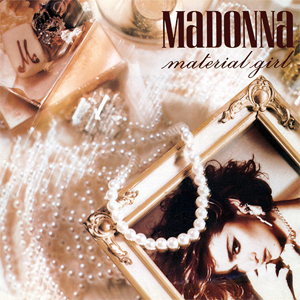
‘Material Girl’ was, she says, never meant to be taken at face value. ‘It was written 20 years ago and somehow people have always missed my sense of irony. Irony’s not big in America.’ She laughs, shrugs her shoulders and smiles. Why should she care? She is beyond worrying how the world interprets her. This is the most famous woman on the planet – the woman whose broken arm was breaking news from Toxteth to Taipei. ‘I have never been a material girl. I am not a girl who wants diamonds. I like simple things. I don’t need to drive around in flash cars and I don’t need to show off. I certainly don’t need to go on a swanky yacht for a holiday. I’m perfectly happy to go for walks every day for a month at my house in the countryside. I like doing simple things. That doesn’t mean I can’t have expensive tastes, like nice sheets on my bed, or enjoy architecture and pictures. But I do know what makes for a healthy balance in life.’
The biggest change in her life has been Guy Ritchie. Asking to be introduced as Mrs Ritchie when she presented the Turner Prize in 2001 was no playful conceit – her personal letterhead also says ‘Mrs Ritchie’. Marriage is a big deal for her, which brings us back to that ‘marrying for the wrong reasons’ comment in her film. ‘I just meant that I went into the marriage saying, “He’s fantastically talented, very witty, very smart. He’s going to make me laugh and look good because he’s so successful and, of course, he’s gorgeous, sexy and handsome.” But none of those things mean anything after you’ve been sharing a life together for a few years and you’re dealing with raising children and scheduling and finances. You have to go back to what is the point of this marriage. You go to school to learn how to learn and I think marriage is about learning to learn as well. US television journalist Diane Sawyer once said to me that a good marriage is a contest of generosity – I thought that was a good thing to say.’
She is adamant that marriage is far better than just living together. ‘For me, it’s absolutely essential. When you live with someone you don’t really respect the union completely. There isn’t the same sense of responsibility. You can leave whenever you like.’ Was committing to marriage scary – was she hesitant? ‘No, I wasn’t scared at all, not the first or the second time. That is the domain of men,’ she retorts. Of her marriage to Sean Penn she says: ‘I just wasn’t ready to be married before. I was completely obsessed with my career and not ready to be generous in any shape or form.’
In a cameo appearance in his wife’s film, Guy Ritchie comes across as powerful, strong-willed and independent – very much his own man. He is unshaven, classless, comfortable with himself and ‘the missus’. They banter away sweetly. ‘Aren’t you going to wish me luck?’ she asks just before she goes on stage. ‘Go on, bird, fly,’ he says. His independence is combined with a deep closeness to Madonna, who obviously adores him. He is very, very normal, very English – he likes to sing old English country ballads with friends over a pint or three in his local – and this stands in contrast to the craziness of a pop tour. He teases Madonna, is his own authority. His presence on screen is rather magnetic, sort of Antony to her Cleopatra. He refuses to put up with any of the nonsense that surrounds all divas and she clearly likes his strength. We see her merrily swigging a pint in a pub and singing along with Guy. But this is halfway through a 21-city tour of North America and Europe and, enchantingly, she is filmed falling asleep on the floor as her man plucks at his guitar into the night. He pops by at concerts but is wise enough not to get too entangled.
Both are self-educated. ‘It’s what I was attracted to in Guy because, like me, he is hungry for knowledge,’ says Madonna. ‘When I first met him he was reading voraciously. His thing was Darwinism and the evolution of the species and we would get into these philosophical debates about Christianity versus atheism and Darwinism versus Genesis. I had never had these conversations with anyone before. And I found them thrilling and he taught me things I didn’t know, which I also found thrilling.’
Juggling life as mother, wife, singer, dancer and writer – as well as the CEO of Madonna Inc – is tough. ‘I get frustrated. I think I can manage my day and fit it all in. But it gets to 8 o’clock and I go, “Shit, I promised I would read to the kids.” I accept that these are choices I have made. The thing I have sacrificed here is a social life. I don’t go out much. If I want to do my job, pay attention to my children and have a relationship with my husband, I don’t have time to go out with my friends. If it wasn’t for email, I would fall deeply out of touch with everybody.’ But family overrides everything for Madonna: ‘Everyone needs to be stopped in their tracks by parenthood and marriage, otherwise you are just selfish satellites spinning in space.’
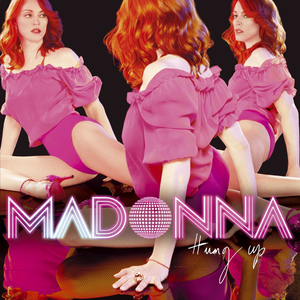
Her new album is all about love. ‘The tracks are more fantasy-oriented than reality-based. They’re all up-tempo. Some are angst-ridden, some pure desire-oriented and some simply about commitment. “Hung-Up” is about grabbing a chance when you can or “You’ll wake up one day and it’ll be too late.”’ The song echoes Robert Browning’s poem Two in the Campagna, where he warns of the ‘good minute’: if you haven’t taken the opportunity to fall in love, call someone, marry them – or whatever – the minute is gone. ‘I believe in taking the good minute,’ she says.
Madonna’s early days in New York were fraught with the tensions of poverty and potential failure. The hard times may be in the past but they still resurface: ‘I remember having very little money and starving and budgeting myself, alternating between being able to buy a packet of peanuts and a container of yoghurt one day, and a large bag of cheese popcorn and a container of cranberry juice the next. That was my diet. But I never thought my dream could crumble. I always thought I just had to stick it out. That I had some kind of survival mechanism. I refused to accept that anything but success would happen. I had miserable low points, terrible feelings of loneliness, but I kept thinking that it was all a rite of passage, and I had to pass this test.’
And if it had all failed? ‘That was not an option. I was not going back to Michigan, no matter what. I’m not going to depend on anybody, no matter what.’ What if she’d been forced to go back? ‘I don’t know. I guess I would have become a schoolteacher, maybe a dance teacher. Don’t know.’
Dance is where Madonna begins and ends – she still trains every day. ‘It’s an effort but it’s also part of my life because I grew up and trained as a dancer for years. Using my body and sweating is just part of my life. I get depressed when I can’t do it. If you peel back all the layers, a dancer is what I am. It’s why I start my movie with the dancers and the auditions. That’s my first memory of New York.’
As she rode hard and controversially into the big-time, Madonna alienated her father. What father would not be put out to see his daughter breaking taboos and flirting with lesbianism, fetishism and lurid sex? Her new film is partly about how she and her father have come through it. He flies into Paris to see her and joins the hand-holding troupe of dancers. ‘Daddy, sorry about this,’ she says as she launches into a chorus of fucks while exhorting the dancers to do their darndest. He can smile now. This portly, elderly, blue-collar Midwesterner – now a vineyard owner thanks to his daughter’s largesse – almost weeps with pride when she comes on stage. Then he bops along. He has lived through the different stages of Madonna’s life more intensely than anyone.
Madonna lost her mother to cancer when she was just five. ‘I remember her death and everything about it,’ she says. ‘I remember not really understanding what it meant but accepting that she was never going to come back. I remember being so frustrated at not having the words to express my feeling of loss. My dad had to deal with so many things and we kind of got farmed out to people’s houses. I went down the street and lived with this family for a while. This poor woman had to put up with my rages and tantrums – I was told to put on this dress and I was so angry I ripped it off. The woman had a daughter in a wheelchair with cerebral palsy who I thought was luckier than me because she had a mum. I have very strong memories but I no longer feel sorry for myself. But I do
If I had an aim, it was to show that you could be sexy and have a brain.
Songs
Last updated