How Madonna Got Her Groove Back
Rolling Stone · 1 December 2005
- Magazine
- Rolling Stone
- Published
- 1 December 2005
- Interview by
- Neil Strauss
- Country
- United States · English
At a glance
Neil Strauss’s Rolling Stone cover story of 1 December 2005, on a flight to Germany and backstage at Wetten Dass …?: the riding accident and the painkillers, Confessions on a Dance Floor and the abandoned Luc Besson film, recording with Stuart Price, her first New York club, Guy Ritchie, her father, and the Kabbalah Centre.
The interview
Madonna, 2005, is part spiritualist, part narcissist, part sex symbol. And for the first time, she’s looking back instead of moving forward, returning to her dance-floor roots for her latest triumph.
Have you ever witnessed a Madonna moment?
Allow me to share one with you.
It begins with “nice boots”. Those are the words Madonna says to me when we meet. The next words are “I approve,” letting me know that we are in her world, where a strict code of standards and practices applies.
But this is not the Madonna moment. She is just, in her own way, being fun and friendly. The Madonna moment comes two hours later, when she changes into knee-high silver boots for a television performance. As she walks past, she looks down her nose at me and says, “Who’s got the better boots now?” This is a Madonna moment.
One can’t help but wonder sometimes how this boy-crazy outcast from Michigan ended up selling some 250 million records worldwide. But watch her closely for a while, and that answer will come in a Madonna moment, when, despite the ego-shedding lessons of Kabbalah, her competitive nature emerges.
She is probably a good person at heart. And if not, she’s at least struggling to be good. But there’s a tripwire in her head, and when it’s crossed, you understand that it’s no accident she became one of the most famous women in the world and has retained that title for more than 20 years.
There are Madonna moments in her tour documentaries, when she refers to herself as “the boss” and “the queen” when talking with her crew. And there was a golden Madonna moment on Late Night With David Letterman last October, when Letterman offered her the smaller of two horses to ride. Mistake.
“I don’t want a tiny one,” she snapped. “I want a big one. I want the prettiest one. Well, I want the best horse.”
Madonna moments are not bad things. They are the telltale signs of a woman who believes she deserves the best the world has to offer – the best boots, the best horse, the best career, the best stage show, the best seat on the plane. For the most part, thanks to her confidence, intelligence and single-minded work ethic, she’s gotten it.
That is, until she had her first experience with mortality a few months ago. In a well-reported incident, Madonna attempted to ride an unfamiliar horse at Ashcombe, the eighteenth-century estate in western England that she shares with her husband, director Guy Ritchie. She fell from the horse, breaking eight of her bones. It was the first time she’d ever broken a bone and a wake-up call to her own vulnerability.
“It was the most painful thing that ever happened to me in my life, but it was a great learning experience,” she says. She is sitting on a private plane that is taking off from a Royal Air Force base south of London. Its destination is Germany, where the members of Green Day will soon experience a Madonna moment of their own.
Madonna version 2005 is a woman in flux. She is part spiritualist, part narcissist; part provocative sex symbol, part children’s-book author; part artist, part mother; and, thanks to her new aerobic-disco look, she is part retro, part futuristic. She doesn’t even live in one place; she spends most of her time in London and has homes in New York and Los Angeles. She is a contradiction. And she will always be one. This is because her true genius is a facility for learning. She is a quick study. One of the only things consistent about her career is her ability to absorb and incorporate knowledge at an alarming rate, allowing her to stay one step ahead of critics, competitors, fans and trends. Some accuse her of being pretentious since she started speaking in a British-tinged accent, but rather than being an affectation, it is simply further evidence of her adaptability and spongelike nature. Before I leave her presence, she will actually count on her fingers the things she’s learned from me. I’ve served my purpose.
Her new album, Confessions on a Dance Floor, integrates the lessons she learned from her previous album, American Life. Perhaps her most poorly received album (unjustly so), this was Madonna restyled as a pop-culture Che Guevara and anti-materialist girl, brooding about her life and the culture she’s part of. It is her folk album. Confessions on a Dance Floor is the antithesis.
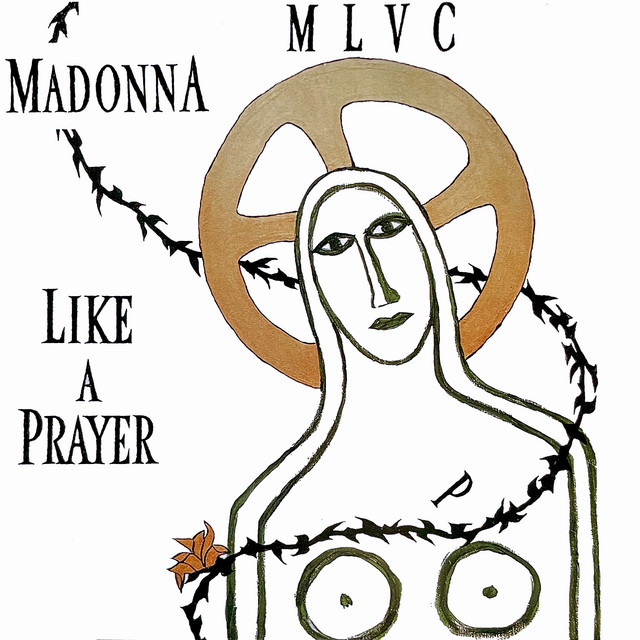
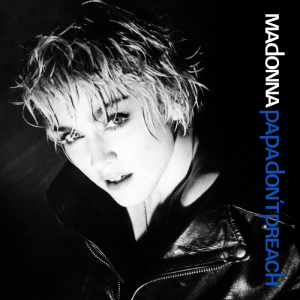
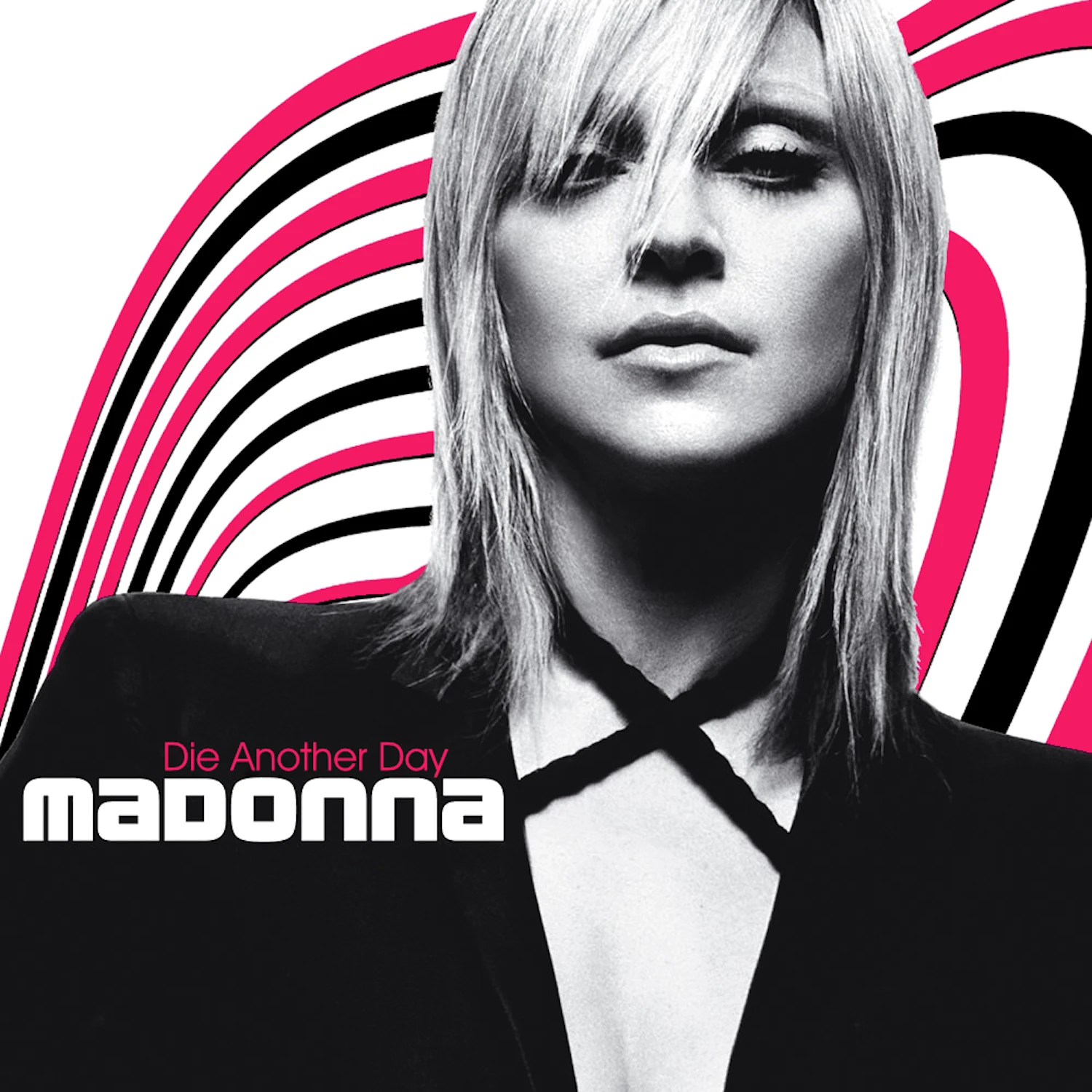
If American Life was for the head, Confessions is for the feet. It is pure groove. It is her equivalent of a mash-up album. It takes snippets from forty years of dance music (Giorgio Moroder, Tom Tom Club, Abba, Pet Shop Boys, Stardust, the Jacksons), mixes in snatches from her own back catalog (“Like a Prayer,” “Papa Don’t Preach,” “Die Another Day”) and filters it all through club-cool electronics in a nonstop mix. At the helm is Stuart Price, who in addition to being the musical director on Madonna’s last two tours is an English DJ, remixer and recording artist (known as Les Rhythmes Digitales) who is equal parts Beck and Daft Punk.
Even in a form-concealing black sweat shirt, Madonna looks thin and fragile. At forty-seven, she cuts a more spartan and elegant figure than the navel-bearing, crucifix-dangling, hair-moussing Madonna who burst into the national pop consciousness in 1983. She is now Esther, Madge, Lady Madonna with children at her feet, or, as her staff calls her, simply M.
“Do you want to see where the bone broke?” Madonna asks as we talk about her horse tumble.
She pulls her sweat shirt aside and proudly displays the battle scar: a collarbone that, at its midsection, disconnects and juts up into the skin.
“She’s broken hers, too,” Madonna says, gesturing to Shavawn, her former nanny and current stylist. Shavawn is helping her massage the bone with some sort of vibrating machine that Madonna says has helped it heal faster. “She’s the person who made me get on the polo horse.”
“I didn’t make her,” Shavawn protests.
“She did,” Madonna insists. “It’s her fault.”
“I didn’t,” Shavawn repeats.
“Because she was the person who instigated it, she had to be my caretaker,” Madonna continues. “She slept in the room next to me the whole time.”
“‘You’re guilting her out,’ I protest in Shavawn’s defense. Even though Shavawn is laughing, inside she must feel bad. Who wants to be responsible for breaking their boss’s bones? That is, assuming they like their boss, which Shavawn clearly does.
“I don’t have to,” Madonna says. “She guilted herself out.”
Suddenly, Madonna sounds a lot like my Jewish mother.
It is at this point that I notice the carry-on bags that both Madonna and her manager have brought on the airplane — they are both filled with popcorn. I make a note to ask about it later, when we’re not on the subject of medical emergencies.
Despite being taken to the hospital, Madonna says that the day after the accident, she decided to take a helicopter to Paris for her birthday. Hopped up on morphine, she felt little pain.
“I’m a lot of fun on morphine,” Madonna says with a laugh. “At least I think I am.” She pauses and looks at Shavawn for confirmation. “But I’m not fun on Vicodin.”
Her manager, Angela Becker, who is also sitting on the plane along with Madonna’s hair and makeup team, clarifies. “Do you know the story of Dr. Jekyll and Mr. Hyde?” she asks. “I’ve never seen a transformation like that in my entire life.”
“I only tried Vicodin once,” Madonna says. “I was in a lot of pain, and everyone kept telling me to try Vicodin. But they kept saying, ‘Be careful. It’s so amazing. You’re going to get addicted.’ So I called five people to get advice before I took it, and they all told me I was going to love it.”
“She went on a walk with me,” Shavawn blurts, as she packs up the bone machine. “And it was really scary.”
“Drugs have a weird effect on me,” Madonna continues. “They do the opposite with me. I just cleaned the entire inside of my mouth. I bitched at everybody. And I was in more pain. It was the worst experience of my life. So I’m happy to say that none of my pharmaceuticals — and I had a plethora of them given to me — influenced me.”
Madonna’s lack of interest in drugs is another reason for her success: The biggest career killer is the mixture of a person who’s very confident in her judgments with drugs that impair those judgments.
“I just like the idea of pills,” she says as she stretches her legs on the wall of the cabin. “I like to collect them but not actually take them. When I fell off my horse, I got tons of stuff: Demerol and Vicodin and Xanax and Valium and OxyContin, which is supposed to be like heroin. And I’m quite scared to take them. I’m a control freak.”
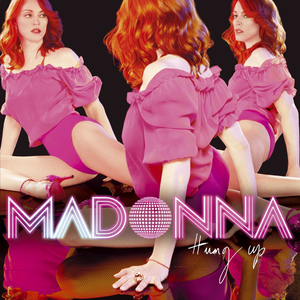
Just the other day, Madonna was in Portugal, where she obsessively rehearsed the first live performance of her undeniably catchy electropop single “Hung Up” thirty times for the MTV Europe Music Awards. The result: She not only stole the show but, nearing fifty and wearing a leotard, still managed to be the best-looking woman on the stage that night.
For Madonna, whose stage productions have become as career-defining as her albums, the next project is to start planning a tour for the new year. “I want to make people feel like they’re inside a disco ball,” she says, beginning a show description that in part sounds like a non-ironic version of U2’s Popmart. “I want to explore the idea of making the dancers more personalities in the show and having their stories come out. And we want to devise a sound system that’s surround-sound, because the standard system in a sports arena is crap for people watching, and it’s crap for people onstage.”
“CONFESSIONS ON A DANCE FLOOR” BEGAN as a musical film. The French director Luc Besson, best known for The Fifth Element, was writing a screenplay about a woman on her deathbed looking back on the life she thought she had lived but, due to senility and amnesia, didn’t actually experience. Madonna, who was set to star in it and write the music, began working with Stuart Price, Pat Leonard and Mirwais on songs spanning the last century of popular music.
“I had to write music from the Twenties, big-band stuff from the Forties, Sixties folk music a la Joni Mitchell or Joan Baez, punk, and music from now, which is where ‘Hung Up’ came from,” she explains. “I made my own research book, and I had tons of reference material. But when I finally got the script, it was 300 pages long. And I was really not happy with it. It wasn’t what I wanted it to be. It just wasn’t.”
The disappointment still lingers in her voice. Like most successful people, Madonna is not a quitter. Though she may not get back on the horse that threw her, she will definitely get back on a different horse. (Which is exactly what she did that morning, when, against the advice of her handlers, she went horseback riding for the first time since the accident.) So though she didn’t like the script, she refused to abandon the material she’d written.
“After so much work, I was kind of devastated,” she says. “But I loved the song ‘Hung Up.’ So I thought, ‘Let’s just keep writing in this direction and see what happens.’”
The CD was recorded in Price’s two-room apartment in the Maida Vale neighborhood of West London. “The studio is a tiny room with a roof that comes down really low,” Price tells me. “I mean, I can’t stand up in there. She can, because she’s a little shorter than me. And the equipment there is my old keyboards and an old mixing desk. Most studios cost thousands of dollars a day. My apartment costs the price of a good cup of tea a day. My African neighbors used to come out and say, ‘Is that Madonna going in your apartment?’ and I’d say, ‘No, it’s just a friend.’”
Confessions may be the first time in her career that Madonna has looked backward. As the lights of Frankfurt beckon in the dusk outside the window, she reminisces, “Confessions brought back the time I was recording my first record, with Steve Bray. We worked in a very casual way in his apartment on the Lower East Side of Manhattan with these street sounds coming in through the windows being recorded and not giving a shit. In a recording studio, you always sing in isolation. And I hate that. I hate being cut off from everybody. I hate that I can’t hear what they’re saying in the control room until they press the talk-back button.
“To me, recording this album was like going back. It was so liberating. I want to be in the shit holes. I want to be in a small place with no furniture. I want to keep it the way it was when I started, sitting on the floor and scribbling in my notebook. I work best under those circumstances.”
Working with Price, Madonna often found herself thinking about her early days in the New York club scene. Acting on the advice of her hometown mentor, a dance teacher named Christopher Flynn, she dropped out of the University of Michigan and moved to Manhattan in 1977 with no friends, no money and no real-world experience. All she had with her was brunet ambition. She used to carry books around all the time because “you never know when you’re going to get stuck in a room or on the subway with nothing to do. And I hate wasting time.”
And so it was that she found herself at her first New York club, Pete’s Place. “It was kind of like a restaurant-bar-disco, and everybody was so fucking cool,” she recalls. “The guys all had Forties suits on and porkpie hats. And the women were so glamorous. They all had red lipstick and black eyeliner and high heels. And I felt so dull. Because I was kind of embarrassed, I just sat in my corner and read my book. It was an F. Scott Fitzgerald book, Jazz Age Stories. I was like, ‘OK, I don’t fit in. I don’t know what to do with myself. I’m not dressed appropriately. There’s nothing cool about me. I’m going to go read a book.’”
What’s interesting about this story — besides that if you had happened to be at Pete’s Place that night and decided to talk to a mousy girl reading a book alone, you might have gotten a chance to date Madonna — is her fear of being dull as a motivation for her protean career.
The plane lands on a private airfield in Frankfurt, where two helicopters are waiting for Madonna and her crew: a large helicopter and a small one. Guess which one Madonna climbs into?
A big blue illuminated M appears on the ground, letting us know we have reached our destination: the nearby city of Mannheim, where local record-label reps have somehow convinced Madonna, Green Day, Shakira and Carlos Santana that the best way into the hearts and minds of the German people is to appear on the long-standing television show Wetten Dass …? (in English, Wanna Bet …?), which tonight involves four guys wagering that they can stuff ten full drum kits into an SUV in four minutes.
While Madonna and dancers are waiting backstage to rehearse “Hung Up,” the topic of body language comes up. “I find it very disconcerting to talk to people who don’t look you in the eye,” she says. “I don’t know what to do. It freaks me out. Or when they shake your hand and hold on to it too long.”
When I mention that you can always tell when someone’s lying by looking for tells in their speech, body language and eye contact, she says she wants to learn this skill for business negotiations. So I demonstrate by asking her to tell me three things she’s done that day and to make one of them a lie.
Her answers: “I worked out.”
“I had sex.”
“I ate a tuna-fish sandwich.”
Despite rumors to the contrary, Madonna is not a good liar. When I point out which statement isn’t true, she cracks up and throws her legs into the air. “We have to learn this,” she squeals to her manager.
For readers who need closure, let’s take a moment to wrap up some loose ends: The four guys actually win the bet about the drum sets and the SUV. Madonna took the large helicopter. The popcorn was for a snack, though neither Madonna nor her manager actually ate any. And the lie was that she ate a tuna-fish sandwich. Good for her. It means she had sex today, which brings us to the subject of her marriage.
Her relationship with Ritchie, whom she originally met at a dinner party at Sting and Trudie Styler’s house, is one of the themes of her new and surprisingly personal tour documentary, I’m Going to Tell You a Secret. In it, Ritchie is depicted missing concerts he’s promised to attend, boring her to tears while he sings drinking songs with his buddies and slapping her ass nearly every time he walks past.
What do you think are the three most important things in a relationship?
The ability to listen, resilience and a sense of humor.
How did you feel your relationship came off in the movie?
I think it came off as peculiar. Not a typical relationship. A lot of macho men see the movie and like Guy’s character, because he doesn’t give me any special treatment. I think we come off as a couple that has a genuine and deep connection. He is always there for me, but he’s not impressed.
But you were pissed at him a few times in the movie.
I feel like we are sort of The Honeymooners, only I’m the Jackie Gleason character. Obviously, he irritates me on a significant basis, as everyone’s significant other does.
He often seemed to not care about your feelings or what was important to you.
Yeah, like when he was singing in the pub all night, and I had a show the next day and wanted to go home. Well, he’s a human being. It’s hard for him. He was pretty much there for a lot of my tour, but it’s hard for a guy to be traipsing around the world with a girl. No one wants to be anybody’s trailer bitch. It’s easier for girls to do that than guys. I think Gwyneth Paltrow is having an easier time going on the road with Chris Martin. You have to be a pretty evolved man to go on the road with me and not for a moment have this glimpse of yourself as someone who’s lost their identity.
Maybe, on some level, you both enjoy the power battles that take place in your relationship. You challenge each other.
Yeah. Ha ha ha ha ha ha.
This question is answered not with words but with an evil cackle. It is the laugh of a vixen, and Madonna uses it often – six sharp ha’s – when she is laughing at the flaws that she loves about herself. For example, the next time I hear the evil cackle is after the sentence “Being monogamous is revolutionary – at least it is for me. Ha ha ha ha ha ha.”
The other man in Madonna’s documentary is her father, Tony Ciccone, a longtime Republican, a practicing Catholic and seventy-two-year-old Michigan vineyard owner who, on camera, wanders through his daughter’s world unaffected by the circus around him. This is the man from whom Madonna inherited her workaholic tendencies.
“My dad sent me an e-mail after he watched the movie,” Madonna says. “And at the end of it, he wrote, ‘In spite of our differences – I don’t agree with everything that you say – I’m very proud of you.’ That’s the only time my father’s ever said that. I mean, he’s only liked certain things I’ve done: my last tour, Evita, Dick Tracy and a couple of my ballads. That’s about it.”
She shakes her head and flutters the fake lashes her makeup artist has put on her. “It’s terrible,” she says, sighing. “All my life I’ve been going out of my way to get my father’s approval. And he’s never been impressed.”
WITH HALF A DOZEN DANCERS, THREE choreographers, her longtime publicist Liz Rosenberg and a retinue of Warner Bros. executives in tow, Madonna heads to the stage to rehearse “Hung Up.” Though she’s just performed the song perfectly in Portugal, she insists on rehearsing it three times until the lighting and choreography cues are perfect.
In the Eighties and early Nineties, it often seemed as if Madonna went out of her way to be controversial – from the burning crosses of the “Like a Prayer” video to the graphic depictions of bondage, homosexuality and, um, hang gliding in her Sex book. Yet now that she’s settled into adult life as a mother of two with a spiritual bent, she’s under more scrutiny than ever. (Though she proudly boasts that she recently received a letter from Dr. Spock’s wife defending her child-rearing techniques, which include not letting her kids watch TV and teaching them to be bilingual.)
“It’s funny that I’ve supposedly made my career out of being controversial, so now even my child-rearing and my spiritual life are freaking people out,” Madonna responds. “It just goes to show.” She pauses and smiles. The lines in her face deepen, making her appear not older but more cerebral. “I don’t know what it goes to show.” She grows silent and thinks a little more. Her eyes squint, her aquiline lips purse and then, suddenly, her face goes smooth again. “It just goes to show that people are not comfortable with what’s not familiar,” she finally announces, triumphant.
Madonna pulls off her black sweat shirt, revealing a white tank top cut low in the back, exposing the back of a nude-colored bra. Though she looks great on camera, in person she seems overly thin.
One of the subjects Madonna has received the most flak about lately is her status as a Kabbalist. Technically, Kabbalah is a mystical branch of Judaism. But in the modern sense of the word, it’s the non-denominational teachings of an organization called the Kabbalah Centre. Founded by Philip Berg in the early Seventies, the Kabbalah Centre is chiefly a self-help institution that has taken a mystical branch of Judaism and cleaned, simplified and reworked it for mass consumption in an era of overstimulated materialists looking for spiritual and psychological peace of mind. Until recently, the Kabbalah Centre and its books and courses were looked at as benignly as, say, Wayne Dyer or Deepak Chopra. Madonna describes it not as a religion but as a philosophy.
More recently, however, the Kabbalah Centre has been under attack for its fund-raising methods and for the statements and qualifications of some of its leaders, among other issues. As a result, the bad publicity has trickled down to Madonna, who has donated millions of dollars to the Centre.
While the Kabbalah Centre remains a far cry from the much more controversial Church of Scientology, Madonna does have empathy for Tom Cruise right now. “We’re both in the take-a-lot-of-shit club together,” she says. “I don’t
I want to make people feel like they’re inside a disco ball.
Songs
Last updated