Looks Good on the Dancefloor
Observer Music Monthly · November 2005
- Magazine
- Observer Music Monthly
- Published
- November 2005
- Interview by
- Simon Garfield
- Country
- United Kingdom · English
At a glance
Simon Garfield meets Madonna and Stuart Price in Price’s home studio in West London for Observer Music Monthly, November 2005: how “Hung Up” set the direction of Confessions on a Dance Floor, the abandoned musicals, Danceteria and Pete’s Place, Mirwais and American Life, fame, the press, Live 8, her broken bones, “I Love New York” and I’m Going to Tell You a Secret.
The interview
With ‘Hung Up’ at number one and her new album also set to storm to the top of the charts, Madonna has taken back her crown as the undisputed queen of pop. Simon Garfield talks to her about her faith, her family and her ever-changing image. And she explains why, at 47, she has returned to her disco roots.
‘Have you brought three machines?’ asks Madonna as I get out my tape recorder.
No, why?
‘In case they don’t work.’
In fact, there is recording equipment everywhere. Madonna is sitting on a stool in her producer’s tiny home studio in West Kilburn, London, her feet resting by cables, her hands within reach of the keyboards and guitars and microphones that made her new album. She can also touch Stuart Price, the English producer who converted his loft into this studio a few years ago with the money he got from a publishing deal. He says that the walls are so thin that Madonna’s new record may accidentally contain the sound of a neighbour weeping.
Price is 28, 19 years younger than Madonna. They started working together four years ago, when Madonna was looking for a keyboard player for a world tour and heard the DJ/remixing work Price conducted under the names Jacques Lu Cont and Les Rythmes Digitales. He then became her musical director, rearranging studio tracks for live performances, and they wrote a song together, called ‘X-Static Process’, that appeared on her last album. ‘Writing is a very intimate thing,’ Madonna says, ‘especially when you write lyrics and sing them in front of someone for the first time. It’s like a really embarrassing situation. To me, singing is almost like crying, and you have to really know someone before you can start crying in front of them.’ She looks at her collaborator. ‘Before now I just didn’t feel that I knew you well enough. I wasn’t 100 per cent confident in your songwriting skills, if I may be so honest.’
Stuart Price: And you were right.
Madonna: I liked this space, but I didn’t think you were ready. The amount that you’ve grown from that record to this one is huge. But I only intended to write a few songs with you. I intended to do the bulk of the record with Mirwais Ahmadzai, the producer of her last two albums Music and American Life, and then it turned out to go in the other direction, because the first song resonated so monstrously.
SP: ‘Hung Up’.
M: And that song made up my mind in which musical direction to go in. Until then I had done an entire soundtrack to a musical called Hello Suckers, and that didn’t pan out because I decided I didn’t want to do it. Then I decided to write a musical with Luc Besson, with him doing the screenplay. So I started a whole new chunk of songs, and then I read the script and I hated it, and I thought, ‘That’s crap, let’s scrap that’. And then I was exhausted. We finished the tour, and my record company was like, ‘You owe us an album’, and I was, ‘I don’t have any more ideas. I’m tapped out’. So I came over here to work experimentally, and because that song turned out so great, I said, ‘OK, that’s it, I’m making all dance music’.
She is wearing a black suit with pinstripes, and pointy black leather boots. Her hair is parted in the centre and straight, but the next day it will be made to look like Farrah Fawcett for her video for ‘Hung Up’. People asked me afterwards whether I liked her, and I really liked her. She was in a great mood and laughed a lot. Some of the time she performed stretching exercises with her hands, which she said was an attempt to get back into shape after her recent riding accident.
M: The entire time I was recording the album I was also editing a documentary film that I’ve just finished, and that was a very painful… It’s called I’m Going to Tell You a Secret and it’s not a conventional documentary. It’s cinematic, it’s like a journal. I was flying to Stockholm every other week to work on the edit, then coming back here, and it was very difficult, taking 350 hours of film and putting it into two hours. I was so wiped out by it.
SP: So working on the record came to be a respite.
M: It was the antidote for the stress of that film. It was, ‘I want to dance, I want to feel free, buoyant, happy, placated’, and so I’m going to come up to this little white room with lots of cables and I’m going to do that.
OMM: The new record sounds modern, but there’s a lot of your early years in the New York clubs that have gone into it. That dance floor hitting you when you were… how old?
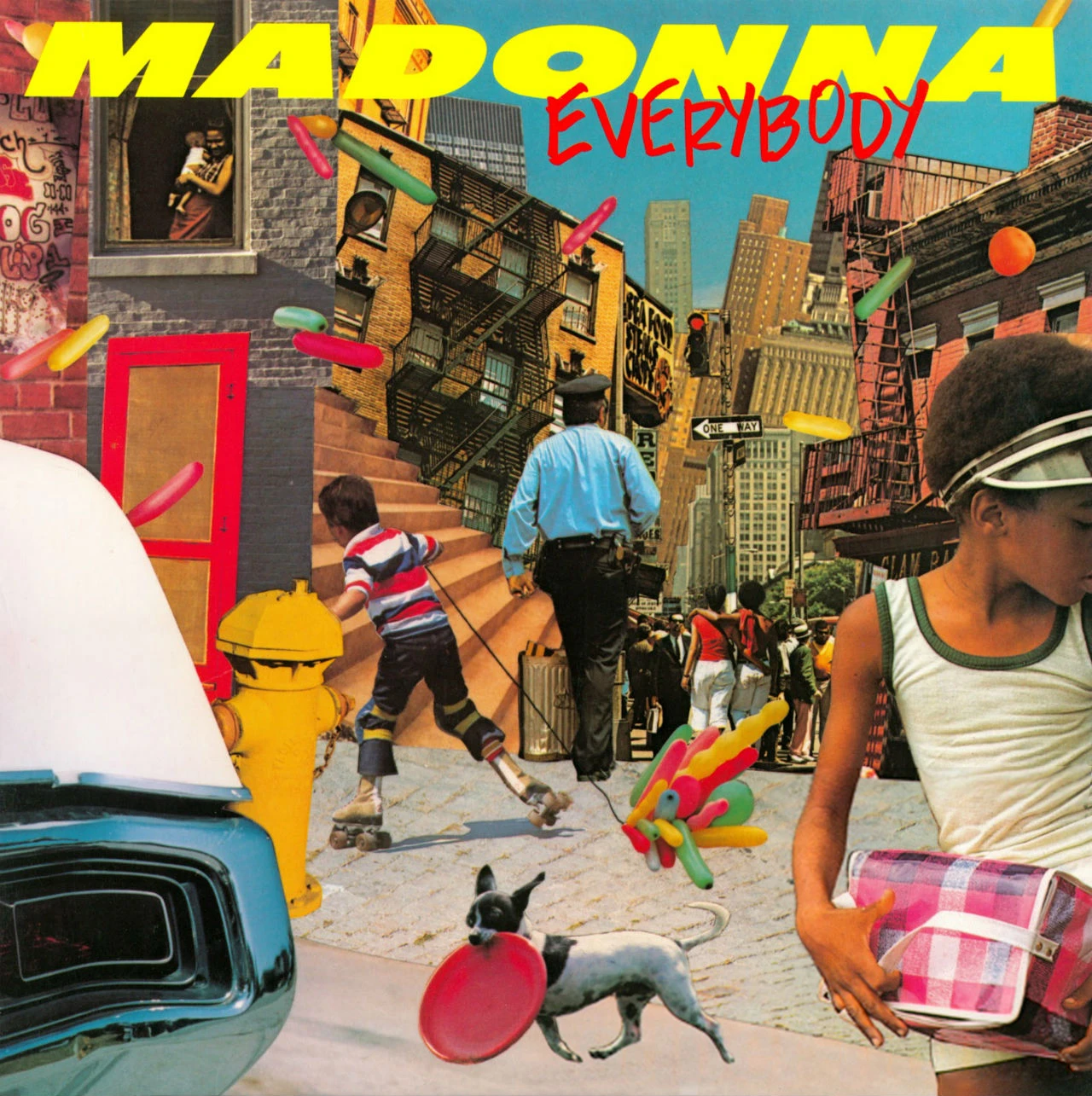
M: God, 20, 21. Yes, my original impulse was to make music in the first place. I used to go to this club in New York, Danceteria, and I kept bringing my demos to the DJ, so all music for me begins with the DJ taking my first record, ‘Everybody’, and thinking it’s good enough to play to everyone to dance to.
When I first moved to New York I wanted to be a dancer, I danced professionally for years, living a hand-to-mouth existence. I never tapped into nightlife, all I knew was dancers, we went to bed early and got up early and went to free concerts at the Lincoln Center and Shakespeare in the Park. Then I met this guy, as one does, and he brought me to a nightclub and I was like, ‘Wow’.
It was called Pete’s Place. In one room was John Lurie and the Lounge Lizards and all these guys who looked like Forties movie stars, and all the girls looked like Fifties movie stars and had perfect eyeliner, and I was like wearing my dance clothes, and I brought a book with me, just in case I got bored. It was an F Scott Fitzgerald book. I thought, ‘You never know…’. And that was my introduction to dance music. I thought, ‘Oh my God, are there other places like this?’ I didn’t know you could just walk into a club and start dancing by yourself. I thought someone had to ask you.
OMM: What an innocent girl you were.
SP: Hard to believe.
M: You can just dance for six hours and nobody will bother you and you don’t have to drink. I felt an incredible sense of liberation, and I felt happier. That sense of freedom and feeling independent. I was used to dancing, but only when someone told you what to do. So in the nightclub I was all over the place, I combined everything. Street dance, modern dance, a bit of jazz and ballet, I was Twyla Tharp, I was Alvin Ailey, I was Michael Jackson. I didn’t care, I was free. There was nothing fun or glamorous about my life and I needed some excitement. And believe me, there were a lot cooler people there than me. They were wearing black and not moving much, and I was giving everyone the retarded tingles.
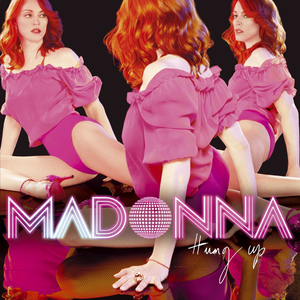
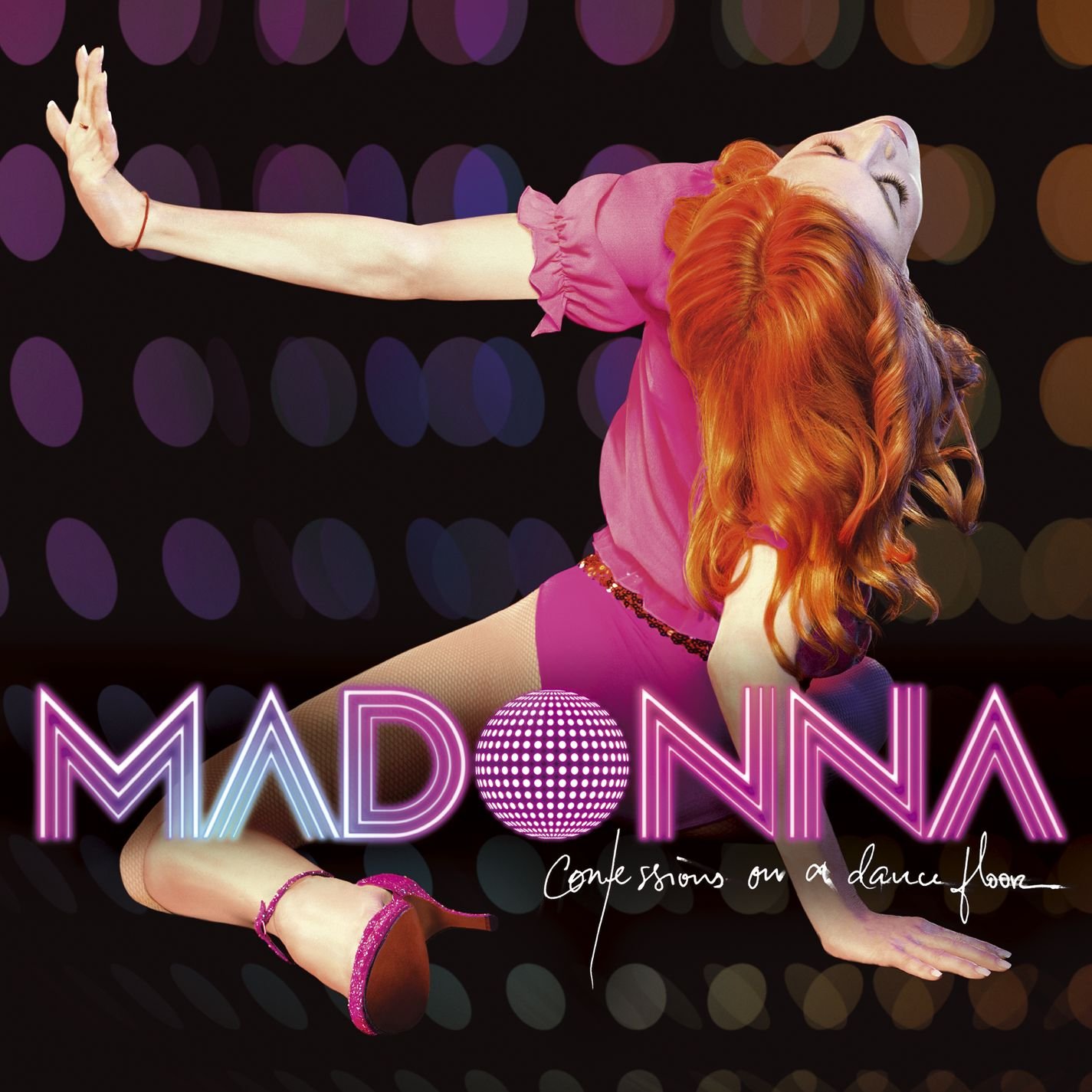
The new album is called Confessions on a Dance Floor, and the tracks have been sequenced together to run as one continuous piece of music. The idea was to create a record that resembles the score of a musical, with recurring themes, combined with the feel of an hour at a nightclub. The predominant marketing image on the album artwork and advertising spreads is of a Seventies disco glitterball and a pop star keen on the Jane Fonda workout look. She sings about the usual things, which inevitably means singing about the saga of being Madonna: her quest for understanding, for a deeper truth beyond the trappings of fame, for a spiritual light in the darkness. There aren’t many ‘confessions’, but there’s plenty of self-assertion. The record is the closest Madonna has got to a concept album, and the concept is simplicity.
M: I tried to do some other stuff with Mirwais but it didn’t resonate. I always kept wanting to run back to Stuart’s studio.
SP: The escape pod.
M: Yes. You meet somebody, and you’re already going out with somebody else, so you say ‘Hi’ and you have this fantastic date with them, and when you go back to this other person you’re with all you can do is think about that other new person. I couldn’t stop thinking about how fun it was to work with Stuart. It took me a minute to decide which boyfriend I wanted to have.
Have you ever met Mirwais? Jean-Paul Sartre comes to mind. He’s very intellectual, very analytical, very cerebral, very existential, very philosophical. You have to be in the mood for it. I didn’t want to over-think things too much. I don’t want to be complicated now.
OMM: You feel that happened with American Life?
M: Yes. It didn’t happen when we first worked together, on Music, but on American Life we both got into a sort of…
SP: Vortex.
M: We both got sucked into the French existentialist vortex. We both decided we were against the war, and we both smoked Gauloises and wore berets, and we were against everything. No, it’s about the universe conspiring. With the last album I was in a very thoughtful mood, a very angry mood, a mood to be political, very upset with George Bush.
OMM: But now you’re happier?
M: It’s just that I did that already. I don’t need to be going on about the war in Iraq. I made a lot of political statements in my show and in my film. I don’t want to repeat myself, so I moved to another area and that’s ‘God, I really feel like dancing right now’. It was too intense. It’s not just a reaction to what I was doing work-wise, but also a reaction to what was going on in the world. I just wanted some relief.
OMM: Fuck Art, Let’s Dance?
M: What?
OMM: Used to be on T-shirts in the Seventies.
M: It’s fuck everything, let’s dance.
OMM: There seem to be a lot of references to your earlier records on it.
M: Really? Please tell us which ones. We listened to a lot of other people’s records when we were making this – obviously Abba and Giorgio Moroder – so to me it’s more of an homage to other people’s records than mine. If there are references to earlier records it’s probably done unknowingly, part of our molecular structure, it comes out again and again, hopefully not too boringly and repetitive.
I couldn’t have made this record anywhere else but up here. Where you record is very important. It can’t be too nice, it can’t be too expensive, it can’t have a view to an ocean or a field. I’d rather be in a prison cell with Pro Tools. I don’t want to know what’s going on in the rest of the world. I want it to be exactly as it was when I wrote my first song. In a small space with hardly any frills. I want it always to be straightforward. I can’t deal with the pressure of how much things cost. Otherwise I think, ‘Oh God, I’ve got to turn out 12 number one hits to justify how much the space costs.’
OMM: If I heard that from anyone else I might believe it.
M: What can I say? That’s how I think. I loved lying on that couch with my notebook writing stuff and then crawling over to do the vocals. Every vocal I did here we also tried somewhere else and it didn’t work. Other people who contributed to this record, we’d meet in this much larger, characterless space in Primrose Hill, and I would be totally missing the vibe that was necessary, and so I’d take what I did there and say ‘thank you very much’, and then run back here and say, ‘Stuart, you’ve got to help me fix this. Help me’.
All the songs are to a lesser or greater extent biographical. ‘How High’ is obviously asking the question, how important is fame and how much does it matter? And what really does matter?
OMM: These are questions you must have asked yourself for 20 years. Have you reached any conclusions?
M: Sure, although my point of view and philosophy continues to change and grow. As the years go by you go through this evolution. You think, ‘Oh my God, having a song on the radio and being number one is the most important thing in the world’, and then that happens for a while and then you get the shit kicked out of you and you think, ‘I can’t deal with this’, and you go into introspection mode and then you come through the other side. You realise that having a number one record and being loved and adored isn’t the most important thing in the world. But at the same time, I don’t have a problem with it. What I’m trying to say is, I’m not a reluctant pop star. I’m very grateful and happy for everything that I have and for things when they go well. On the other hand, I’ve had enough of the other side to know that if it doesn’t, I will survive that and life goes on.
At the end of the day when I’m standing at the golden gates, I’m sure God doesn’t give a shit how many records I’ve sold or how many number one hits I’ve had. All he gives a shit about is how I behaved, how I treated people. So understanding that, and still doing my best making records, is the conclusion I’ve come to. I think about that more now than I used to.
OMM: Do things hurt you still? You’ve had…
M: Anything and everything written about me. Honestly, I don’t read newspapers, magazines, whatever. They’re just not part of my lexicon. I don’t want to be manipulated, or manipulated about other people’s work. I don’t want to be told how I should think or how I should receive things, and even when you know that the press writes a lot of shit about people, you’re still tainted and influenced by it. I’m trying to remove that from my life. Also, I don’t want to see pictures of myself with sarcastic quotes underneath. Even if it just pinches me for 30 seconds, I don’t want it.
Before doing any interviews I like to know who I’m meeting with and get a bit of an idea of their sensibilities, so consequently I’ve read lots of reviews of my last tour, and all of them were really negative. They were, ‘Oh it’s not very good, not very exciting, not anywhere near as good as Blonde Ambition’, which I’m sure they slagged off. Now I couldn’t give a shit, but thank God I didn’t read it when I was on tour.
OMM: Elvis Costello said that the worst thing would be to read something by an influential critic and then let it affect what you do. So if they don’t like a particular direction you’re going in, you think, ‘Well, maybe I shouldn’t be doing it’. And then you realise: why on earth is this guy deciding my career path?
M: Exactly. You have this inner struggle within yourself all the time, this pendulum that swings between you caring what people think and not caring. It’s not important, but on the other hand the media is something that affects a lot of people, so you’re constantly trying to strike a balance between respecting something and not caring about it. Let’s talk about economics: I know there’s a lot of competition in the world of magazines and newspapers and we have to make headlines and be sensational and sell, and saying bad things about me is going to sell more papers than writing good things about me.
OMM: But does it have an affect on you still?
M: It used to have a huge effect, but I’m so used to people slagging me off. Since the beginning of my career I’ve been told I have no talent, I can’t sing and I’m a one-hit wonder. That was 22 years ago.
OMM: You really seemed to surprise people with your performance on Live8.
M: Lots of people called me. I was kind of surprised. I mean, it wasn’t the first time I’ve ever done a show.
SP: It was the only time the backstage area cleared out to watch someone.
The studio door opens. Angela Becker, her personal manager, has bought drinks from Starbucks.
M: This is Chai Latte. I’m off coffee now because I’m on homeopathics. For my eight broken bones.
OMM: All healed now?
M: Not all. I have one rib that has not formed a union, as they call it in the mysterious world of orthopaedics. But all my other bones – there’s cellular fibrous tissue that has joined them together, but my collar bone is still a bit of a problem. I can’t lift my arm over my head yet, but I’m doing lots of rehab. Lots. I can’t lift it above here… but I can still slap you.
OMM: It’s like that Tommy Cooper joke. You know, quaint English humour.
M: I like quaint English humour.
OMM: You know Tommy Cooper?
M: The comedian.
OMM: Yes, died on stage and everyone thought it was part of the act. Did terrible magic tricks. And he used to tell this great joke; man goes to a doctor and says, lifting his arm a bit, ‘It hurts when I do that,’ and the doctor says, ‘Well, don’t do it then’.
M: Uh. Tumbleweed.
OMM: So where were we?
M: Talking bollocks.
OMM: That song on the new album, ‘I Love New York’.
SP: That was written on tour at a soundcheck.
M: After an excellent police escort. The song is ironic! I love London. Please embrace my irony.
OMM: You diss London and LA and Paris. ‘If you don’t like my attitude, then you can eff off/ Just go to Texas, isn’t that where they golf?/ New York is not for little pussies who scream.’
M: Funnily enough, I live in all those places. Well, I don’t live in Paris, by the way. But let’s face it, with New York, it’s like putting your finger in a socket. When I walk down the street anywhere people say, ‘Oh, there’s Madonna’, but in New York the cops are like, ‘Hey, you’re back’. It feels like I’ve come home.
OMM: What happens when you walk around here?
M: Here? I don’t walk around here! I live in Marble Arch, and everyone’s Saudi, everyone wears a veil and nobody pays any attention to me. If people notice me in London they don’t make such a big deal about it.
SP: Oh, believe me, they notice you.
M: In New York they shout, ‘I don’t like the hair colour!’ Here, they’ll make their judgments but keep them to themselves.
I’M GOING TO TELL YOU A SECRET WILL be shown on Channel 4 in December and then made available on DVD. It combines a backstage journal of the last tour with meditations on her spiritual quest for a good way to live her life. It ends with Madonna’s trip to Israel last year to learn more about Kabbalah, and the closing shot is of an Israeli child and a Palestinian child walking down a road together. It’s a political and revealing movie, and it provides a less artful insight into her world than her last tour movie Truth or Dare more than a decade ago. It is particularly revealing about the scenes Madonna has chosen not to remove, not least the sequences with her children and husband Guy Ritchie. In one scene, Madonna and her kids are trying out the bed in her suite at the George V hotel in Paris: ‘Who’s the Queen, Rocco?’ she asks her five-year-old son. ‘You, you, YOU!’ Rocco replies. In another, Lourdes, who is eight, teaches her mother how to say ‘let me tell you a secret’ in French; Lourdes tells the camera she’s looking forward to the tour ending so she can see more of her mother. In a limo after a show, Madonna is upset that her husband has attended so few of her gigs, and doesn’t believe his explanations. ‘I got married for all the wrong reasons,’ she says. ‘My husband did not turn out to be the person I imagined him to be… There is no such thing as the perfect soulmate. Your soulmate is the person who pushes all your buttons, pisses you off on a regular basis and makes you face your shit. It is not easy having a good marriage, but I don’t want easy.’
Stuart Price, who is in the film as much as Ritchie, appears in an early scene telling Madonna a joke, which she loves: ‘What’s so great about fucking twenty eight year-olds?’ Answer: ‘There are 20 of them.’ Later, Madonna asks: ‘What’s the difference between a terrorist and a pop star? You can negotiate with a terrorist.’
‘Hopefully people will see the film,’ Stuart Price told me after a screening, ‘and realise that M is actually one of the kindest and most personable people…
To me, singing is almost like crying, and you have to really know someone before you can start crying in front of them.
Songs

Last updated