Madonna in L’Uomo Vogue
L’Uomo Vogue · November 2005
- Magazine
- L’Uomo Vogue
- Published
- November 2005
- Interview by
- Ashley Heath
- Country
- Italy · Italian
At a glance
Ashley Heath’s L’Uomo Vogue cover story of November 2005, in the week of “Hung Up”, translated from the Italian: Confessions on a Dance Floor and Stuart Price, dance music and spirit, the album’s samples of other records and of her own, and Madonna’s brief answers by email on disco, style, survival and a secret.
The interview
It’s the week Madonna’s new single, “Hung Up”, is released, and there’s simply no escaping its disco beat or that sampled ABBA hook that fires up this latest pop classic. The record is all over radio and music television, blasting out of dancefloors and hi-fi shops, not to mention the seemingly endless television commercials for mobile phone operator Orange. Previews of her new album, Confessions on a Dance Floor, are springing up through every crack in the pavement. Madonna is back, and in a big way.
The tabloids, however, have little interest in discussing the music. They would much rather gossip about her new look. In London, where the superstar has lived for more than five years, The Sun, Britain’s biggest-selling daily newspaper, keeps passing comment on her “bizarre Seventies look”, her “Farrah Fawcett hair”, her “just-got-out-of-bed hair”, her “Biba-style” appearance or her “disco diva look with oversized hoop earrings”.
Not that Madonna is likely to have noticed any of these comments or criticisms. Newspapers and magazines are not allowed into her home, and the plasma screens in her London residences are used exclusively for watching films. Television is strictly off-limits.
“TV is rubbish, it’s poison,” she would say. “I grew up without it and never missed it. My children don’t watch television.”
And further: “The world is already so full of distractions that constantly prevent us from looking within ourselves. We grow up believing that everything begins and ends with our five senses. Nobody is encouraged to have a spiritual life.”
For the moment, though, we must place our trust in those five senses and concentrate on the material world rather than Madonna’s frequently ridiculed spiritual teachings. After all, the greatest pop icon of all time is about to release her finest album since Ray of Light, alongside a new documentary film, I’m Going to Tell You a Secret, with the two arriving just days apart.
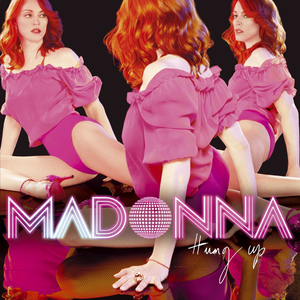
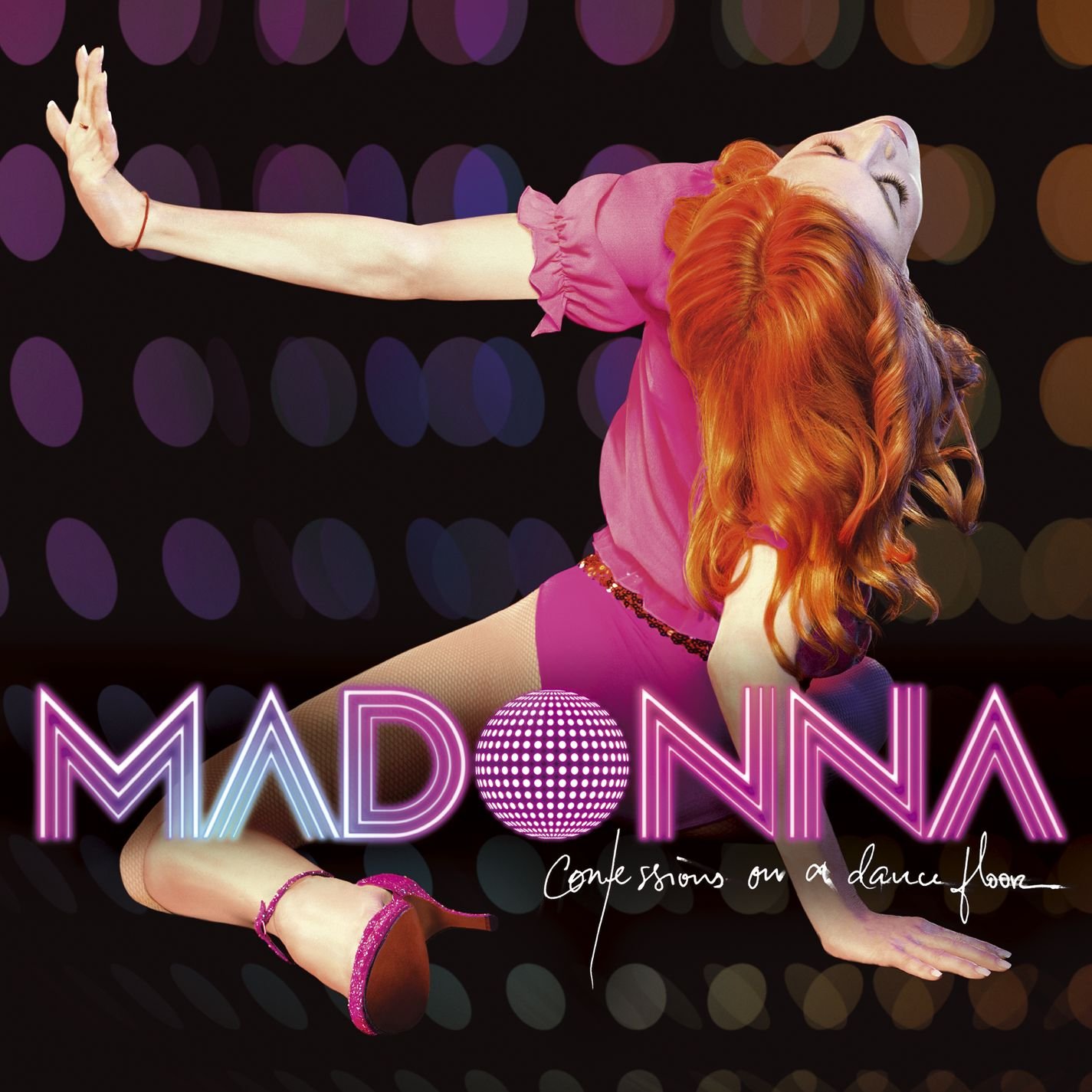
Then there is the aforementioned new look, captured by Steven Klein for the single and album covers, and given a startling digital makeover by the photographer himself. Klein’s beautiful images appear here unaltered.
If Madonna’s autumn/winter 2005–06 incarnation looks here rather like a little disco Stepford wife, by the time she reaches the cover of her new CD she will be shamelessly D.I.S.C.O., resplendent in vibrant oranges and pinks, complete with a glittering mirror ball that doubles as a logo, replacing the “O” at the centre of her name.
To promote her latest work, Madonna has granted a couple of journalists access to her opulent London residence, a substantial house on an unremarkable street bordered by Marylebone to the east, the bustle of Oxford Street to the south and the late-night hum of Edgware Road to the west. For L’Uomo Vogue, she agreed to answer a few questions, asking to do so in her own time, via email.
“My aim with this album was to get back to my roots, to dance music,” she confides. “I wanted to make a record you could put on at a party and dance to from beginning to end. I want people to jump out of their seats! It has to be non-stop fun.”
Much of that spirit appears to have been captured during the recording sessions Madonna held in a loft in north-west London. This intimate, comfortable space had served as British DJ Stuart Price’s studio for two years. Madonna admits to having fallen in love with this “magical” space, where she achieved a very particular sound that could never have been replicated in an expensive Los Angeles or New York recording studio.
In Stuart Price, Madonna has found a DJ, producer and collaborator worthy of joining the likes of Jellybean, Shep Pettibone and William Orbit in her personal pantheon.
“Stuart was the perfect person to work with on this record,” she says. “He’s a brilliant DJ, which means he can road-test our music in clubs, and I think that’s important. But he’s also an excellent musician with impeccable taste and a great sense of humour. Working with him is a dream.”
Price’s sense of humour is evident in Madonna’s new documentary, I’m Going to Tell You a Secret. One of its most telling scenes finds him fooling around for the camera while she is engaged in one of her pre-show prayer sessions. It suggests that Madonna is a far cry from the somewhat fanciful mystical figure certain people would have us believe she has become, and that Price is often able to bring her round to his way of thinking.
Having started out as a keyboard player on the Drowned World Tour, Price quickly progressed to become Madonna’s musical director. The roots of this new album can be traced back to the recent dancefloor-oriented live reinventions of songs such as “Bedtime Story” and “Hollywood”.
It is a brilliant record: an hour of relentless electronic dance-pop, with no breaks between tracks. It plays like one glorious, extended DJ mix, with enough personality to keep you hooked throughout, culminating in a song, “Like It or Not”, in which Madonna declares that you can call her a saint or a sinner, that this is who she is, whether you like it or not, and that you can love her or leave her, but she will never stop.
Elsewhere, the disco mix of Confessions on a Dance Floor takes the ABBA sampling of “Hung Up” a step further, weaving in the Jacksons’ “Can You Feel It”, Donna Summer’s “I Feel Love” and Stardust’s “Music Sounds Better with You”.
What is particularly interesting is that Madonna is now sampling herself, too. She does so not only lyrically, borrowing words from “Love Song”, her 1989 duet with Prince, but musically, with a synthesiser-driven reworking of the chords from “Papa Don’t Preach”.
Taken as a whole, it amounts to a bold, unapologetic pop statement, recalling the remarkable cohesion of sound and ideas she achieved on Ray of Light, Like a Prayer and any of her other classics.
But how does the hedonism of disco music and its attendant aesthetic sit alongside her spiritual studies, her devotion to Kabbalah and her life as a mother of two who, in her spare time between albums and film projects, writes children’s books?
I put the question to her, encouraging her to consider why she had felt so comfortable immersing herself once again in her dance music roots.
The great French composer Pierre Boulez maintained that the older and wiser he became, the more he found that the music and art which truly spoke to him existed at the point where “spirit spoke to spirit”: where the creative spirit connected with the receptive spirit of the individual.
It is precisely in dance music, with its roots in soul and its hypnotic, repetitive grooves, that a spiritual connection between artist and audience becomes possible, reaching far beyond the surface of lyrics and slogans.
“If spirit speaks to spirit, that also means soul speaks to soul, and that’s why my music has become more soulful,” Madonna reflects. “But I think my lyrics have become more soulful and spiritual for the same reason. And because dancing is my first love, this record comes from the place where dance and music meet. It’s a true expression of who I am.”
And Confessions on a Dance Floor does indeed feel like an honest reflection of who Madonna is, considerably more so than some of her other records, such as the Kabbalah-influenced American Life.
That is not to say that Kabbalah is absent from Confessions on a Dance Floor. Indeed, when Madonna sings that she owes it all to someone who pushes her as nobody else does, what is striking is that those words could equally be addressed to her husband, her latest producer, a higher spiritual power or all three at once.
Madonna has never been a particularly easy creature to decipher. I have dined at her home, celebrated one of her birthdays among a small circle of close friends, during which she sang quite movingly to the accompaniment of an acoustic guitar, and sat next to her at a wedding where, at one point, she stood up and surprised everyone with an impromptu speech.
Yet whenever people ask me, “What’s she really like?”, I invariably find myself shrugging and replying that it depends on her mood. As it does for most of us, I suppose.
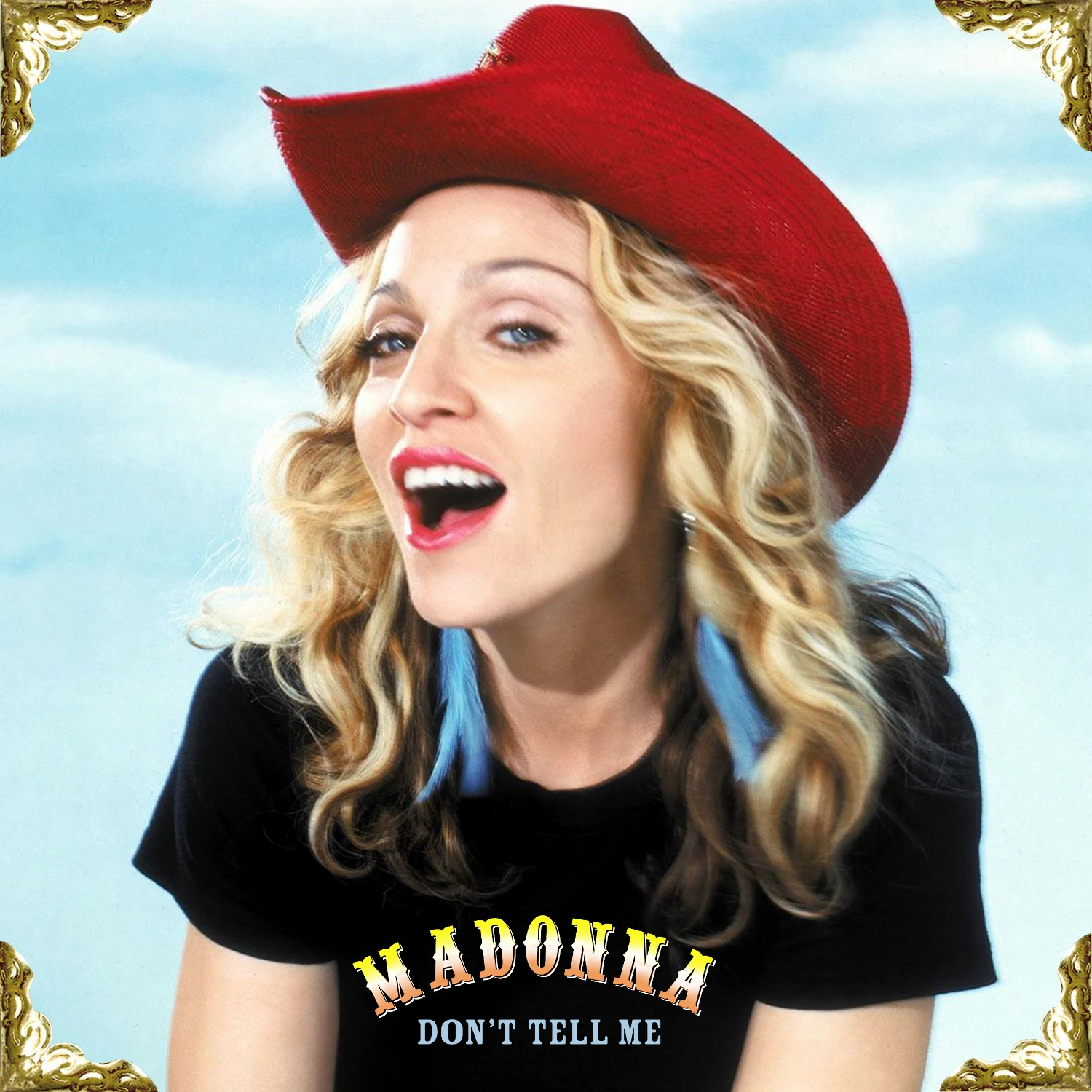
But I genuinely like Madonna a great deal, and I think she is an enormously underrated songwriter. If “Don’t Tell Me” alone is not sufficient evidence of that, then perhaps “Isaac” and a couple of other gems from her new album will make the case.
One final observation about Madonna: if you allow her to answer questions by email, what you get are clipped sentences and remarkably brief replies.
What immediately springs to Madonna’s mind when I say ‘DISCO’?
“Freedom. Community. Joy.”
When you look back at the evolution of your style, how much of it is planned and how much is accidental?
“It’s a kind of balance between the two, between what’s planned and what happens by accident. I think I lean more towards the latter, although I find it difficult to believe that things happen by accident. Let’s call it divine inspiration.”
What is the most important thing in your life after your family?
“The ability to survive.”
At what age did you begin to feel comfortable in your own skin, and why?
“A few years ago. It took me a long time to grow up, I know. It also took me a long time to stop being so affected by what people say or think, and to see the physical world for the illusion it really is.”
Could you confess a genuine secret to me?
“Yes. I pray every night before I go to sleep.”
Yes. I pray every night before I go to sleep.
Songs
About this text
Translated from the Italian by DrownedMadonna. Madonna’s words are English translations of the published Italian text, not her original words in English.
Last updated