Introduction: The revolution that didn’t announce itself
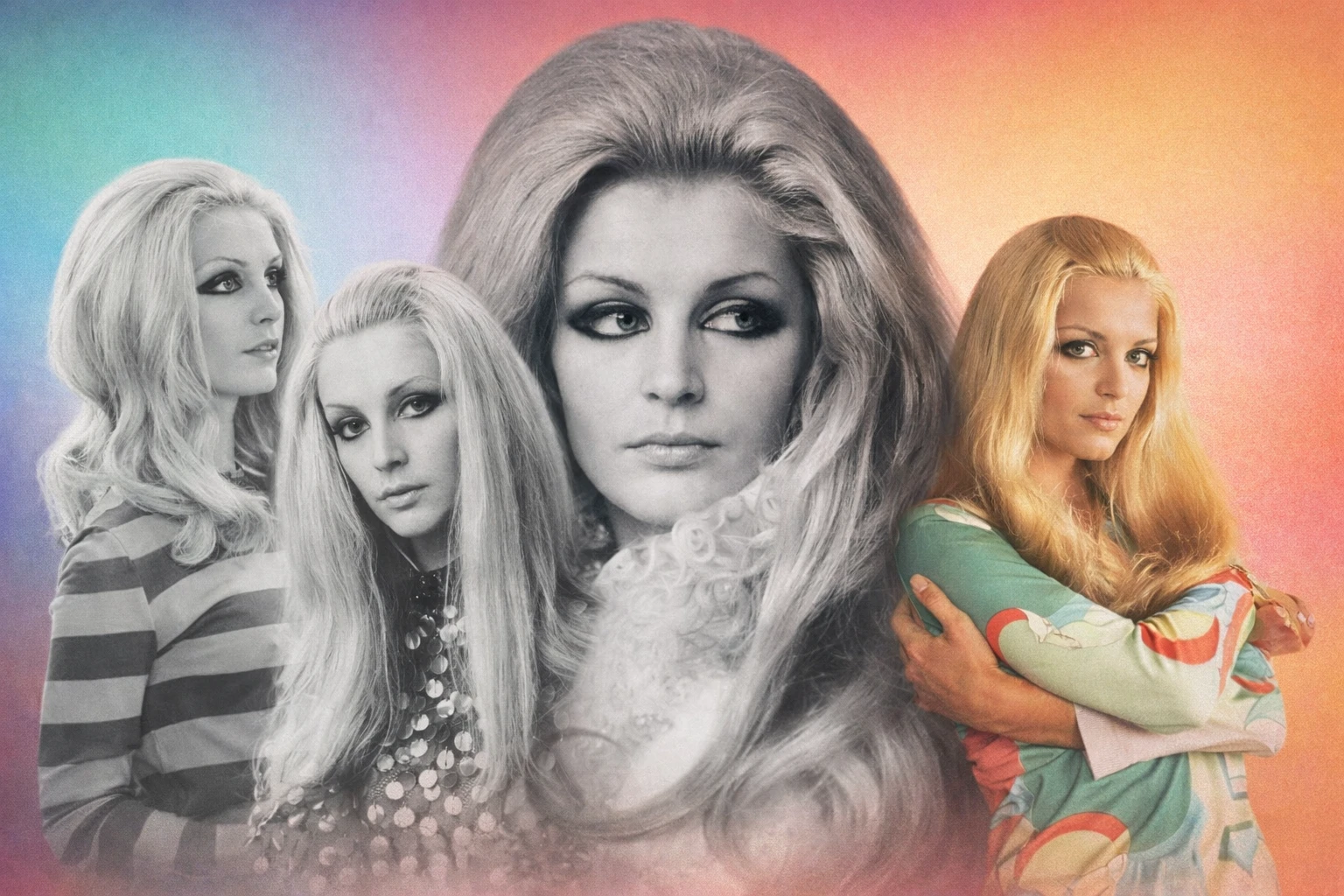
In Italian pop history, few names carry the same aura as Patty Pravo.
She is not just remembered for her voice or for a handful of iconic songs. She is remembered for the way she inhabited music—fully, unapologetically, on her own terms.
From the late 1960s forward, she became one of Europe’s most recognizable yet unconventional pop figures. Tracks like “La bambola”, “Pazza idea”, and “Pensiero stupendo” weren’t just chart successes. They were cultural flashpoints that redefined how desire, independence, and femininity could sound in a mainstream song.
That voice—deep, smoky, a true contralto—bore no resemblance to the bright, comforting tones that dominated female pop at the time. Her presence was detached, hypnotic, faintly dangerous. She never played the girl next door or the romantic heroine waiting to be rescued. She seemed to occupy a world entirely her own.
Across the decades, she reinvented herself constantly. Beat pop gave way to psychedelia, then sophisticated songwriting for adults. She refused to be pinned down, categorized, or frozen in time. She was never the safe choice—and that’s exactly where her power lived.
Yet for all her success and visibility, the true radicalism of what Patty Pravo was doing often went unrecognized in the moment. Sometimes the subversion was too subtle to name. Sometimes it hid inside ambiguity. Sometimes even Patty herself only understood later just how far a particular song had pushed.
To grasp why, you need to understand more than just the artist. You need to see the country, the television landscape, and the contradictions that made her possible.
Part One: The Ecosystem
1. Italy 1968-1978: The country that could host radical spectacle
When Patty Pravo rose to prominence, Italy was experiencing one of the most intense periods of social transformation in its modern history.
The late 1960s brought massive student revolts that, unlike in most European countries, quickly merged with organized labor movements. Universities and factory floors became allied fronts of resistance, culminating in the strike waves of 1969—the Hot Autumn. Everything was being renegotiated simultaneously: authority structures, working conditions, sexuality, youth culture, family dynamics, women’s roles.
But here’s what matters: Italy’s response to this upheaval was contradictory in ways that created unexpected cultural opportunities.
The same society that maintained strict codes around gender and sexuality could simultaneously elevate artists whose entire personas challenged those codes—because they did it spectacularly, because they made it art, because the system could absorb transgression when it arrived as performance rather than manifesto.
Take Renato Zero. Between 1972 and 1982, he didn’t just perform—he rewrote the rules. RAI’s own retrospective accounts describe this period as “intense and disruptive,” a decade when he fundamentally transformed what Italian music and television could contain. He mixed traditional songwriting with full theatrical spectacle and didn’t hide his gender fluidity or sexual ambiguity. He performed it openly, on national stages, in prime time.
In most countries, an artist like Renato Zero would’ve been marginalized, kept underground, maybe tolerated in certain club scenes. In Italy, he became a household name.
That cultural contradiction—regulation and spectacle, conservatism and experiment—is the exact ecosystem that made Patty Pravo possible.
2. The Piper Club: Where the codes were written
Before national television, there was the Piper Club in Rome.
The Piper opened on February 17, 1965, and was immediately recognized as more than a nightclub. It became a symbol of Italy’s beat and yé-yé moment—explicitly defined as a “phenomenon of costume,” worthy of sociological study. It functioned as a cultural engine where music, fashion, sexuality and youth identity fused into a new language.
This is where Patty Pravo comes from. Not as a visitor, but as someone native to that world.
She didn’t just perform at the Piper—she became synonymous with it. The press dubbed her “la ragazza del Piper” (The Piper Girl), a nickname that captured how completely she embodied that world’s codes. At seventeen, she had moved to Rome and began dancing and singing at the newly opened club. There, agent Alberigo Crocetta discovered her and secured her first contract with RCA Italiana.
Her look, her posture, her distant gaze, her controlled sensuality—all of it emerged from a culture where women were no longer required to perform sweetness or availability on demand. She looked like someone observing the world, not seeking its approval.
She carried that DNA directly into national television, where RAI’s production machine would transform it into something unprecedented.
3. RAI and Canzonissima: The broadcaster that censored and created in equal measure
Italian television in this era deserves its own examination because it was genuinely unique.
RAI operated under tight regulation. Political censorship was real and well-documented—the 1962 Canzonissima incident with Dario Fo and Franca Rame being a prime example. When Fo performed satirical sketches about workers’ rights and safety conditions, RAI fired him and his wife after seven episodes following parliamentary inquiries and press outrage.
Yet this same broadcaster was also one of the most creatively ambitious in Europe.
Canzonissima itself—broadcast from 1958 to 1975—became the synthesis and paradigm of Italian television variety. Running on Saturday nights (except the final two years), it was an immensely popular song competition tied to the national lottery that dominated Italian culture for nearly two decades. Millions of Italians organized their weekends around it. The show didn’t just present music—it created elaborate theatrical spectacles, turning singers into characters and performances into cultural events.
This was where Mina’s “Tintarella di Luna” became legendary in 1959-60 (despite finishing second), where major careers were launched, where pop music became national conversation.
And crucially, this was where boundaries around female representation could be tested—sometimes successfully, sometimes not.
In 1969, the Kessler twins showed their navels on Canzonissima without major incident. But when Raffaella Carrà did the same in 1970—performing the opening theme “Ma che musica maestro” with her midriff exposed—it became a cultural flashpoint. The difference? Carrà moved with frenetic energy, made every part of her body active. Her presence was dynamic rather than composed.
The following year, 1971, she performed “Tuca Tuca” with choreographer Enzo Paolo Turchi—a dance that was essentially “touch touch,” with sensual movements and physical contact that the Vatican newspaper L’Osservatore Romano condemned as too provocative. RAI initially pulled it. Only after Alberto Sordi demanded to perform the dance with her on air did it become acceptable, eventually transforming into a national phenomenon.
Carrà’s revolution parallels Patty Pravo’s in crucial ways: both brought sexual liberation into mainstream television not through confrontation but through style, elegance, and the creation of atmospheres that audiences absorbed before fully understanding them.
The system was contradictory: it could host genuinely daring content, then panic at its own audacity. It could be simultaneously curated and wild, moralistic and aesthetically fearless. Within that contradiction, the most subversive material was often the kind that didn’t announce itself as dangerous.
4. May 1969: When RAI built a prime-time special around Patty
Into this environment, Patty Pravo arrived with perfect timing.
On May 10, 1969, RAI broadcast Stasera Patty Pravo, a prime-time Saturday night special built entirely around her. The archival description is revealing: a showcase where she “shows herself, tells herself, and lets herself be heard.” Not “performs her songs.” The framing is “presents herself as identity.”
The production values tell you everything about how seriously television took this. Ninety musicians from the RAI Light Music Orchestra. Costumes by Corrado Colabucci. Choreography by Don Lurio. Direction by Antonello Falqui, one of the era’s most important TV directors.
The show moved from beat-era Piper energy into orchestral sophistication, positioning her across multiple registers—“seductive and rebellious, rock and classical.”
By 1969, she was already being read as more than a recording artist. She represented a new kind of femininity—not asking for approval, not performing sweetness, just existing with total self-possession in front of millions of viewers.
This is the foundation. Before she sang anything explicitly transgressive, she had already normalized a different way of being female in public.
This post is hosted on Instagram (Meta)
If you click “Accept and show post”, it loads from Instagram (Meta), which may collect data about you (such as your IP address) and set cookies. Privacy Policy
5. Patty on Canzonissima: Entering the mainstream
Patty’s relationship with Canzonissima deepened her reach into Italian households.
In autumn 1968, she performed “La bambola”, “Sentimento”, and “Tripoli 1969” on the show—bringing her Piper-born aesthetic directly into Saturday night family viewing. In autumn 1969, she returned with “Nel giardino dell’amore,” advancing to the second phase of the competition.
She appeared again in 1970 with “Per te” and “Non andare via” (her Italian adaptation of Jacques Brel’s “Ne me quitte pas”), and in 1971 with “Non ti bastavo più” and “Preghiera.”
These weren’t just performances—they were regular insertions of her particular brand of controlled, ambiguous femininity into the most watched program in the country. Week after week, millions of Italians absorbed her presence, her voice, her way of inhabiting songs without explanation or apology.
Canzonissima became one of the vehicles through which Patty Pravo normalized herself as a mainstream figure while carrying codes that would only later be fully understood.
Part Two: The Songs That Changed the Rules
6. “La bambola” (1968): Autonomy disguised as elegance
When Patty Pravo released “La bambola” in 1968, it sounded like a perfect pop single. Elegant melody. Immediate hook. Radio-ready.
But underneath the polish sat something radical: a woman declaring I am not an object. I am not something you pick up and discard when you’re done. I make the decisions here.
In a pop landscape still dominated by female passivity and romantic submission, this was extraordinary. Yet the song slipped into the mainstream without triggering obvious controversy—because the rebellion arrived wrapped in beauty, not confrontation.
The track became the second best-selling single in Italy that year, went to #1 for nine consecutive weeks, sold a million copies, and earned a gold disc. It charted internationally across Europe and South America.
Patty Pravo didn’t raise her voice. She simply normalized female autonomy as if it had always been there. The system didn’t get broken with noise. It got reshaped through elegant insistence.
This post is hosted on Instagram (Meta)
If you click “Accept and show post”, it loads from Instagram (Meta), which may collect data about you (such as your IP address) and set cookies. Privacy Policy
7. “Pazza idea” (1973): When female desire became the subject, not the object
By 1973, the transgression had become structural.
Released that year, “Pazza idea” is one of the clearest moments when Patty Pravo turned mainstream Italian pop into a vehicle for something culturally taboo: a woman owning her sexual desire and narrating it from inside her own consciousness.
What makes the song genuinely disruptive isn’t that it hints at erotic life—Italian pop had always trafficked in innuendo. The radical break is how it frames everything through female agency.
The lyric’s scandalous premise centers on a psychologically specific scenario: a woman having sex with one person while fantasizing about another. “To make love with him while thinking of you.”
This isn’t generic seduction or vague passion. It’s a sexually charged confession that places the woman’s desire, her fantasy, her interior life at the absolute center of the song. She is not the object of someone else’s longing. She is the subject of her own.
Critical analysis later described “Pazza idea” as fundamentally different from traditional female roles in Italian pop—the woman in love who resists temptation, the woman who yields to male pursuit. Instead, this is female erotic consciousness as the organizing principle of the record.
And crucially, she doesn’t perform that desire as guilt. There’s no moral lesson, no punishment, no redemption arc. The record simply holds desire as a fact—intense, persistent, complicated—without stepping back to reassure anyone.
This is what made the song audacious, what made some consider it morally questionable. It allowed a woman to occupy sexual imagination openly, on her own terms, without the usual narrative softening that pop music typically demanded from female voices.
Yet this is also where Patty Pravo’s quiet revolution becomes most visible. The lyric is bold, but it arrives wrapped in elegance. The delivery is through suggestion and atmosphere, not explicit description. That particular blend—psychological specificity inside refined pop form—allowed the song to travel through mainstream radio and television while still carrying its full charge.
There’s also an industry angle worth noting. The recording sessions took place in June 1973, and accounts suggest RCA’s leadership was acutely aware of the volatile climate surrounding Patty Pravo’s choices and image. The song’s impact was navigated within a system that understood exactly what was being released.
It’s a masterclass in strategic ambiguity. The song wasn’t censored because its radicalism was embedded in subtext. It required interpretation. It didn’t trigger the instant moral outrage that comes from literal statement.
8. “Pensiero stupendo” (1978): Mainstreaming the triangle
If “Pazza idea” normalized female desire as psychologically precise confession, “Pensiero stupendo” took the next step: mainstreaming the fantasy structure itself.
Released in 1978, the song is described plainly as “sensual and transgressive”—centered on a woman’s desire to realize a specific sexual fantasy: a ménage à trois with two women and one man.
Not vague seduction. Not generic passion. A concrete scenario that, in late-1970s Italy, carried genuine cultural risk. The key lyric—“lei fra noi” (“her between us”)—makes the structure unmistakable.
And crucially, the perspective is entirely hers—female desire, female imagination. Not male conquest. Not voyeuristic fantasy authored by someone else.
Critical analysis later identified the song as depicting love triangles, partner exchanges, intoxication, and what gets carefully described as “unusual” intimate acts. Both her vocal interpretation and her visual presentation during this period—what was called a “futurist and fetish” aesthetic with elaborate head ornamentation, dramatic makeup, daring necklines—were integral to how the song landed. The performances became events that some viewers found genuinely shocking.
But here’s what proves the mechanism worked: the song became a massive commercial success.
It entered the Italian charts at #10 on March 11, 1978. Climbed into the top five and stayed there for more than two months. Hit #1 for two weeks in April. By year’s end, it was the 9th best-selling single in the country.
This wasn’t niche provocation. This narrative of desire—triangulated, complex, authored by a woman—entered mass circulation, played on national radio, performed on television, bought by hundreds of thousands of people.
9. How the song found its interpreter
The creation story behind “Pensiero stupendo” shows how revolutionary material can emerge from inside the mainstream machinery itself.
RCA originally commissioned the track in 1977 while trying to break French singer Jeanne Mas into the Italian market. Her version didn’t land. Ennio Melis at RCA pivoted and offered it to Patty Pravo, who at that moment was between record deals after leaving Ricordi.
Recording happened in autumn 1977. The single dropped in January 1978.
This reveals something crucial: “Pensiero stupendo” becomes what it is because Patty Pravo performs it. Because her voice, her persona, her accumulated cultural authority can hold that lyric without it collapsing into either cheap provocation or moral panic. She elevates it into art.
The song proves Patty Pravo doesn’t just provoke for provocation’s sake. She makes the provocative mainstream—by wrapping it in enough aesthetic sophistication to pass through every cultural filter without triggering alarms.
10. The pattern: From interiority to fantasy structure
When you track these songs chronologically, you see deliberate escalation.
“La bambola” (1968) establishes autonomy—a woman refusing to be treated as object. Commercial phenomenon: #1 for nine weeks, million copies sold.
“Pazza idea” (1973) centers female erotic consciousness—her thoughts, her fantasies, her interior life during sex as legitimate pop subject matter. Controversial but successful.
“Pensiero stupendo” (1978) mainstreams the fantasy structure itself—triangles, partner exchanges—and makes it a year-end bestseller, 9th biggest single in Italy.
Each song pushes further. Each wraps its transgression in more sophisticated aesthetics. And each succeeds commercially, proving the method works.
This isn’t accident. It’s strategy—normalizing complexity first, then mainstreaming the fantasy structures themselves, always wrapped in enough refinement to move through the system.
Part Three: Television’s Contradictions and Strategic Ambiguity
11. How ambiguity became strategy
Many of Patty Pravo’s most radical songs were not censored—not because they were harmless, but because they were too ambiguous to be easily policed. Her lyrics didn’t explain themselves. They suggested, evoked, floated through interpretation.
Even she herself has spoken of only later understanding the full meaning of some texts. That’s not weakness—it’s the mark of an art form that works below the surface.
Historical accounts of censorship in this period reveal a consistent pattern: authorities reacted most aggressively to what was easily quotable, easily denounced, immediately transparent. But material with transgressive themes frequently circulated when coded in metaphor, suggestion, or stylish understatement.
“Pensiero stupendo” appears explicitly on historical lists of songs that “escaped” censorship during these years, grouped with other provocations that navigated the same cultural climate successfully.
The most subversive material sometimes isn’t blocked because authorities find it acceptable. It slips through because it can’t be reduced to a single condemning quote. It forces interpretation—so backlash arrives later, unevenly, after the song has already done its work.
Her revolution was not didactic. It was atmospheric.
12. “Stryx” (1978): When Italian TV staged taboo as prime-time spectacle
In autumn 1978—the same year “Pensiero stupendo” dominated the charts—RAI 2 broadcast something genuinely strange: Stryx.
Retrospective accounts describe it as a variety show built on esoteric imagery, occult aesthetics, and what gets called a volatile mix of “satanism and musical eroticism” that “broke the schemas of Italian television.”
The show featured international stars like Grace Jones and Amanda Lear alongside Italian performers, creating an atmosphere of deliberate sexual ambiguity and transgressive spectacle. Patty Pravo’s performances were central to its identity, part of what made it culturally volatile.
Only six episodes aired. Controversy killed it almost immediately.
But the show’s existence proves something essential about this moment: the broadcast system wasn’t monolithically conservative. It was contradictory, capable of hosting genuinely transgressive content and then panicking at what it had created.
Accounts built around interviews with co-author Carla Vistarini describe it as deliberate experimentation, an attempt to expand what variety television could contain. Stryx demonstrates that Italian television in this era operated in a state of productive tension—regulated but ambitious, moralistic but aesthetically fearless.
That contradiction created space for artists like Patty to work. Not because the system was permissive, but because it was spectacular enough to absorb provocation when it arrived as high-concept art.
Part Four: Recognition and Legacy
13. 1997: When Italy finally had the language to describe her
By the mid-1990s, Patty Pravo had become legend—but legends risk calcifying into nostalgia, into revival acts trading on past glory.
Sanremo 1997 is the moment she exploded that trajectory entirely.
She arrived with “…E dimmi che non vuoi morire,” and immediately the stakes were different. This wasn’t a heritage artist doing a victory lap. The song came with serious authorship credentials: lyrics by Vasco Rossi, music by Gaetano Curreri and Roberto Ferri. Major names attaching themselves to her return signaled this was a genuine artistic statement, not a sentimental gesture.
The performance didn’t treat her as a relic. It treated her as what she’d always been: an interpreter who could transform a lyric into a cultural moment through sheer force of presence and vocal intelligence.
14. Eighth place—and the two prizes that mattered more
Here’s the detail that reveals everything: Patty Pravo finished eighth out of twenty at Sanremo 1997.
Eighth.
And yet she walked away with two prizes that meant far more than the final ranking:
Critics’ Prize “Mia Martini” for the song itself.
Volare Prize for Best Music for Curreri and Ferri’s composition.
This is the “delayed recognition” mechanism playing out in real time. The popular vote rewards the immediate moment. The critics’ prize and the music award recognize structural quality—the thing that lasts, the work that people return to years later.
Contemporary lists of famous non-winning Sanremo entries consistently include “…E dimmi che non vuoi morire” as one of the tracks that defined that edition and continued resonating long after. Press coverage noted it was considered among the favorites, yet it only reached eighth place while capturing both major critical awards and performing strongly commercially afterward.
The gap between popular ranking and professional recognition tells you which judgment aged better.
15. What the song actually was: Existential transgression
“…E dimmi che non vuoi morire” isn’t transgressive in the same erotic register as “Pazza idea” or “Pensiero stupendo.” But it’s transgressive in a deeper, more existential Patty Pravo sense.
The song stages a relationship with life, love, and self-destruction that’s too psychologically raw to be contained by conventional romance. It moves between the desire to change your life and the refusal to be changed by circumstance. Between intimacy that swings from tenderness into provocation. The title itself—“tell me you don’t want to die”—functions as existential demand rather than romantic decoration.
This is why it worked so powerfully as a return. It reconnected her to the exact artistic mechanism she’d wielded in the 1970s: taking material that could collapse into melodrama in someone else’s voice, and transforming it into lived emotional theater.
The comeback demonstrated conclusively that Patty’s power was never about trend or timing. It was always about interpretation, identity, and the atmospheric transformation of material.
Conclusion: The Revolution That Lasted
16. The complete architecture
Now you can see the pattern across three decades.
Italy’s paradoxical cultural stage — The country that experienced the Hot Autumn of 1969 created a television ecosystem capable of hosting radical spectacle. RAI censored Dario Fo in 1962 for workers’ rights satire, yet by 1970 allowed Raffaella Carrà’s navel and “Tuca Tuca” to scandalize and then captivate the nation. Canzonissima, running from 1958 to 1975, became the platform where millions of Italians absorbed new codes of femininity and sexuality week after week. The system hosted Renato Zero’s gender fluidity as prime-time entertainment and briefly aired the occult eroticism of Stryx in 1978. These contradictions—regulation and spectacle, conservatism and experiment—opened space for genuinely radical work.
Patty’s method: aestheticized transgression — She didn’t arrive with manifestos. She embedded female autonomy and erotic interiority into elegance. “La bambola” (1968) normalized autonomy wrapped in beauty, selling a million copies. “Pazza idea” (1973) centered female sexual consciousness as psychological confession. “Pensiero stupendo” (1978) mainstreamed triangulated desire and fantasy structures, hitting #1 and becoming the year’s 9th best-selling single. All delivered through atmosphere and interpretation rather than explicit declaration, allowing transgressive content to circulate widely before being fully decoded.
Vehicles of normalization — Regular appearances on Canzonissima from 1968-1971 inserted her aesthetic directly into family viewing. The 1969 RAI special Stasera Patty Pravo presented her as complete artistic identity with full orchestral production. By appearing consistently on the nation’s most-watched program, she made her presence feel inevitable rather than shocking.
Critical recognition across time — When she returned in 1997 with “…E dimmi che non vuoi morire,” she finished eighth in the popular vote but won both the Critics’ Prize and the award for Best Music. The gap proved what mattered for longevity: not the immediate moment, but the lasting quality that people return to years later.
17. Why the revolution wasn’t immediately obvious
Patty Pravo’s cultural impact wasn’t always recognized in real time because her method was atmospherization, not declaration.
In 1969, RAI already framed her as a complete artistic figure spanning multiple registers—Piper rebellion and classical refinement existing simultaneously. She normalized a different kind of female presence before singing anything explicitly transgressive.
By the 1970s, the songs that later get identified as structurally transgressive—depicting female erotic interiority, triangulated desire, fantasy scenarios—were also commercial phenomena. These ideas entered mass culture not as scandals but as sophisticated pop records that people loved, bought, and absorbed before fully understanding their implications.
Meanwhile, the television system itself experimented at the edges with programs like Stryx and transformed Raffaella Carrà’s sexual liberation into national conversation, demonstrating that the broadcast environment could host taboo aesthetics while maintaining institutional claims to moral authority. The contradiction was productive.
The delayed recognition isn’t a flaw in the narrative. It’s the mechanism itself.
When you aestheticize transgression skillfully enough, it circulates first and gets decoded later. By the time people fully register what happened, the culture has already absorbed it. The work is done.
18. What made it possible: The unrepeatable moment
This could only have happened in this specific Italy, at this specific moment.
A country experiencing massive social transformation while maintaining strict cultural codes. A public broadcaster that censored political content but created spectacular television around pop figures. Canzonissima as a national Saturday night ritual where boundaries could be tested in front of millions. An industry willing to take calculated risks with transgressive material when it arrived wrapped in sophistication. A Piper Club culture that fused music with identity politics before television scaled it nationally.
Raffaella Carrà and Patty Pravo worked parallel revolutions—Carrà through exposed midriffs and the scandalous physicality of “Tuca Tuca,” Patty through voice, atmosphere, and the aestheticization of female desire. Both understood that the most effective revolution doesn’t look like revolution. It looks like elegance, like atmosphere, like something that was always meant to be there.
And in the center of all these contradictions: an artist who understood instinctively that you don’t force a culture to confront uncomfortable truths through shock tactics. You make those truths sound so inevitable, so refined, that they enter the culture almost unnoticed—until suddenly they’re everywhere, normalized, part of how people understand desire and selfhood.
19. The lasting impact
Patty Pravo’s revolution was never just about scandal, and it was never confined to a single decade.
It was about something rarer and more durable: the ability to bring ambiguity, desire, and emotional danger into the mainstream without cheapening any of it.
In the 1960s she entered television carrying the codes of nocturnal youth culture into Saturday night living rooms, appearing regularly on Canzonissima alongside the era’s biggest stars. In the 1970s she turned female erotic consciousness—the interior landscape of female fantasy and desire—into legitimate pop language through a succession of increasingly bold songs that became commercial successes. “La bambola” sold a million copies. “Pensiero stupendo” hit #1 and ended the year as a bestseller.
In 1997 she returned to Sanremo not as memory but as contemporary force, collecting the prizes that recognize lasting artistic value with a song that refused easy consolation.
Her innovation wasn’t always immediately obvious because it didn’t arrive as headline or manifesto. It arrived as atmosphere—something you felt before you could name it, something that changed the room permanently once you’d heard it.
She didn’t shout. She normalized autonomy.
She didn’t confront. She made transgression sound sophisticated.
She didn’t break the system. She bent it from within until it could no longer return to its original shape.
By the time people fully understood what she’d done, the culture had already absorbed it. Female desire as legitimate subject matter. Sexual complexity as pop content. Autonomy as given rather than demand.
That’s not a quiet revolution.
That’s the only kind that actually lasts.