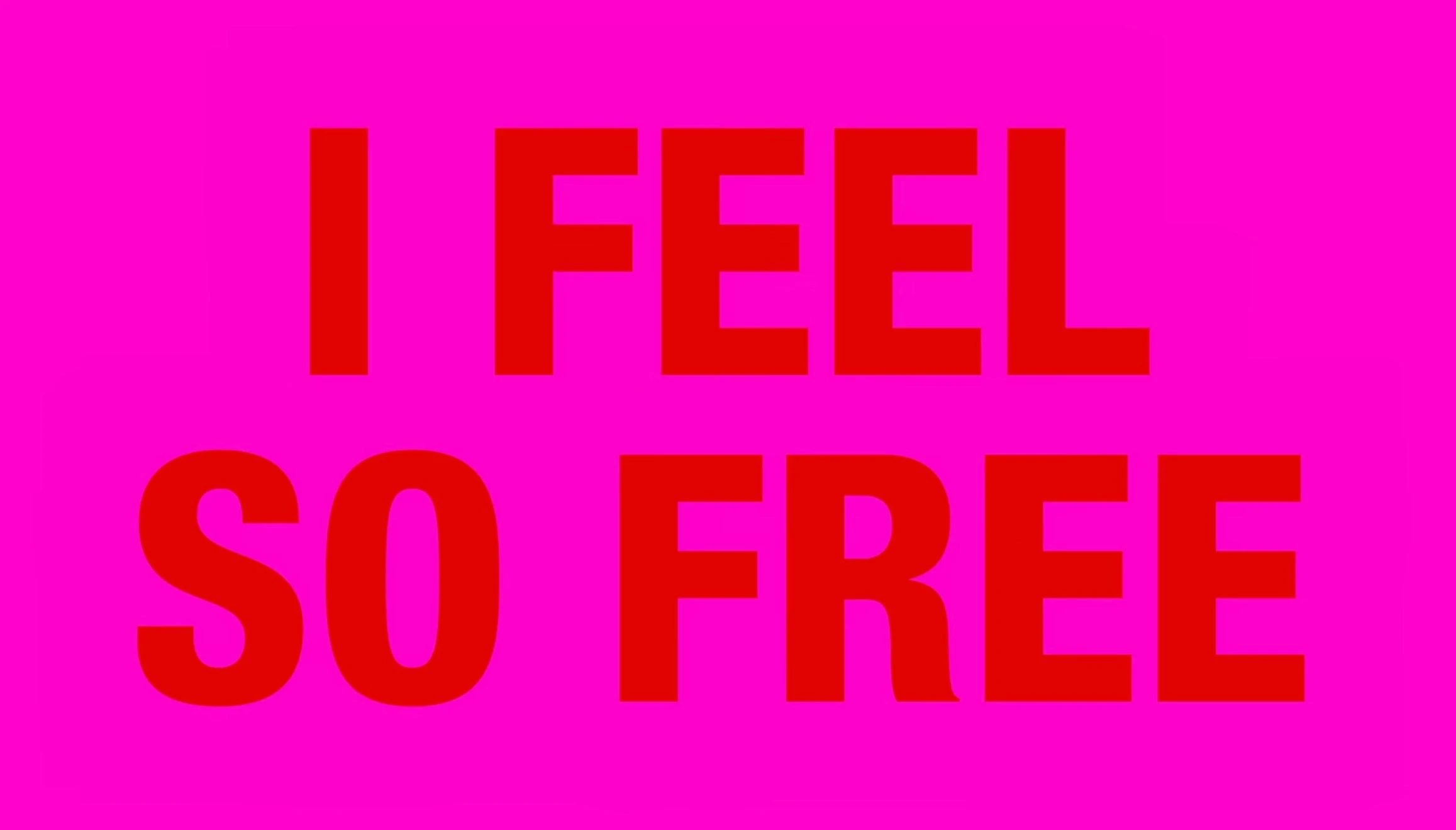
It all started with a rebrand.
On April 14, Madonna quietly redesigned her official website — stripping it back, replacing everything with a new visual identity. No announcement, no caption. Just a shift in the air. Fans noticed immediately.
The following day, the full picture emerged. On Instagram, Madonna confirmed what many had been waiting years to hear: Confessions II — the sequel to her landmark 2005 album Confessions on a Dance Floor — would be released on July 3, 2026, via Warner Records. The cover art, shot by photographer Rafael Pavarotti in a palette of pink and lilac, landed alongside the announcement. Cities across Europe responded in kind: London’s East End, from Brick Lane outward, and the streets of Paris were plastered with posters almost overnight.
Along with the album announcement came a short teaser — roughly a minute of audio — of “I Feel So Free”, the opening track of Confessions II. It was enough to send the internet into a tailspin. Fans immediately caught something in that brief excerpt: a male spoken voice, unmistakably sampled, saying “Oh, by the way, it all started like this.” The source was identified within hours — more on that shortly.
Then came the rollout. Before the track reached streaming platforms, Madonna gave the world premiere exclusively to iHeartRadio’s Pride Radio, where it aired at 10am ET on April 17 and then on the hour, every hour, throughout the day. A deliberate choice — Pride Radio, Madonna, house music: three things that have always belonged together. Simultaneously, the track was serviced to select DJs and clubs ahead of the weekend, so that “I Feel So Free” could be heard where it was always intended to be heard first: on a dancefloor, loud, in the dark.
Then came Coachella.
On the night of April 18, Madonna appeared as a surprise guest during Sabrina Carpenter’s headlining set — performing Vogue and Like a Prayer together, before the two unveiled their brand new collaboration “Bring Your Love” to a stunned crowd. Immediately after the performance, “I Feel So Free” was released globally on all streaming platforms and on YouTube as an official visualiser. The Confessions II era had officially begun.
Not the lead single. Something better.
It’s worth being clear about what “I Feel So Free” is — and what it isn’t. Madonna’s team has been explicit: this is not the lead single. A lead single is still forthcoming. What “I Feel So Free” represents is something arguably more interesting — a first taste, a manifesto, an opening statement. It is track one of the album: the door you walk through.
And that framing matters, because Madonna and Stuart Price were very deliberate about what this record needed to say from its very first seconds. In the press release accompanying the announcement, the two shared what they described as their creative manifesto for Confessions II.
“We must dance, celebrate, and pray with our bodies. These are things that we’ve been doing for thousands of years — they really are spiritual practices. After all, the dance floor is a ritualistic space. It’s a place where you connect — with your wounds, with your fragility. To rave is an art. Sound, light, and vibration reshape our perceptions, pulling us into a trance-like state. The repetition of the bass — we don’t just hear it, we feel it. Altering our consciousness and dissolving ego and time.”
The sound: where Chicago house meets Italo soul
Produced by Madonna and Stuart Price — with additional production by Arca — “I Feel So Free” is a deep house track built around a relentless four-on-the-floor pulse and layered synths that feel simultaneously vintage and untethered from any specific era. But it is not purely one thing. The critical conversation around the track has pointed in two directions at once — and both are correct.
The first is Chicago house: the lineage of Lil Louis, the raw underground dancefloor, the hypnotic repetition of the beat as ritual. The second is something more European, more spectral — and here the name that keeps surfacing is Giorgio Moroder. When the track first hit Brazilian radio, the immediate reaction was that it sounded like Donna Summer’s legendary 70s producer had put it together. Stereogum went further, describing it explicitly as being built on “a slamming, bubbling Italo-house beat.”
This is not incidental. Moroder — born in the Italian Alps, based in Munich — essentially invented the template that connects disco to house: the motorik pulse, the synthesiser as spiritual instrument, the voice suspended above an infinite groove. His productions for Donna Summer, above all “I Feel Love” (1977), created the sonic architecture that house music would build upon a decade later. That “I Feel So Free” carries both his spirit and that of Chicago’s dancefloors is not a contradiction — it is the full history of electronic dance music compressed into a single track. The Chicago house DNA and the Moroder/Italo soul are, at root, the same impulse: the body as antenna, the beat as prayer.
Stereogum noted that the track “sounds like Madonna being herself, rather than trying to chase whatever current pop trend has caught her eye.” The Guardian described it as “exceptionally well made, very obviously the work of people who genuinely understand and love house music” — structured like an underground record, with no conventional chorus and none of the attention-grabbing bombast of EDM. The Telegraph called it “an old-school banger” and “a searing love letter to Studio 54-style dancefloor escapism” — awarding it four stars and declaring Madonna “back to her imperious best.”
The presence of Arca — Alejandra Ghersi, the Venezuelan avant-garde producer with credits on albums by Björk, Kanye West and FKA Twigs — is one of the most intriguing creative decisions on the record. Her connection to Madonna runs deeper than a production credit. Arca has spoken openly about Madonna’s foundational influence: “I don’t know if I can overstate how major Madonna’s music and persona were in my household.” That this lifelong admiration has now materialised into an actual collaboration — on an album explicitly built around the spiritual power of the dancefloor, a space Arca has called her own “home” — feels like more than coincidence. It feels like completion.
The DNA: Lil Louis and the birth of house
At the centre of “I Feel So Free” is one of the most knowing and beautiful sample choices in Madonna’s entire catalogue.
The track carries the DNA of “French Kiss” by Lil Louis & The World — born Marvin Louis Burns on May 13, 1962 in Chicago — one of the most iconic and radical records ever made. Released in 1989 on Epic/FFRR Records, “French Kiss” is widely regarded as a foundational text of house music: ranked in Rolling Stone’s 20 Best Chicago House Records and by Time Out among the greatest house tracks ever recorded. Originally an instrumental built on a single note — F natural — it became famous for its extraordinary structure: the tempo gradually slowing to a complete stop, marked by unmistakable female moans, before rebuilding and surging forward again. Those moans became the track’s signature — erotic, hypnotic, and unlike anything that had come before.
The connection between “French Kiss” and Madonna is not new. Its influence was already audible in “Future Lovers”, one of the most iconic tracks of the original Confessions on a Dance Floor in 2005. Now, twenty-one years later, Madonna reaches back to that same well — and this time she goes further. “I Feel So Free” contains not just the sonic spirit of “French Kiss” but two direct vocal extracts from the original recording, both clearly audible and both visible in the official visualiser:
“Oh, by the way, it all started like this”
“So, how’s your evening so far?”
These are not interpolations. These are the actual voices from 1989, lifted and placed at the gateway of Madonna’s 2026 album — as if Lil Louis himself is opening the door and welcoming you in. And “I Feel So Free” also carries the moans that made “French Kiss” legendary: present in the new track as both homage and echo, the sonic signature of a song that helped invent the world Madonna is returning to.
That Marvin Burns — Lil Louis — appears in the songwriting credits alongside Madonna and Stuart Price is therefore no formality. He is a genuine co-author of this moment.
The lyrics: what everyone hears, and what Madonna is really saying
On the surface, “I Feel So Free” is immediately legible. It is a song about the dancefloor as sanctuary — a place where someone guarded, someone who struggles to trust, someone who moves through the world wearing masks, can finally let go. Anyone who has ever lost themselves in music, in a crowd, in movement, will recognise this feeling without needing any further explanation. That directness is part of what makes it work.
But for those who know Madonna’s relationship with Kabbalah — the mystical tradition she has studied seriously for decades, and which has threaded through her work from Ray of Light to Confessions on a Dance Floor to Madame X — the lyrics of “I Feel So Free” open onto a second, deeper level of meaning. Not instead of the first reading: beneath it, and entirely consistent with it.
Because what Madonna is describing, phrase by phrase, is not just the psychology of the dancefloor. It is the Kabbalistic map of spiritual liberation. And the two are, in this tradition, the same thing.
There is a place where the ego goes to die. Where you stop being a name, a face, a set of wounds and defences and unanswered questions. Where the bass replaces thought, the crowd replaces loneliness, and something — you couldn’t call it anything but freedom — moves through you without asking permission.
For centuries, human beings built temples for exactly that feeling. They lit candles, chanted in unison, gathered in consecrated spaces so that the divine presence could descend among them. They called it sacred. They called it worship. They called it prayer.
Madonna calls it the dancefloor.
In “I Feel So Free”, she has written a song that maps the dancefloor onto the temple, beat for beat. The crowd is the sacred congregation. The music is the prayer. The bass moving through your body is the channel through which the light travels. And the freedom that hits you somewhere around the second chorus — the freedom you cannot explain and cannot hold onto, but also cannot deny — that is what Kabbalah calls Cherut: liberation not from the world, but from yourself.
“The dancefloor is the temple. The music is the prayer. The crowd is the minyan. The freedom is the redemption.”
The song traces this journey step by step:
Lyric What it means The Kabbalistic layer “I like to hide in the shadows” Shyness, self-protection Tzimtzum — concealment that precedes revelation “Create a new Persona” The masks we wear Klipot — the false shells obscuring the true self “I can’t trust people” Vulnerability, isolation The ego closed in on itself “Safety in numbers” The comfort of the crowd Minyan — the sacred collective “I feel so free” Release, liberation Cherut — freedom from the ego “FREEEEeeeEEEE” Pure feeling beyond words Dissolution — union with the Light.
Now let’s read it line by line.
“Sometimes I just like to hide in the shadows / Create a new Persona / A different identity / I can be whoever I wanna be.”
“Create a new Persona. A different identity.”
“Honestly, I wish I could be like other people / And just not care.”
“But out here — on the dance floor — I Feel So Free.”
“It’s really hard for me to trust people / Can you blame me? / I never know why people like me / That’s why I like to go dancing / Safety in numbers.”
This is the philosophical and spiritual centre of the entire song. “Safety in numbers” reads on the surface as a familiar English idiom — there is protection in a crowd. And psychologically, it holds: the anonymity of the dancefloor offers shelter to someone who cannot trust individual relationships. But the Kabbalistic resonance is far more precise. The Hebrew word מניין (minyan) means literally “number” or “count” — and refers to the minimum quorum required for communal prayer. The minyan is not an administrative rule: it is spiritual architecture. The teaching is that certain frequencies of divine presence — the Shekhinah — can only descend into a space held by a collective. The individual, however devoted, cannot access them alone. There is, in the deepest sense of the tradition, safety in numbers.
Madonna is identifying the dancefloor as a minyan — a sacred gathering in which the individual ego is held, dissolved, and transformed by the collective. What cannot be reached alone becomes possible together.
“It’s dangerous with just one person. That’s not a nice feeling.”
“But out here on the dance floor — I feel so free. I can’t explain.”
And then, at the very end, that final release — “FREEEEeeeEEEE” — the voice stretching beyond its own limits, beyond syntax, beyond meaning. Not a lyric anymore. A sound. The sound of the ego dissolving. The sound of the Shekhinah descending into the room.
Madonna has written a complete Kabbalistic map of spiritual liberation — and hidden it inside a five-minute house track that will sound, to most of the world, like a very good reason to dance. Both things are equally true. That is precisely the point.
This is what Confessions II is, from its very first seconds: not a dance album with spiritual undertones, but a spiritual work that happens to move your body. Madonna and Stuart Price said as much in their manifesto. “I Feel So Free” proves they meant every word.