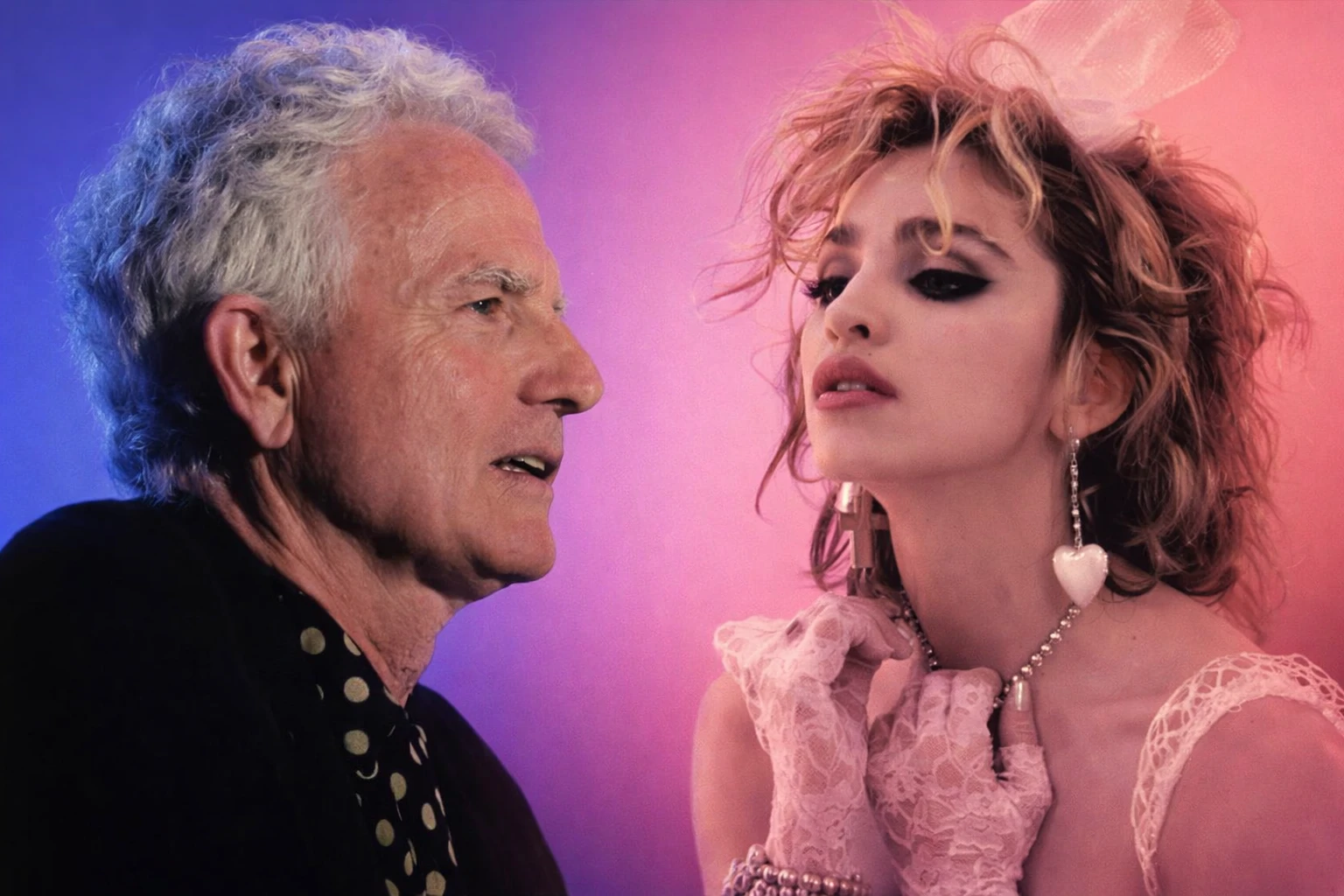
Billy Steinberg, the songwriter behind “Like a Virgin” and some of the most iconic pop hits of the 1980s, died on Monday, February 16, 2026, in Los Angeles after a long battle with cancer. He was 74 years old, just ten days short of his 76th birthday. The news was confirmed by his attorney, Laurie Soriano, to Billboard.
For Madonna fans, Billy Steinberg’s name is forever tied to the song that transformed a promising young artist into a global superstar. “Like a Virgin” wasn’t just Madonna’s first number one on the Billboard Hot 100 — where it stayed at the top for six weeks — it was the song that redefined pop music in the 1980s. In 2024, Billboard ranked it as the biggest hit of Madonna’s entire career.
We had the privilege of interviewing Billy Steinberg back in 2010, and his words about Madonna, the song, and the creative process behind it remain as vivid and insightful as ever. Much of what follows draws from that conversation.
“I don’t think that anyone before, during or after Madonna could have delivered ‘Like A Virgin’ with equal impact. She had the perfect voice and the perfect image.”
How “Like a Virgin” Was Born
The story of “Like a Virgin” begins in the most personal way imaginable. In 1983, Steinberg was coming out of a difficult relationship and had just met someone new who made everything feel fresh again. As he told us: “I wrote the lyric to ‘Like A Virgin’ while sitting in my pickup truck in my family’s vineyard in Coachella, California.”
His father was a farmer, growing table grapes in the Coachella Valley — a world far removed from the pop charts. But the words that came to Steinberg that day would change music history.
“‘Like A Virgin’ was written in 1983. The lyrics were written before the music,” Steinberg explained. “Because the first verse lyric starts out on a serious note, Tom’s first inclination was to approach it as a ballad. Then, when he arrived at the chorus, the ballad approach sounded ridiculous. It was out of frustration that Tom started to play the bass line and sing falsetto. As soon as I heard it, I said, ‘That’s it!’”
The demo was simple — recorded on an 8-track system at Tom Kelly’s home studio. “It is a simple demo with Tom on synthesizer and lead vocals. I sang a few ‘atmospheric’ backing vocals, including the ‘hey!’ after the title. We used a Linn drum pattern,” Steinberg recalled.
He and Kelly knew they had something special. “Tom and I were very happy with the song after we finished it. We knew we had something unique. Musically, it was inspired by Motown, ie: Holland Dozier & Holland’s ‘I Can’t Help Myself’, but lyrically it was very cutting edge. We felt the song could be a hit if there wasn’t too much resistance to the bold lyric.”
But finding the right artist proved difficult. “Tom and I never tried to write songs with particular artists in mind. So, when we wrote ‘Like A Virgin’ we were just having fun. After the song was completed, we realized it would be difficult to cast. There weren’t many artists in the early eighties who could sing it.”
Multiple A&R executives turned it down — everyone agreed the song was catchy, but thought the title was too bizarre and wouldn’t suit any artist. Then fate intervened.
“Tom and I had a meeting with Warner Brothers A&R man Michael Ostin,” Steinberg told us. “I don’t think that before the meeting we had put ‘Like A Virgin’ and Madonna together in our minds. I knew of Madonna because my girlfriend at the time was an aerobics instructor and she used Madonna’s ‘Burning Up’. This meeting occurred before the success of ‘Borderline’ or ‘Lucky Star’. After playing several other song demos, we played ‘Like A Virgin’. Michael loved it immediately and suggested it would be right for Madonna.”
Madonna’s management asked for a share of the publishing, but Steinberg and Kelly refused, confident she wouldn’t drop the song. They were right.
Madonna’s Instinct: Choosing “Like a Virgin” Over Everyone’s Objections
Madonna instantly loved the song and was adamant it would be the first single and the title of her second album. But she was practically alone in that conviction. Producer Nile Rodgers wasn’t initially sold on the track at all. According to author Fred Bronson, Rodgers didn’t even want Madonna to record “Like a Virgin,” feeling the hook wasn’t strong enough. His first reaction, as he later admitted, was blunt: “This is really queer.” But after hearing the demo, something shifted — he couldn’t get it out of his head for four days and eventually came around, reasoning that if a song is that catchy, it must have something.
Even after recording it, though, Rodgers remained convinced that “Material Girl” was the stronger choice for the lead single. As he told Q magazine: “I thought Material Girl was the best song to lead with.” He later elaborated to the Big Issue: “I thought that ‘Material Girl’ was much better than ‘Like A Virgin.’ As a matter of fact I thought that every song on that Like A Virgin album was better than the single.”
Madonna saw it differently. She told Rodgers something he didn’t fully grasp at the time: that for a girl or a woman, losing your virginity is a huge, defining experience — and that in this case, the message was bigger and more powerful than the groove. Rodgers, by his own admission, came from a club world where the groove mattered more than the lyric. But Madonna was steadfast and unwavering.
“Like A Virgin was one of those historic rock and roll decisions, where only Madonna believed in that song to the depth that she believed in it,” Rodgers later acknowledged. “I was going for Material Girl, I’m a club guy. I don’t come from a world where the lyric is more important than the groove, I don’t get that and she stuck to her guns, she was steadfast and unwavering and every argument I could throw at her, every argument the record company could throw at her… she knew.”
Rodgers reminded himself that it was ultimately her decision — it was her name on the album cover, after all. And Madonna’s instinct proved spectacularly right. “Like a Virgin” became her first number one, spending six weeks at the top. “Material Girl,” released as the second single, peaked at number two. The album went on to sell over 21 million copies worldwide — the biggest-selling album of Rodgers’ entire career.
“I was shocked at how well it did,” Rodgers admitted. “All of them were basically because ‘Like A Virgin’ was such a strong lead single. I would never have thought that in a million years.”
It was, in hindsight, one of the earliest and most striking demonstrations of Madonna’s extraordinary instinct for understanding what her audience needed — an instinct that would define her career for decades to come.
Madonna and the Demo
What struck Steinberg most was how closely Madonna studied their demo when she recorded the song with Nile Rodgers at Power Station Studios in New York. Steinberg and Kelly were not involved in the recording sessions, and only heard the finished version when Michael Ostin gave them a copy.
“Madonna’s recording of ‘Like A Virgin’ is almost exactly like our original demo,” Steinberg told us. “Madonna copied all of Tom’s vocal inflections and ad libs right to the end of our demo. Nile Rodgers’ main contribution was the live bass and drums. Other than that, she followed the map of our demo.”
In a separate interview, Steinberg elaborated further: “Even as our demo faded out, on the fade you could hear Tom saying, ‘When your heart beats, and you hold me, and you love me…’ Her record ends with the exact same little ad-libs that our demo did, so Madonna must have listened to it very, very carefully and liked what we’d done. It rarely happens that someone studies your demo so carefully that they even use all those little details.”
That VMAs Performance
The song was released on October 31, 1984, as the lead single from Madonna’s second album. The music video, shot in Venice and directed by Mary Lambert, received seven MTV nominations — though Steinberg had mixed feelings about it. “When I first saw the video for ‘Like A Virgin’, I thought the Venice, Italy thing was silly. I couldn’t see how it related to the song. Also, the gondola and the lion seemed odd,” he admitted. “I wouldn’t say it’s a great video, but it is exotic and it caught people’s attention.”
But it was the live performance at the inaugural MTV Video Music Awards in September 1984 that turned the song into an indelible pop culture moment. Madonna descended from a giant wedding cake in a white bustier and “Boy Toy” belt, then rolled around the stage of Radio City Music Hall. “Like A Virgin” hadn’t even been released yet.
“Her performance took the world by surprise. It was so audacious,” Steinberg recalled. “At first, Tom and I were worried that it was unflattering of Madonna and would affect the performance of the song. The camera followed her as she rolled around the stage. It only seemed to increase the public’s insatiable interest in her.”
And when the single hit number one? “When ‘Like a Virgin’ reached #1 and stayed there for 6 weeks, Tom and I were ecstatic. It was a dream come true.”
Steinberg was also thrilled that the song became the album title: “I was thrilled that ‘Like A Virgin’ was chosen as the title of the album. I loved the photo they selected for the cover.”
No One Else Could Have Done It
When we asked Steinberg whether anyone else could have delivered the song with the same impact — Britney Spears, Christina Aguilera, or any of the pop stars who came after — his answer was unequivocal:
“I don’t think that anyone before, during or after Madonna could have delivered ‘Like A Virgin’ with equal impact. She had the perfect voice and the perfect image.”
He was also emphatic in defending Madonna against her critics: “People seriously underrate Madonna’s songwriting talent. She co-writes most of her hits, including wonderful songs like ‘Like A Prayer’, ‘Live To Tell’ and ‘Music’. It is my understanding that she writes the lyrics and the melody topline on the songs she co-writes. I think that most of her musical collaborators provide the musical track. She is a great songwriter. This is sadly often overlooked.”
And on the subject of Madonna’s voice — a perennial topic of debate — Steinberg offered a beautiful analogy: “I think Madonna is a classic pop singer. Her voice is also underrated. Cyndi Lauper’s voice is more powerful, but Madonna’s is perfect for pop. To compare them as singers is like comparing Diana Ross to Aretha Franklin. Aretha, the more powerful singer, never could have delivered the perfect vocals on all the Holland, Dozier & Holland songs for the Supremes.”
When asked about Cyndi Lauper specifically and whether she could have pulled off “Like a Virgin,” Steinberg was clear: “I don’t think that Cyndi Lauper could have delivered ‘Like A Virgin’ as effectively as Madonna did. At the time, Cyndi’s image was more artsy. Madonna’s image was more blatantly sexy. Cyndi’s music had more rock influences. Madonna’s music was more ‘dance’. ‘Like A Virgin’ was influenced by Motown Soul. It worked better for Madonna. And, crucially, it was a match made in heaven for a girl named ‘Madonna’ to sing a song with the word ‘virgin’ in the title.”
“People seriously underrate Madonna’s songwriting talent. She co-writes most of her hits, including wonderful songs like ‘Like A Prayer’, ‘Live To Tell’ and ‘Music’. She is a great songwriter. This is sadly often overlooked.”
Meeting Madonna
Despite writing her biggest hit, Steinberg didn’t actually meet Madonna until several years after the song became a hit. He and Kelly had tried to write a follow-up for her, but never heard back. The encounter finally happened at a party for manager Freddie DeMann’s 50th birthday. Steinberg and Kelly were on a terrace talking with Stephen Bray, who had co-written “Into the Groove” with Madonna, when they spotted her walking toward them with her then-boyfriend Warren Beatty in tow.
“Stephen says, ‘Madonna, this is Billy Steinberg and Tom Kelly — they wrote Like a Virgin.’ I was trembling and said, ‘Madonna, I’ve wanted to meet you for so long!’” Steinberg recalled. “And she said, ‘Well, now you did.’ And with that, she grabbed Warren and walked off. Tom laughed his head off. I was a little insulted and my feelings were hurt, but it makes for a good story.”
Steinberg always wished he could have worked with Madonna directly. “I have always wanted to write a song with Madonna,” he told us. “Tom and I tried to make that connection after ‘Like A Virgin’ was a hit, but, apparently, she wasn’t interested. I was jealous when my friend, Rick Nowels, got to write with her.”
A Legendary Career
Born on February 26, 1950, in Fresno, California, and raised in Palm Springs, William Endfield Steinberg attended Bard College in New York’s Hudson Valley before pursuing a career as frontman of the band Billy Thermal. His breakthrough came when Linda Ronstadt recorded his song “How Do I Make You” in 1980, taking it to No. 10 on the Hot 100. It was around that time that Steinberg began his partnership with Tom Kelly — a collaboration that would produce some of the most memorable pop songs ever written.
Their method was consistent: Steinberg wrote the lyrics, Kelly wrote the music. Together, they achieved five number one hits on the Billboard Hot 100:
- “Like a Virgin” — Madonna (1984) — 6 weeks at #1
- “True Colors” — Cyndi Lauper (1986)
- “Alone” — Heart (1987)
- “So Emotional” — Whitney Houston (1987)
- “Eternal Flame” — The Bangles (1989, co-written with Susanna Hoffs)
Beyond those chart-toppers, the duo wrote “I Drove All Night” (recorded by Roy Orbison and later Cyndi Lauper), “I Touch Myself” (Divinyls), “I’ll Stand by You” (The Pretenders), “In Your Room” (The Bangles), and “Sex as a Weapon” (Pat Benatar), among many others.
When we asked Steinberg to pick a favorite, he couldn’t: “I can’t say I have one favorite. I like different ones for different reasons. ‘Like A Virgin’ and the Divinyls’ ‘I Touch Myself’ had cutting edge impact. ‘Eternal Flame’ is a beautiful melody and reminds me of a Beatles song. ‘I Drove All Night’ is dramatic like a Roy Orbison song. One of the highlights of my life was working with Roy to record his vocals on it.” But he acknowledged: “Of all our songs I think ‘Like A Virgin’ has had the most impact.”
After Kelly retired from songwriting in the 1990s, Steinberg continued to work with new partners. With Rick Nowels, he co-wrote “Falling into You” for Céline Dion, which helped earn them a Grammy for Album of the Year in 1997. With Josh Alexander, he wrote “Too Little Too Late” for JoJo and “Give Your Heart a Break” for Demi Lovato. His career spanned over three decades of pop music with remarkable consistency.
Steinberg and Kelly were inducted into the Songwriters Hall of Fame in 2011. In 2008, Steinberg received a Golden Palm Star on the Palm Springs Walk of Stars.
Cyndi Lauper, who recorded several Steinberg/Kelly songs including the landmark “True Colors,” paid tribute in a statement to Billboard: “He was a great lyricist and a wonderful collaborator. He and Tom had such a way of capturing the range within an emotion, from the subtlety to urgency.”
A Song That Lives Forever
“Like a Virgin” has been performed by Madonna on six of her concert tours, most recently the Rebel Heart Tour in 2015–2016. Steinberg loved seeing how Madonna reinvented the song across her shows: “I liked the way Madonna re-invented ‘Like A Virgin’ in her tours. I wish she would re-invent it again!”
The song has been covered, parodied, and referenced in films and TV shows — from the famous opening scene of Quentin Tarantino’s Reservoir Dogs to the musical Moulin Rouge! — cementing its place as one of the most recognizable and culturally significant songs in pop history. “I thought the Reservoir Dogs scene was funny,” Steinberg told us. “I am constantly amazed at how often ‘Like A Virgin’ is referenced.” When Madonna met Tarantino at a party after the film’s release, she gave him an autographed copy of Erotica, signing: “Quentin: it’s about love, not dick.”
The 2003 VMAs performance with Britney Spears and Christina Aguilera also delighted Steinberg: “I loved the Madonna / Christina / Britney thing. It is flattering when a 20-year-old song can remain provocative.”
The song has been credited with encouraging women and female performers to embrace their sexuality, and remains a defining moment in pop culture more than four decades after its release.
Steinberg’s advice to young songwriters perfectly encapsulated the philosophy behind “Like a Virgin”: “I think it’s important to be courageous and listen to your heart. If you can write something truly personal, it sometimes becomes universal simultaneously if it’s honest.”
With Billy Steinberg’s passing, the music world loses one of its most brilliant and prolific songwriters. Madonna loses the man who, with pen and heart, gave her the song that made her the Queen of Pop forever. But “Like a Virgin” will live on — shiny and new — just as it was on the day a California boy sat in his pickup truck among the vineyards and wrote the words that would change pop music forever.
Billy Steinberg is survived by his wife, Trina; his sons, Ezra and Max; his sisters, Barbara and Mary; and his stepchildren, Raul and Carolina.
Rest in Peace, Billy Steinberg February 26, 1950 — February 16, 2026