At a glance
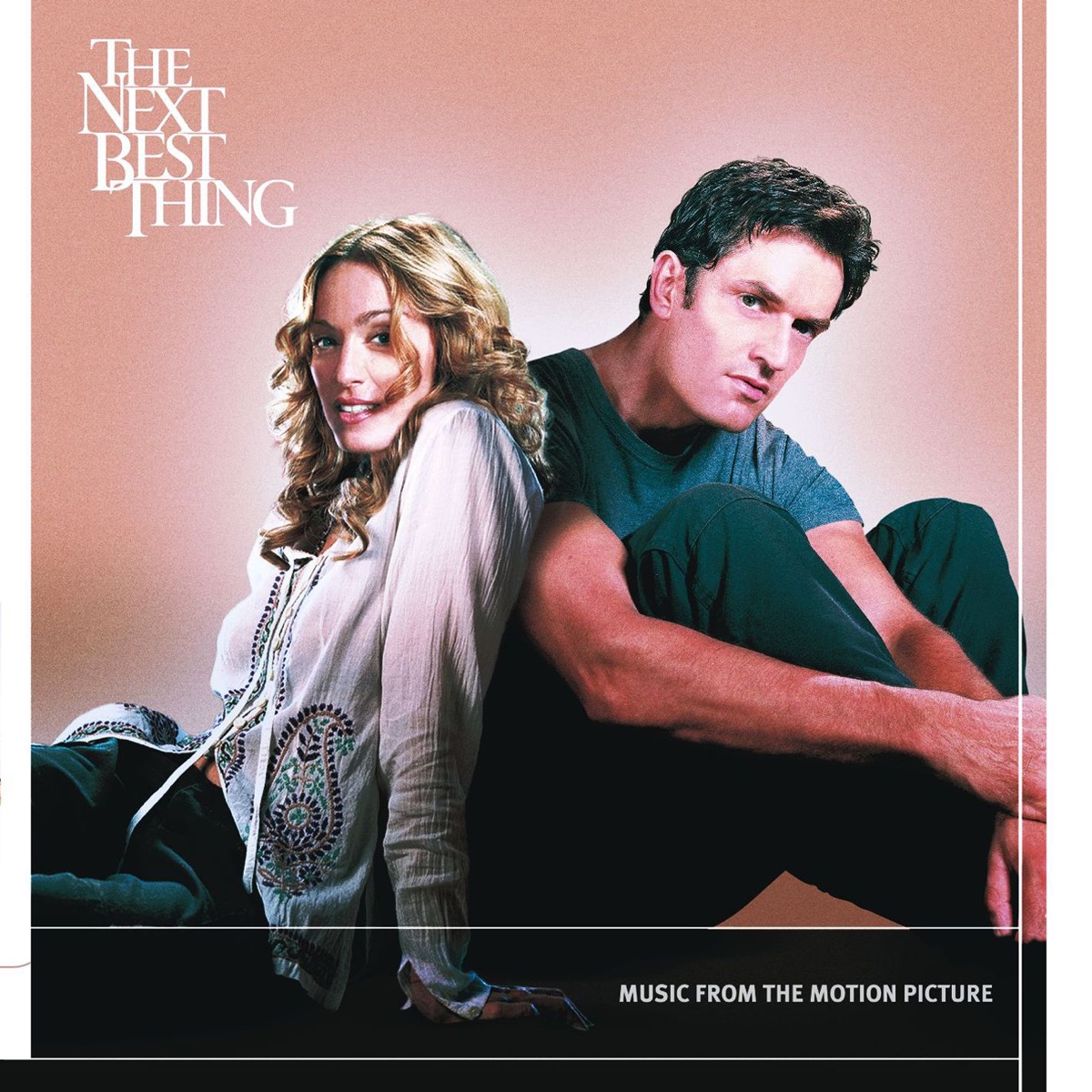
“Time Stood Still” was written and produced by Madonna and William Orbit and released in February 2000 on the soundtrack of The Next Best Thing, one of her two new recordings there with “American Pie”. It was recorded in 1999, when Madonna interrupted the early work on Music to make two songs for her film. It was never a commercial single, yet it reached No. 2 on Polish Radio Three. The engineer Mark Endert remembers a version on which Rupert Everett also sang; it has never been released.
- 2000
- released in February
- 3:48
- length
- No. 2
- Polish Radio Three chart
- 19
- weeks on that chart
Performing artists
Madonna
Vocals
Damian Legassick
Keyboards
William Orbit
Keyboards, Guitar, Drums
Composition & lyrics
Songwriter
Songwriter, String Arranger
Songwriter
Production & engineering
Producer
Producer
Mark "Spike" Stent
Mixing Engineer
“Time Stood Still”
- Written by
- Madonna, William Orbit; Damian LeGassick in the label’s current data
- Produced by
- Madonna, William Orbit
- First released
- February 2000
- Release
- The Next Best Thing: Music from the Motion Picture
- Length
- 3:48
- Mixed by
- Mark “Spike” Stent
An unusual place in the catalogue
“Time Stood Still” was written and produced with William Orbit and released on the soundtrack of The Next Best Thing, the film of 2000 directed by John Schlesinger, with Madonna and Rupert Everett. It was one of two new Madonna recordings on the album, with her version of Don McLean’s “American Pie”.
Unlike “American Pie”, it was never a conventional commercial single. Yet a review in the Los Angeles Times, published on 4 March 2000, called it another “likely single”: its commercial potential was seen at the time.
Who made it
The personnel credits of the soundtrack say more than the short credits usually given in Madonna discographies.
The credits
| Role | Credit |
|---|---|
| Lead vocals | Madonna |
| Composition and lyrics | Madonna, William Orbit |
| Production | Madonna, William Orbit |
| Guitar | William Orbit |
| Drums | William Orbit |
| Keyboards | William Orbit |
| Additional keyboards | Damian LeGassick |
| String arrangement | Damian LeGassick |
| Mixing | Mark “Spike” Stent |
As given in listings of the physical edition; the official digital data supports Orbit’s instrumental credits.
Three contributions deserve attention.
William Orbit made the instrumental foundation, besides sharing the writing and production credits. Guitar, drums and keyboards are all his: a sign of how much of an arrangement he could build without a conventional band.
Damian LeGassick is an especially significant name. His credits for keyboards and string arrangement show that the orchestral character of the track involved another musician and is not all Orbit’s programming.
Mark “Spike” Stent did the final mix, and brought into the project another of the key collaborators of Madonna’s recordings of the late 1990s.
The credits name the instruments and the people. They do not give makers, synthesizer models or recording software.
A third writer?
The original credit of the soundtrack, as on the physical edition, gives Madonna and William Orbit as writers and producers; LeGassick has separate credits for keyboards and string arrangement.
The recording as supplied by Maverick/Warner to Madonna’s official music catalogue on YouTube names three writers: Madonna, William Orbit and Damian LeGassick. It lists LeGassick separately as keyboard player and string arranger, Orbit on drums, guitar and keyboards, and Mark “Spike” Stent as mixer. The digital data of a retailer, Qobuz, gives the same three writers.
The writing credit, by source
| Source | Writers |
|---|---|
| Original soundtrack credits | Madonna, William Orbit |
| The label’s current digital data | Madonna, William Orbit, Damian LeGassick |
The discrepancy is real, and the third name is no isolated attribution by one retailer: it is in the credits Warner distributes. The treatment used here is Madonna, William Orbit and Damian LeGassick, with the note that the artwork of the original soundtrack credits only Madonna and Orbit.
A writing credit does not say what each person contributed. It does not tell us whether LeGassick wrote the string melody, added to the chord progression, or was credited through some other arrangement.
The sessions: New York, 1999
The most useful testimony on the making of the song comes from the recording engineer Mark Endert, interviewed in 2007 by the Madonna researcher Peter Magennis about his work with Madonna and Orbit; the interview was published in 2011.
We were set out to record Music at The Hit Factory, New York.
He explained that Madonna and Orbit were already working on material for Music when Madonna broke off their preparations to record two more songs for her film.
Several things follow:
- “Time Stood Still” comes from the period of recording that led to Music, and not from the later sessions for American Life.
- At least part of the work on it was done at The Hit Factory in New York, with Orbit and Endert.
- The song was connected with The Next Best Thing while the sessions were going on, and was not chosen for the film years later.
- The soundtrack recording was released in February 2000, before Music came out that September.
Endert’s recollections are a firmer base than the fan chronologies, which sometimes contradict one another.
A version with Rupert Everett
Endert also remembered a different version of “Time Stood Still”. He first described the song as a duet with Rupert Everett, although he was unsure of its final title, and then recalled that its working title had been “The Next Best Thing”.
As I recall Rupert also sang on that song.
This matters because Everett’s backing vocals on “American Pie” are well documented, while his part in “Time Stood Still” has been largely overlooked.
The interview is credible first-hand evidence that Everett recorded vocals for a version of the song. But Endert was remembering sessions several years later and said himself that he was not certain. What is telling is his uncertainty about the title and his first confusion with “American Pie”: he remembered Everett singing during the sessions, and the interview does not settle whether it was a complete co-lead vocal, backing vocals, or an experimental version later abandoned.
No commercially released version of “Time Stood Still” credits Everett as a performer, and no verified public release of his vocal has been found.
What Everett himself has said. Rupert Everett gave several interviews at the time of the film, and in none of those found does he confirm or deny a version of “Time Stood Still” with his voice.
- Los Angeles Times, 29 January 2000: the most relevant, on “American Pie” (below).
- A press-junket interview for the film, 2000: Everett tells how he brought the screenplay to Madonna, rewrote it with his writing partner and built the project around their friendship; Madonna, separately, talks about the soundtrack and how hard it was to choose music that satisfied both her own taste and what the director, John Schlesinger, required. Neither mentions Everett’s possible vocals on “Time Stood Still”.
- Charlie Rose, 2 March 2000: Everett and Schlesinger discuss the development of the film, the screenplay, their collaboration and the characters. It is not established that the soundtrack was discussed.
- The A.V. Club, 1 March 2000: interviewed by Joshua Klein, Everett talks about his friendship with Madonna, her singing technique, the changes in her voice after Evita, and their work on the screenplay. It is a rare discussion of her musicianship at the time by someone who knew her personally. There is nothing on the unreleased duet.
- How to Fail with Elizabeth Day, October 2024: much later, Everett goes back to the disastrous production of the film and the decline of his friendship with Madonna, and reflects on her difficulties as a film actress. It does not confirm the recording.
One archival lead remains: the John Schlesinger collection of the British Film Institute lists an interview with Everett for Genre magazine, conducted by Schlesinger during production and dated December/January 1999. Its contents have not been verified.
Music, and American Life
The connection with Music (2000) is direct: the song was made while Madonna and Orbit were developing material for that album.
With American Life (2003) there are later parallels of style and theme, and no documented connection of recording or production. American Life was developed mainly with Mirwais Ahmadzaï and released in April 2003; its recording came well after the confirmed work of 1999 on “Time Stood Still”. In November 2001 Madonna announced that she would begin recording another album in January 2002, with Mirwais among the intended collaborators; that project became American Life.
If the question is whether “Time Stood Still” or the material of American Life was recorded first, “Time Stood Still” came first. Between “Time Stood Still” and “American Pie”, the evidence does not establish an order.
The possible artistic link with American Life is still worth looking at. Both have emotional disillusion and reduced arrangements, by very different methods of production. “Time Stood Still” belongs firmly to Orbit’s atmospheric electronic pop; American Life depends far more on Mirwais’s deliberately fragmented sound of guitar and electronics.
The order of events
1999
Madonna and Orbit are working on what will become Music. Mark Endert remembers Madonna bringing in the two soundtrack songs while they are at The Hit Factory in New York.
7 January 2000
NME reports that “American Pie” is Madonna’s new single.
8 January 2000
Billboard announces the soundtrack and names both Madonna recordings.
29 January 2000
The Los Angeles Times tells how “American Pie” came into the film.
Week of 31 January 2000
A promotional 12-inch of “American Pie” goes to club DJs.
22 February 2000
Both songs are released on the soundtrack of The Next Best Thing.
4 March 2000
The Los Angeles Times calls “Time Stood Still” another “likely single”.
12 May 2000
“Time Stood Still” is No. 2 on the Polish Radio Three chart.
September 2000
Music is released; “American Pie” is on some international editions, “Time Stood Still” stays on the soundtrack alone.
November 2001
Madonna says she will begin a new album in January 2002: the future American Life.
2002
An instrumental version is catalogued on a William Orbit promotional release.
2005
Ellie Lawson’s “Inside Out” is built on the song’s instrumental.
The music
“Time Stood Still” is an atmospheric electronic-pop ballad, with elements of downtempo, ambient pop and orchestral pop. Its emotional character is restrained, with Madonna’s voice at the centre of the arrangement.
The Los Angeles Times review of the time called it warm and gently plaintive. A retrospective in The Independent also singled it out as one of the musical successes of the film.
Instruments and sounds
| Element | What it does | Evidence |
|---|---|---|
| Electronic drums and percussion | A measured, understated rhythmic base | Orbit credited with drums |
| Keyboards and synthesis | Sustained harmonic textures and layers of atmosphere | Orbit and LeGassick credited with keyboards |
| Guitar | A more organic quality in the electronic arrangement | Orbit credited with guitar |
| String arrangement | Orchestral colour and emotional movement | LeGassick credited with string arrangement |
| Lead vocals | The intimate, reflective quality of the song | Madonna credited with vocals |
| Mixing and spatial effects | Electronic and acoustic elements joined into one recording | Mark “Spike” Stent credited with mixing |
The arrangement is interesting for its balance between electronic sound design and traditional songwriting. Orbit does not use an aggressive dance rhythm: he sets up a subdued accompaniment that leaves the vocal melody in front. The sustained keyboard textures give a sense of space, and the guitar and strings soften the electronic production.
The recording also shows a constant of Orbit’s work: electronic instruments used for atmosphere and emotional expression, and not only for rhythm or futuristic effect.
One distinction matters. LeGassick’s credit for the string arrangement does not say whether the released recording uses live orchestral players, sampled strings, synthesized strings or a mixture. The credits name no string ensemble.
Madonna’s vocal. The vocal is fairly restrained beside the more theatrical delivery of some of her earlier ballads. The song depends on measured phrasing and a sense of resignation.
Its subject is a relationship seen in retrospect: missed possibilities, emotional loss, and the recognition that an imagined future will not happen. The words also connect with the title of the film: the phrase about the next best thing ties the song to the screenplay, although it works apart from the film as well.
The melancholy is reinforced by the gentle rhythmic movement of the arrangement. That places the song nearer to the reflective side of Ray of Light and Music than to the harsher electronic experiments later made with Mirwais.
Damian LeGassick
LeGassick was a composer, arranger and keyboard player in Orbit’s circle. A biographical document drawing on a profile of June 2006 gives more detail of his career. He had worked with William Orbit since 1994, playing keyboards and programming on his projects, among them Pieces in a Modern Style, Orbit’s electronic versions of classical compositions.
He was also connected with Icebreaker, the British contemporary-music ensemble known for amplified instruments, minimalist composition and complex rhythms; the ensemble’s official history confirms that its album of 1994, Terminal Velocity, included his music.
The biography reports that Orbit introduced Madonna to LeGassick’s composition “Gone”, which she then recorded for Music, where it closes the original album. The released song credits Madonna, LeGassick and Nik Young as writers.
That puts him in the same creative setting in which “Time Stood Still” was recorded: his part was more than an orchestral overdub added to a soundtrack. With experience in both contemporary classical composition and electronic pop production, he was well suited to arranging strings around Orbit’s programmed instruments, and his presence may help to explain the song’s mixture of orchestral writing and electronic textures. That is an interpretation founded on the music. A breakdown of the particular sounds he made for this recording is still lacking.
Software, synthesizers and equipment
Here documented equipment and plausible reconstruction have to be kept apart. There is no publicly verified studio sheet for “Time Stood Still” that names its synthesizer models, software versions, effects processors or presets. Interviews with Orbit make it possible to reconstruct the technology around its making.
Pro Tools. In an interview of 2022, republished by MusicRadar, Orbit talked about his move from analogue multitrack to digital production. He had worked with multitrack tape from 1983 to 1997, and took up Pro Tools when he went to America to work with Madonna. That is strong evidence that Pro Tools was part of his way of working in the Madonna years. It does not say which edition was used on “Time Stood Still”, or which instruments were edited in it.
Cubase II and the Atari ST. Another part of Orbit’s technical history is Steinberg Cubase II on an Atari computer. In an interview with The Guardian in December 1999 he talked about using the older system while making Ray of Light; in an earlier interview for Keyboard he had described his Atari sequencing setup. Cubase II is therefore relevant to the collaboration, and there is no direct evidence that “Time Stood Still” was sequenced on it.
Synthesizers associated with Orbit
| Instrument | What Orbit has said |
|---|---|
| Roland Juno-106 | A major source of sound on Ray of Light and on his Strange Cargo recordings |
| Korg MS-20 | A favourite, for unpredictable and expressive electronic sounds |
| Roland JD-800 | Praised for its range of sound and its hands-on controls |
| Akai S3200 | Documented in his sampling and sequencing setup of the 1990s |
These are documented Orbit instruments. They are not verified instruments of “Time Stood Still”.
No pad, bass sound or keyboard part on the released master can be assigned to one of these machines without session documents. The same holds for effects: reverberation, filtering, equalisation and compression are typical of Orbit’s productions, and the processors and plug-ins used on this song are not documented. Modern products such as Kontakt, Massive or Melodyne have no place in the credits of a recording of 1999 merely because Orbit spoke of using them much later.
Was it meant to be the single?
Three possibilities need separating: the original lead single, a planned follow-up, and a song that journalists simply expected to be a hit.
Both songs were announced together. Billboard of 8 January 2000, in its production news, announced the soundtrack and named both Madonna recordings: “American Pie”, a cover of Don McLean’s song, and “Time Stood Still”, an original song co-written and co-produced with William Orbit. Both had therefore been publicly identified by early January 2000. “Time Stood Still” was no obscure late addition found only after the promotion of “American Pie” had begun.
“American Pie” had the campaign. On 7 January 2000 NME reported that Madonna’s new single would be her cover of “American Pie”, with backing vocals by Rupert Everett. Billboard of 19 February 2000 reported that Maverick/Warner had already sent a promotional 12-inch of “American Pie” to club DJs in the week beginning 31 January, with remixes by Richard “Humpty” Vission and Victor Calderone. Warner had thus committed itself to “American Pie” as the first single well before the soundtrack reached the shops on 22 February. No corresponding campaign of the time has been found for “Time Stood Still”.
The “likely single”. On 29 January 2000 the Los Angeles Times, writing about the making of the soundtrack, discussed “American Pie” as the main new song, with “Time Stood Still”. Reviewing the album on 4 March, Elysa Gardner called “American Pie” the soundtrack’s first single and “Time Stood Still” another “likely single”. A professional critic thought it an obvious possible single. That is not evidence of an official plan.
No sufficiently reliable document shows that Maverick or Warner first chose “Time Stood Still” as the lead single and then replaced it with “American Pie”. Nor is there a verified label announcement, a commercial catalogue number or an official video for an abandoned single campaign.
The conclusion: “American Pie” was the confirmed lead single. “Time Stood Still” was there from the earliest documented announcements of the soundtrack and was seen by critics as a possible follow-up; an official plan to release it as a single is not proved.
Why “American Pie”: the film first had another song
The Los Angeles Times article of 29 January 2000, by Geoff Boucher, “Madonna’s Brand-New ‘Pie’ Recipe”, has comments from Madonna, William Orbit, Rupert Everett and Don McLean. It shows that the choice of “American Pie” was closely tied to the screenplay.
The script originally used Patti Smith’s “Easter” as the song for a character’s funeral. Everett suggested replacing it with “American Pie”, partly because he wanted something that could also work in a dance scene. He then encouraged Madonna to record the song herself, and imagined her singing it as a reflection on her own career.
It just gave me chills thinking of Madonna singing those first lines.
He connected the words with Madonna looking back on her experiences of the 1980s and 1990s, and thought the song especially fitting for the millennium.
Orbit was not convinced at first. Remembering Madonna’s telephone call about the project, he told the paper:
I wasn’t really sure it was a serious proposition.
When she called again to ask whether he had begun work on the song, he understood that she meant to go ahead. The original screenwriter, Thomas Ropelewski, later wrote to the newspaper confirming Everett’s part in suggesting the change of music.
This explains the choice of single much more clearly. “American Pie” was built into the story of the film and had an obvious promotional use. “Time Stood Still”, although an original Madonna song, has no such documented origin in the screenplay. That does not rule out another plan for the single; it makes the priority given to “American Pie” understandable.
Madonna’s reservations about “American Pie”. In March 2000 the Italian music publication Rockol summarised interviews with La Stampa and La Repubblica. Madonna acknowledged that covering Don McLean’s song had been Everett’s idea: at first she was afraid of damaging a classic, and then accepted that its nostalgia suited the film. The same interviews help with the chronology: she was already talking about Music, her work with Mirwais and the album’s minimal electronic sound, and expected it in September.
On 23 November 2001, interviewed by Jo Whiley on BBC Radio 1, Madonna regretted that “American Pie” had ended up on Music. She said that a record-company executive had talked her into it, that she had gone against her instincts and did not think the recording right for the album, and that this was why she had left it off GHV2.
Two decisions are involved: Rupert Everett’s proposal to record “American Pie” for the film, and the record company’s later decision to put it on Music. The interview of 2001 shows her dissatisfaction with the second. It does not show that she would have preferred “Time Stood Still” as the soundtrack’s lead single.
No. 2 in Poland
“Time Stood Still” was not issued as a commercial single of its own, and it reached No. 2 on the chart of Polish Radio Three, Lista Przebojów Programu Trzeciego.
Polish Radio Three, 12 May 2000
| Position | Artist and song |
|---|---|
| 1 | a-ha, “Summer Moved On” |
| 2 | Madonna, “Time Stood Still” |
| 3 | Pearl Jam, “Nothing as It Seems” |
From the archive of the original chart, issue 954, presented by Marek Niedźwiecki.
On the Polish Radio Three chart
- peak
- No. 2
- weeks on the chart
- 19
- weeks in the Top 10
- 15
Source: the chart’s archive, cumulative statistics for Madonna.
This changes the idea that “Time Stood Still” went entirely unnoticed. It found an audience of its own in Poland without a conventional international single.
Reports also place it at No. 3 in the Czech Republic; no independent Czech chart archive of the time has been found to give the chart and the date. The Polish result can be checked directly.
Other releases
The Japanese promotional CD. A three-track promotional CD from Japan (Maverick, PCS-460, 2000) is documented in a collectors’ catalogue.
Japanese promotional CD, PCS-460
| Track | Length |
|---|---|
| American Pie (Richard “Humpty” Vission Radio Mix) | 4:27 |
| Time Stood Still | 3:46 |
| American Pie (Album Version) | 4:32 |
“Time Stood Still” was thus on a promotional CD distributed in support of “American Pie” and of the soundtrack. PCS-460 is not a “Time Stood Still” single: the disc was promoted under the title “American Pie”.
An instrumental, 2002. A two-CD William Orbit promotional release dated 2002, William / Orbit, is catalogued with “Time Stood Still (instrumental)”, 3:27. It is listed as promotional and not as a standard commercial album. It establishes a catalogued instrumental variant; the origin of the source master and the nature of its edits have not been independently confirmed.
Ellie Lawson’s “Inside Out”
In September 2005 it was reported that Ellie Lawson had recorded a song, “Inside Out”, on her album The Philosophy Tree (2005), based on the backing track of “Time Stood Still”.
The first reports described the song as a deliberate reworking by Madonna and Orbit. A correction published the next day gave a more interesting explanation: Lawson had been given several Orbit instrumentals by her manager, and wrote her own song over the backing track of “Time Stood Still” without knowing that Madonna had already recorded a song on that music. According to that account Orbit liked Lawson’s version, Madonna approved it, and the use of the earlier recording was cleared.
It is a significant case of two different songs growing from the same musical foundation. The account is detailed, and comes from reports of the time and not from a verified interview with Lawson or from the documents of the clearance.
It is also more than a sample. A sample takes a short musical phrase; here Lawson built a new composition over the whole existing instrumental.
What is not known
The exact day “Time Stood Still” was recorded, and whether it or “American Pie” came first in 1999.
How much of the released arrangement survives from the version Endert remembered, and whether the unused vocal by Rupert Everett still exists in the archives. Everett’s own recollection, or the original session documents, would settle it.
The synthesizers, drum samples, plug-ins, guitar, microphones and the studios used at each stage of the finished master.
What exactly Damian LeGassick wrote.
Whether an official plan for a single ever existed.
Inside the song
The sound
- Instrument
William Orbit plays guitar, drums and keyboards; the strings are arranged by Damian LeGassick.
Soundtrack credits
- Voice
A restrained vocal, without the theatrical delivery of her earlier ballads. |
Style
- Genre
An atmospheric electronic-pop ballad, with a subdued rhythm and sustained keyboards.
Los Angeles Times (4 March 2000)
Who made it
Written by Madonna and William Orbit; the label’s current data adds Damian LeGassick, whom the original soundtrack credits only as keyboard player and string arranger.
Soundtrack credits; Maverick / Warner digital credits
Produced by Madonna and William Orbit and mixed by Mark “Spike” Stent.
Soundtrack credits
The words
About a relationship seen in retrospect; the words contain the phrase that gives the film its title. |
Its place
Recorded in 1999 at The Hit Factory, New York, when Madonna interrupted the early work on Music to make two songs for her film.
Mark Endert, interviewed by Peter Magennis (2007)
The engineer Mark Endert remembers a version on which Rupert Everett also sang, under the working title “The Next Best Thing”. It is unreleased.
Mark Endert, interviewed by Peter Magennis (2007)
Never a commercial single, though the Los Angeles Times called it a “likely single”.
Elysa Gardner, Los Angeles Times (4 March 2000)
Reached No. 2 on the Polish Radio Three chart on 12 May 2000, and stayed on the chart for 19 weeks.
Lista Przebojów Programu Trzeciego
Ellie Lawson’s “Inside Out” (2005) was written over the song’s instrumental, reportedly without her knowing Madonna had used it.
Reports of September 2005
An instrumental version of 3:27 is catalogued on a William Orbit promotional release of 2002. |
Last updated