“I have yet to meet a single member of the media who has been fair to me”
Io Donna · 19 April 2008
- Magazine
- Io Donna
- Published
- 19 April 2008
- Interview by
- Beppe Severgnini
- Country
- Italy · Italian
At a glance
Beppe Severgnini meets Madonna in Beverly Hills for Io Donna, 19 April 2008, ten years after their first interview in Milan: Hard Candy and Filth and Wisdom, controversy, why she reads nothing written about her, Swept Away, the Gucci evening for Malawi and the adoption of David, Lourdes, and her coming 50th birthday.
The interview
BEVERLY HILLS — There are two certainties in America: when you walk into a bathroom, the light switch is within easy reach, and Madonna never gives a boring interview.
I had met her in Milan in 1998, shortly before her 40th birthday. She was a relatively new mother, dark-haired, lean and argumentative. A series of amusing misunderstandings had made the encounter memorable for me. For her, I imagined, it had been entirely insignificant and swiftly forgotten.
MADONNA: We’ve met before. Quite a long time ago. London or Milan.
BEPPE SEVERGNINI: Milan. I asked whether you’d been caught in the rain, and you explained what the wet-hair look was. How on earth do you remember?
MADONNA: Take it as a compliment and let’s get started.
SEVERGNINI: Ten years ago. You were promoting Ray of Light. Your daughter Lourdes was just over a year old. Liz Rosenberg [Madonna’s longtime publicist] was lying on the bed, keeping an eye on my questions. Rather like today.
MADONNA (laughs): Some things never change. Let’s see how it goes this time.
There were other things she hadn’t particularly liked in 1998: comments about her hands, her clothes, her Italian heritage. A colleague from Rome, a self-confessed Miss Ciccone devotee, maintains that it was the worst interview her idol has ever given.
SEVERGNINI: May I use my tape recorder?
MADONNA (straight-faced): No, I want you to memorise all my answers.
SEVERGNINI: As long as they’re memorable.
I switch on the recorder and look at her. Madonna, known as Nonnie to her siblings and father, and Mo to her friends, is almost 50. She reaches that milestone on 16 August.
In the space of a quarter of a century, since the release of her first album in 1983, she has sold 200 million records, had two children, married three men and amassed 62 million Google mentions (shared with another Madonna who is rather famous in her own right).
Her speech is quick and clipped, with an almost British accent. She sits cross-legged in the armchair, something her petite frame allows her to do quite comfortably. She is blonde, without make-up, her hair tousled, dressed in a tracksuit. Photographs are out of the question.
She has the body of a woman in her thirties and the eyes of a little girl, although I suspect she has succumbed to the temptation of a little cosmetic enhancement: a tight smile, fuller lips. I keep that thought to myself.
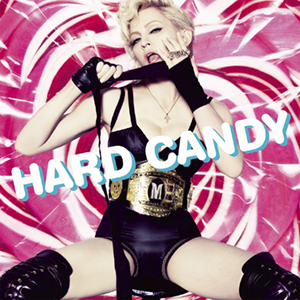
SEVERGNINI: I’ve listened to your new album, Hard Candy. Your eleventh, right? I like “She’s Not Me”.
MADONNA: Why?
SEVERGNINI: It sounds like you. It’s quintessentially Madonna.
MADONNA: I prefer “Candy Shop”, “Miles Away” and “Devil Wouldn’t Recognize You”. But yes, I like “She’s Not Me” too.
SEVERGNINI: Bruce Springsteen maintains that a new album takes precedence over everything else.
MADONNA: I consider myself fortunate because I have so many different ways of expressing myself. The film I’ve directed [Filth and Wisdom, presented in Berlin] is also something very close to my heart. I wouldn’t say that making a record is better than making a film. But music is certainly more accessible.
SEVERGNINI: After 25 years in the business, would you say that controversy helps? Wait, before you get angry. I can understand how irritating it must be to find your private life splashed across the newspapers. But be honest: controversy has also played a part in shaping your public persona.
MADONNA: That may be true in a philosophical sense. Besides, all it takes to be perceived as controversial is to hold an opinion that differs from the prevailing one. You only have to grow up in a Christian neighbourhood and decide that you no longer want to be a Christian, for instance.
SEVERGNINI: (I think to myself: well, when your name is Madonna…) Which kind of criticism makes you angry? Stories about your family or damning reviews of your work? I read something in a German newspaper: “Madonna’s film wasn’t bad. Her film director husband, Guy Ritchie, must have directed it.”
MADONNA: That’s the first time I’ve heard that. I don’t read anything that’s written about me, so thank you for telling me. Was it an English newspaper?
SEVERGNINI: No, German.
MADONNA: Fuckers!
SEVERGNINI: I find it hard to believe that you don’t read anything published about you.
MADONNA: Not a single news story, not a single review. I have no idea what’s being said or written.
SEVERGNINI: Surely you read the biographies, at least.
MADONNA: Least of all those.
SEVERGNINI: I read one from cover to cover in preparation for this interview. Would you like to see it? At least the cover?
MADONNA: There’s no point. Nothing written in it can be true. If you want to know about me, you have to come to me and talk to me.
SEVERGNINI: That’s not exactly the easiest thing in the world.
MADONNA: That’s true, too.
SEVERGNINI: There was a headline in USA Today: “Everyone has a story to tell. Memoirs sell.” Given that none of the Madonna biographies can be trusted, why don’t you write your own?
MADONNA: My films and documentaries are autobiographical. Every record I make is autobiographical to some extent. I have neither the interest nor the intention of sitting down and writing about myself.
SEVERGNINI: Is there a mistake you wouldn’t make again?
MADONNA: Such as?
SEVERGNINI: The film Swept Away, for instance [directed by Guy Ritchie and co-starring Adriano Giannini, 2002].
MADONNA (sternly): That film, Swept Away, taught me a great deal.
SEVERGNINI: …Such as never trusting Italians?
MADONNA (bursts out laughing): Come on, who shouldn’t I have trusted? Adriano Giannini? He was fantastic. I liked him. No, that wasn’t a funny joke.
SEVERGNINI: But you laughed.
MADONNA (no longer laughing): OK.
SEVERGNINI: Do you get nervous in public? I’m not talking about concerts. I was at the fundraising event Gucci organised for Malawi in New York in February. (I’m told Madonna insisted that all the roses match her dress.)
MADONNA: You were there? You came? Well, yes, I was nervous. I wasn’t on that stage to sell a record. It was about saving a country. I knew I was in a room full of wealthy, important people who were accustomed to these sorts of events: support this cause, support that cause. What made my event so special? Why should they support me?
SEVERGNINI: You adopted a little boy from Malawi, David. There were accusations that you had taken him away. Did that upset you? Did you think it was unfair?
MADONNA: Unfair?! I have yet to meet a single member of the media who has been fair to me. What are you talking about?
SEVERGNINI: I don’t understand how you can say that when you don’t read anything that’s written about you.
MADONNA: Newspapers want provocative headlines. If they say horrible things that aren’t true, I think, “They’re doing it to sell newspapers,” and I don’t go into the details.
SEVERGNINI: So I can make things up.
MADONNA: Don’t even try.
Madonna combines charm with a wicked streak: she draws you in, then delivers the sting. She is no longer the instinctive Material Girl, nor the cynical controversy-seeker of the 1990s who specialised in mixing sex and religion. She is an attentive listener and a guarded woman. Yet beneath the surface, the embers are still glowing.
One moment she smiles like a young woman at a job interview, revealing the gap between her front teeth. The next, she suddenly resembles the woman who, towards the end of the 2004 Re-Invention Tour, yelled at her staff: “Straighten up, or get out!”
Then, turning to her daughter, she added: “And that includes you, Lola.”
“And you too, Mum,” the little girl shot back.
SEVERGNINI: I understand Lourdes and Rocco aren’t allowed to watch television. It’s interesting how artists who have led rather eventful lives, shall we say, often choose to bring up their children quite strictly.
MADONNA: (Silence.)
SEVERGNINI: Let me put it another way. If Lourdes became the kind of teenager Madonna was, would you be happy? What if she decided to pursue a career in music?
MADONNA: She can do whatever she wants. But right now, I want her to be a child, to retain as much of her innocence as possible and to grow up with as much anonymity as possible. She watches a lot of films and has a very active social life. She’s not cut off from the world. She goes to her friends’ houses, and I’m sure she watches television there. She doesn’t live in a bubble. I think my role as a parent is to teach her what really matters in life. Those are the things that will give her the strength she needs when she’s older.
SEVERGNINI: She looks like you, at least in photographs.
MADONNA: (Smiles.)
SEVERGNINI: You were born and raised in America, but you’ve also lived in the United Kingdom. From a pop star’s perspective, what’s the main difference between the UK and the US?
MADONNA (serious again): I don’t think there’s any difference. Celebrity madness in both countries. Don’t you agree?
SEVERGNINI: Have you been following the American presidential primaries? Have you made up your mind? Who do you like?
MADONNA: (Silence.)
SEVERGNINI: I see. You’d rather not answer.
MADONNA: I think it’s wonderful that a woman and an African American are running for president, and that the race is so wide open.
SEVERGNINI: Frankly, I was expecting something a little more original. Let’s try Italy. We talked about it quite a lot ten years ago. Do you keep up with what’s happening there?
MADONNA: You mean politically?
SEVERGNINI: One of them is called Silvio, like your father. Did you know that?
MADONNA: What’s his surname?
SEVERGNINI: Berlusconi.
MADONNA: Yes, I’ve read about him. My Italian friends tell me about him, too.
SEVERGNINI: Let me read you the closing quotation from that biography…
Liz Rosenberg intervenes: “Who’s the author?”
“Randy Taraborrelli.”
“Put it away,” Rosenberg says. “It’s worthless.”
SEVERGNINI: You’re quoted as saying: “Just watch out. When I hit the big 5-0, if you think I was a bitch before, well… you just wait!” Now you’re going to tell me that quotation was made up, aren’t you?
MADONNA: Exactly.
SEVERGNINI: Just tell me how you’re planning to celebrate your 50th birthday on 16 August. A big party? Or are you going to pretend it isn’t happening?
MADONNA: I always have a party for my birthday. Why start worrying about it now? I’ll think about it six weeks beforehand, as I usually do.
SEVERGNINI: Do you see yourself becoming a sort of female Rolling Stone, bouncing around onstage for as long as physically possible, like Mick Jagger?
MADONNA: Who knows? I don’t think about it. Maybe I’ll concentrate on directing and making films. When we meet again in ten years’ time, I’ll tell you.
Songs
About this text
Translated from the Italian by DrownedMadonna. Madonna’s words are English translations of the published Italian text, not her original words in English, except for the English phrases the Italian article quoted as she said them. The article’s reference to three marriages has been kept, although Madonna had been married twice at the time, to Sean Penn and Guy Ritchie.
Last updated