What It Feels Like in a Whirl
Entertainment Weekly · 27 July 2001
- Magazine
- Entertainment Weekly
- Published
- 27 July 2001
- Interview by
- Jeff Gordinier
- Country
- United States · English
At a glance
Jeff Gordinier goes under the stage at Earls Court for Entertainment Weekly, 27 July 2001, as the Drowned World Tour reaches America: the toasters and the mechanical bull, the four sections of the show, the Mohawks, the rehearsals in Los Angeles, Stuart Price and Jamie King, Michael Bearden’s departure, and the guitar, flying and martial arts Madonna learned for it.
The article
Madonna and “family” deal with acute labor pains in delivering the you-know-what of all pop tours
GET INTO THE TOASTER and crouch. Shut the door. Bend your knees. You’re in a square, transparent pod underneath the stage at London’s Earls Court. The point man is staring at you, waiting for a thumbs-up. If you’re holding a guitar, aim the fretboard vertically, otherwise a tuning peg might get clipped on the way up and—clannng!—you’ll storm the stage in a hail of sour notes. Keep your arms at your sides. During rehearsals a dancer almost got a limb sliced off when a toaster hurled her into the air sooner than expected. They call it a toaster because it can pop you out like a piece of toast. Sometimes it’s cannonball-fast, but usually it hoists you slowly, into a dry-ice fogbank, as if you’re a platform-booted member of Kiss. If it looks like you’re not ready, “we abort the move,” says production manager Mark Spring. If you are ready—if thumbs-ups are exchanged—then seconds later you’re cavorting with Madonna in front of 17,500 fans. “It’s like going from one world to the next,” says guitarist Monte Pittman. “Under the stage it’s like a hidden city. It’s like something in Star Wars. Then you go up and there’s just a sea of people screaming.”
For nearly half of her 42 years, Madonna’s every move—every haircut, video, lyric, lip-gloss hue, snappy utterance, and tempting-taunting gluteal gyration—has been enough to elicit howls from the crowd and subatomic analysis from the media. The latest chapter in the discourse, Drowned World Tour 2001, marks the first time she has toured since the stripper-chic cabaret of 1993’s Girlie Show. So you can pretty much count on a flurry of rosy public contemplation now that this, her inaugural road show of the 21st century, just made its levitating, nunchaku-flipping, 100-minute Stateside debut on July 21 in Philadelphia. What does Madonna’s battle with the samurai warrior tell us about female empowerment? What’s the significance of the gas masks? What’s with the brutal pastiche of Japanimation? Why does she steer away from her standard clutch of hits—no “Like a Virgin,” no “Like a Prayer”—and focus on a series of solemn vignettes about psychosexual-spiritual liberation? And what about Jesus, the mechanical bull? What does it all mean?!
She’s not saying. But a true student of Madonna-ology would probably get more insight into the diva by snooping around here, among the toasters, in the low-slung catacombs under this London stage. This is where the European leg of the tour is winding to a close. Right around the corner is the 12-city, 29-date American passage, which sold out months ago. Much has been made of the military vastness of the tour; Madonna’s advance team distributes a sheet full of oceanic data about it. (A 4,000-square-foot stage, 1,500 storage trunks, two jumbo jets, a kimono with a 52-foot wingspan. Left off the press release: The $50 million gross that Pollstar predicts they’ll generate in U.S. ticket sales alone.) Frankly, though, you can learn just as much from the minutiae. Because as you chat with Drowned World’s cast and crew—Mama Ciccone’s traveling “family,” albeit maybe a more dysfunctional one than the brood captured in 1991’s Truth or Dare—you realize that each itty-bitty detail is a manifestation of the matriarch’s steely creative will.
That bull, for instance. Madonna wanted the synthoid toro to rise an additional 20 inches off the stage for her urban-cowgirl saddle grind, so the bull is equipped with an extra hydraulic lift. (The crew gave the steer its holy moniker—pronounced the Spanish way—because it’s got a sticker on its rump that says “Jesus.”) Next to the bull under the stage you’ll find Mike McKnight, nicknamed Oz, who’s like an air-traffic controller: He runs the computers that make sure all elements of the show—music, video, choreography—remain meticulously in sync. When Madonna began cobbling together her A team last spring, McKnight was on the road with U2, under the impression that Madonna wasn’t even going to mount a tour. “And of course five weeks into U2, Madonna decides she’s going to tour, and she’s not going to tour if I don’t come back. So it got ugly for a minute,” says the tech wizard, a devoted veteran of Blond Ambition and The Girlie Show. “I kept saying ‘Look, I’ve got this guy that can take my place.’ And they said, ‘No, you don’t understand. If you don’t come back, then she’s not going to do this.’”
At least nobody took a razor to his scalp. There are four sections to a Drowned World show, loosely laid out as Punk, Geisha, Cowgirl, and a sort of Flamenco/Ghetto Fabulous fusion. As the Punk one came together, Mom wanted the whole family—including longtime backup singers Donna De Lory and Niki Haris—to submit to some drastic tonsorial modulations. “She was like, ‘Niki, c’mon, you gotta wear a Mohawk,’” Haris says. “Sorry, we didn’t wear a lot of Mohawks in Detroit, where I’m from. Black folks weren’t really into Mohawks. The only Mohawks I saw were on, like, Aryan youth. I fought her tooth and nail. It got really hairy for a while. She felt like I was fighting her, and how could I do this to her, and she thought I was her friend. And I was like, ‘Okay, Madonna, you know what? If this is going to give you some joy, I’ll do it.’” When the time for her own shearing arrived, De Lory ducked into a dressing room and let Haris twist her tresses into tight, spiky knots. “I was in a panic. I had to come up with a hairdo in five minutes,” De Lory says. “I walked by Madonna down the hall and she’s like, ‘I love it.’ So, saved the hair.”
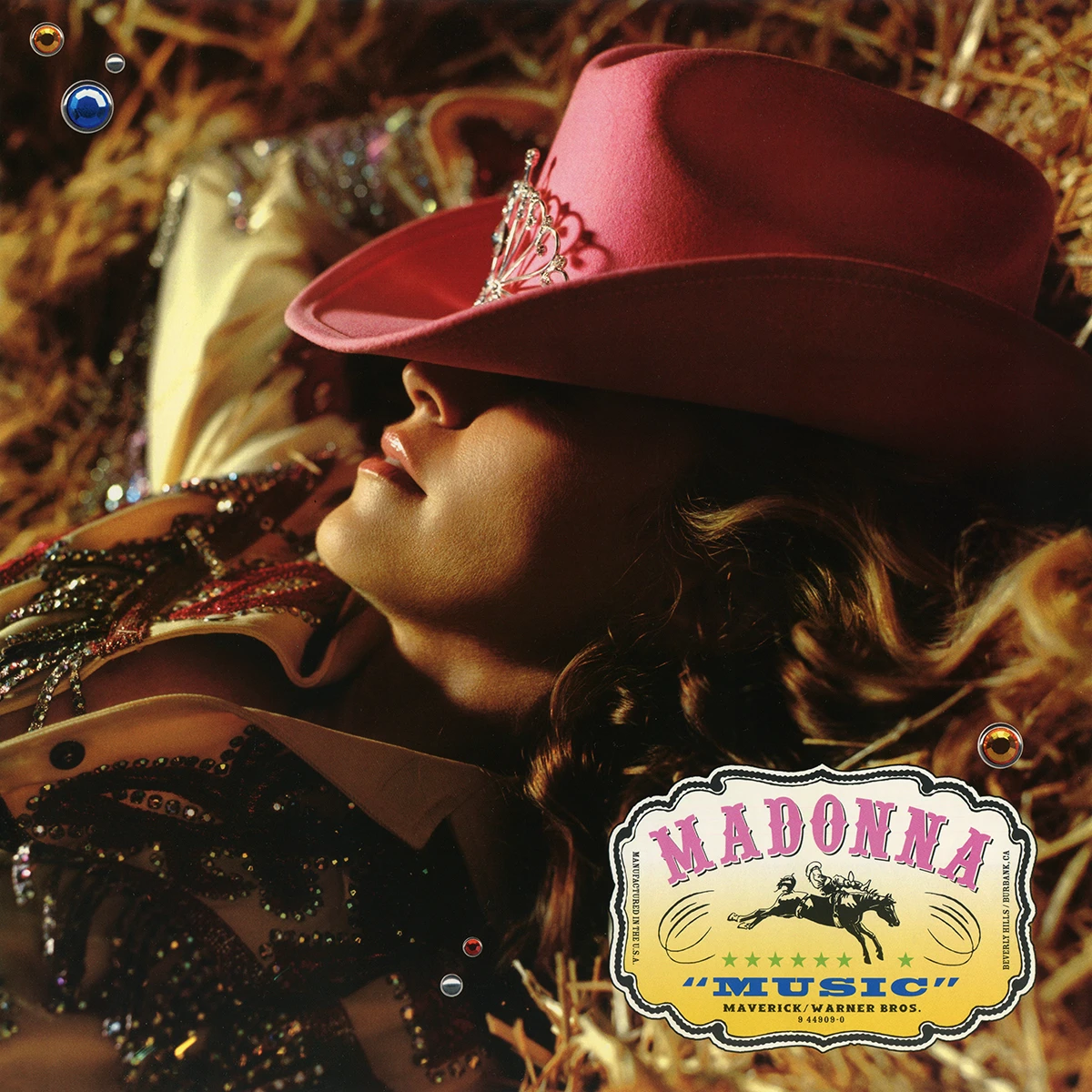
The matriarch, says Dean Caten, “doesn’t miss a thing.” He and his twin brother Dan, who run a design firm called Dsquared, were adopted to expand on the spangled, pastel, Queen of the County Fair look that Madonna unleashed with last year’s Music. “She calculates how high she can lift her leg according to the weight of the pant, and stuff like that,” Dean says. “I remember one shirt we made a little bit bigger, and she noticed. She said, ‘No, this is bigger, you changed it, make it the way it was.’ We’re talking about half a centimeter. She is very, very sharp.” If, as Andy Warhol once put it, “The new Art is Business,” then the CEO of Drowned World Inc. must qualify as the Picasso of micromanagers.
“OH MY GOD, WE’RE GONNA SUCK. Oh my God, this is gonna suck. Oh my God, they’re gonna boo us off the stage,” Niki Haris says. “That’s what was going through my head, to be really honest with you.” She’s thinking back to spring, when the Drowned World army mobilized in Los Angeles for seven weeks of rehearsals. “Finally Madonna was like, ‘Please just trust me. I’ve been very successful. I know what I’m doing.’” Haris goes on, “I was like, ‘You know what? You’re right.’”
Plunging into Drowned World’s rehearsals was a bit like climbing into one of those toasters: Fail to stay alert and you might wind up nicked, bruised, or sliced. Stuart Price, the tour’s brash musical director and keyboardist, recalls the development phase as “infuriating.” Madonna had a conceptual hybrid in mind, a twining of the digital thump of European club life with the grand theatrical gestures of Broadway. “A lot of the time the problems to be fixed were so simple, but there seemed like such a struggle to make things work,” Price says. “There were a lot of boulders in the way that stood between her vision and the execution of it.” How were those boulders rolled away? “Well,” says Price, “she fired them.”
“Madonna wants what she always wants ...edgy,” says tour director and choreographer Jamie King, a maestro behind such edgy enterprises as the recent Ricky Martin spectacle. “She wanted something new, she wanted change, and she wanted to do something she hadn’t done before. And in order for anyone to do that, you kind of have to get rid of what you’ve used in the past ... If someone’s not cutting it, or they’re not inspiring her in a new way, there’s no reason for them to be there.”
For all these allusions to creative obstacles, Price and King don’t name names. However, one key person who left at a critical point was Michael Bearden, Madonna’s musical director for much of the ’90s. “I just find the whole thing funny,” says the virtuoso jazz keyboardist. “‘Boulders being in the way’ and all of this sort of thing—none of this was conveyed to me at all.” Bearden doesn’t recall any unusual stress during rehearsals. “I never got any tension,” he says.
“You’ve got to understand you’re dealing with cats who’ve never done a live tour as intense as a Madonna tour. So any tension I think is just self-manufactured.” Bearden disputes any implication that he was let go. “At one point I was [musical director], willingly. And at another point I wasn’t, willingly,” he says. “From my standpoint, I’m glad I’m not there.” He’s now working with Jennifer Lopez and Michael Jackson.
Eventually Madonna was left with a core of young turks—King is 29, Pittman is 25, Price is 23—who backed up her refusal to give the audience a Solid Gold hit parade. “She was completely like, ‘I just wanna f--- everything up,’” Price says. “A very punk attitude.” In Europe, Price is known for his downtown techno act Les Rythmes Digitales; he sees running away with the Madonna circus as a winky act of subversion. “I don’t really agree with the principle of musical director. It’s a bit old-school, a bit Whitney Houston,” he says. “If you’ve got a guy standing there pointing at band members telling them what to play, you come up with this kind of Broadway, session-musician sound, and to me that’s just boring.” (“To make a blanket statement that musical directors, per se, are old-school and boring lets me know that a person who says that is not that experienced,” Bearden says. “You can’t make that statement and call yourself a real musician.”)
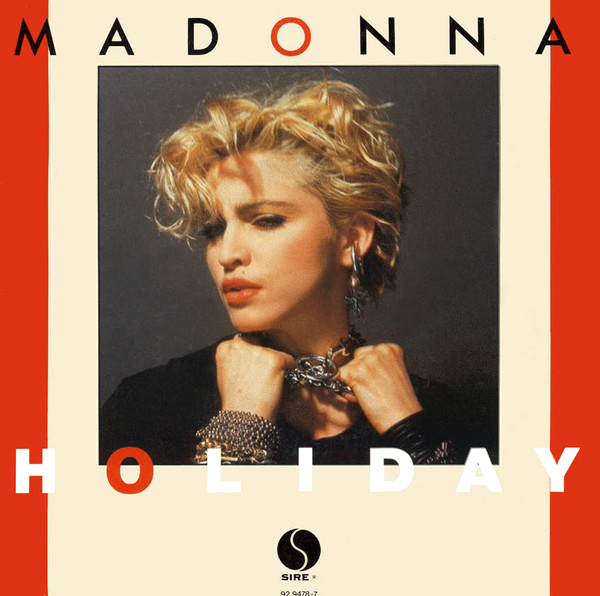
Music may make the bourgeoisie and the rebel come together, but a truce between these Tories and revolutionaries was trickier to negotiate. “Madonna has a tendency to hire people with strong opinions,” says her stylist and fashion guru, Arianne Phillips. “She doesn’t work with people who are, for lack of a better word, wimps.” At one point, Haris told Mom that the band’s greenness was making her anxious. “I said, ‘I’m not feeling this band. I’m not trusting that they’re strong enough for the show that you want to do.’ But for the show she wanted to do, this is a fine band.” After all, it’s thick with electronic soundscapes, churning vortices of aural data created from sources both rega and mecha. “Right. Noises,” Haris says. “Noises and music are two different things. Eeeeeeeeeeeerrrroooooeeeeeee—there’s a lot of that going on.” De Lory and Haris lobbied strenuously (and successfully) to climax the show with “Holiday,” the fizzy 1983 romp that launched Madonna’s march to world domination, but King says “that’s the one where I actually fall asleep, because it’s not new.”
Ironically, Madonna’s fetish for freshness drew her into traditional rock territory. She started guitar lessons with Pittman, a Texan who’d previously played with little-known bands like Myra Mains and Prong. (The six-string was a birthday gift from Madonna’s husband, Snatch director Guy Ritchie.) “I don’t see how she ever sleeps, because whatever she does, it seems like she spends a lot of time practicing,” Pittman says. Madonna crammed the rehearsal phase with other adult-ed opportunities—karate, yoga, flying lessons. During a stunt inspired by the treetop dazzle and girl-power rush of Crouching Tiger, Hidden Dragon, she floats through the ether on cables. “That’s why Madonna calls me the crazy one,” King says, “because she talks about flying and I say, ‘Okay, why don’t we have you fly?’” It’s an extremely intricate show, and nothing can be off. Because if there is a slight change, not only will it throw Madonna off, but it could cause accidents, and we don’t want that to happen.” It already has. Dancer Ruthy Inchaustegui rolled her ankle in London during a practice run-through of “Music,” and dancer Nito Larioza—the guy who plays the samurai bent on decapitating Madonna—broke his thumb during a martial-arts scene. Luckily every routine has an understudy, but in Larioza’s case, “it’s a big deal because he does so many things with Madonna,” King says. “And there’s one thing that you don’t want to do with Madonna: change up on her. She’s very—I’m sure you’ve heard this—she’s very particular.”
That night after the concert at Earls Court, members of the extended Ciccone family pile into Saint, an underground bar in London’s Covent Garden, to boogie down while a DJ spins the Sugarhill Gang at a sternum-cracking pitch. Even the injured samurai Nito Larioza is on the dance floor, and he’s sporting a two-toned bandage on his thumb—white toward the base, black on top. “They made it special that way for me,” he says. You doubt Madonna had a hand in that, of course, but the bandage does happen to mesh nicely with the colors of her geisha robe.
Songs
Last updated