Lady with an Attitude
Attitude · August 1995
- Magazine
- Attitude
- Published
- August 1995
- Country
- United Kingdom · English
At a glance
Attitude’s August 1995 cover feature, with Madonna’s comments on the reaction to Sex and Erotica, the David Letterman show, Bedtime Stories, her film choices and Evita, friendship, fame and wanting a child.
The interview
From bustier to birthday suit, we’ve seen it all. So what’s left for Madonna?
These are difficult days for Madonna Ciccone. In a media culture which constantly seeks to canonise the new, Madonna has, over the past three years, made the fatal mistake of appearing old: no longer a step ahead of the pack as in her heyday, but a tired heroine desperately crawling for publicity. The staged sensationalism of her ill-judged Sex tome in 1992, and the lukewarm reception for the Erotica album marked a watershed in her previously unstoppable ascent. At the same time, her dogged pursuit of a movie career has lurched from disaster to disaster. While harmless fluff like Who’s That Girl? and Dick Tracy could be humoured while she was still reigning pop queen, bombs like Body of Evidence and Dangerous Game only compounded the damage.
Madonna, of course, remains unrepentant. She counters that she’s been punished by the media for talking openly about sex, for being a rich powerful single woman – for having balls.
“I’m not changing my opinion nor my attitude,” she begins defiantly. “I understand the risks involved. The main thing you have to remember is to keep your sense of humour at all times. And I’ve definitely still got mine.”
Others would disagree. Her notorious appearance on US TV’s top-rating Late Show with David Letterman last year only fuelled the anti-Ciccone campaign which the contentious Sex had sparked.
The audience visibly quailed as Madonna, black hair slicked back, wearing lounge dress and combat boots and puffing a cigar, proceeded to lock horns with America’s favourite talk-show host, saying “fuck” live on air thirteen times and subsequently bleeped thirteen times, discussing the merits of peeing in the shower and causing Letterman to declaim to his public, “Ladies and gentlemen – turn down your volumes! Turn it down immediately! She can’t be stopped – there’s something wrong with her!”
Posing by the highway, thumbing a lift, wearing nothing but a pair of high heels and a fag, was one thing, but daring to introduce the f-word into American homes at 11.30pm was another. It was an unprecedented, victorious act of public defiance by such a famous figure (and, arguably, a hysterically funny spectacle too), but her detractors were only further enraged. ‘Madonna a Gonna’ the headlines screamed…
“The articles on my private life don’t bother me at all. Rather, it’s the stories that were written about me that said I was finished that hurt me the most,” she muses. “This illustrates one of the ills of our society: speaking badly of someone makes people feel good! Unless it’s just a case of unrequited love!”
In a way it is. The world – or more specifically young women and gay men – took Madonna to their hearts during her mid-Eighties peak. The hedonistic pop candy of Like a Virgin, Material Girl and Into the Groove all spoke of that perfect pop moment where singer, song and the instant become inseparably entwined: ‘Fuck what mummy and daddy told you,’ she seemed to say, ‘you go out there and get what you want.’ Sex, money, glamour were all yours if you had the guts to go out there and take them – and she herself was living proof.
The Like A Prayer album became her ultimate statement: a heady mixture of her empowerment liberalism (Express Yourself) and self-mythologising star power (the little lost Catholic girl of Oh Father and Promise To Try) which had run its course by the time of the stage-managed confessionalism of In Bed With Madonna.
Deified by the media and public alike and subject to countless reams of adoring academic analysis, perhaps it’s hardly surprising that Madonna began to take her role as cultural provocateur a little too seriously. Whereas before her moves had, instinctively, always kept her ahead of the game, with Sex and the interviews she gave at the time, Madonna overplayed her hand. Toying with pornography and making confused and conflicting statements about sexuality and power, Madonna challenged both moralist and feminist orthodoxies in a way she had only hinted at before, setting herself up for her biggest fall from grace. Breaking taboos and pointing out the absurdities of straight heterosexual society was always one of her greatest assets, carried off with a knowing smirk behind the seemingly harmless pop fluff. And all the while she raked in the dollars: it was the best of both worlds.
But the overt, yet muddled politics of her Sex campaign heralded the disillusionment of many by her overexposure (in every sense). Misguided though the venture was, Madonna deserves to be applauded: what other superstar has risked so much, and opened the doors for so many? Consequently, what other superstar has been so publicly hauled over the coals and tied to the stake?
“I think I’m treated that way because people find it hard to believe that an ordinary little lady can become rich and powerful. And stay sexy and disrespectful,” she observes astutely. “Nobody talks about Prince’s sex life! But me, just because I tried using eroticism to stop the tide of obscurity, I’ve become designated some sort of orgiastic leader… or a satanist.”
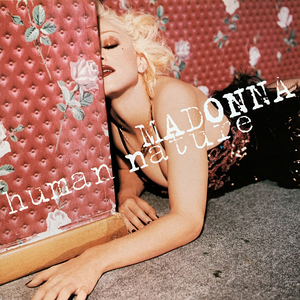
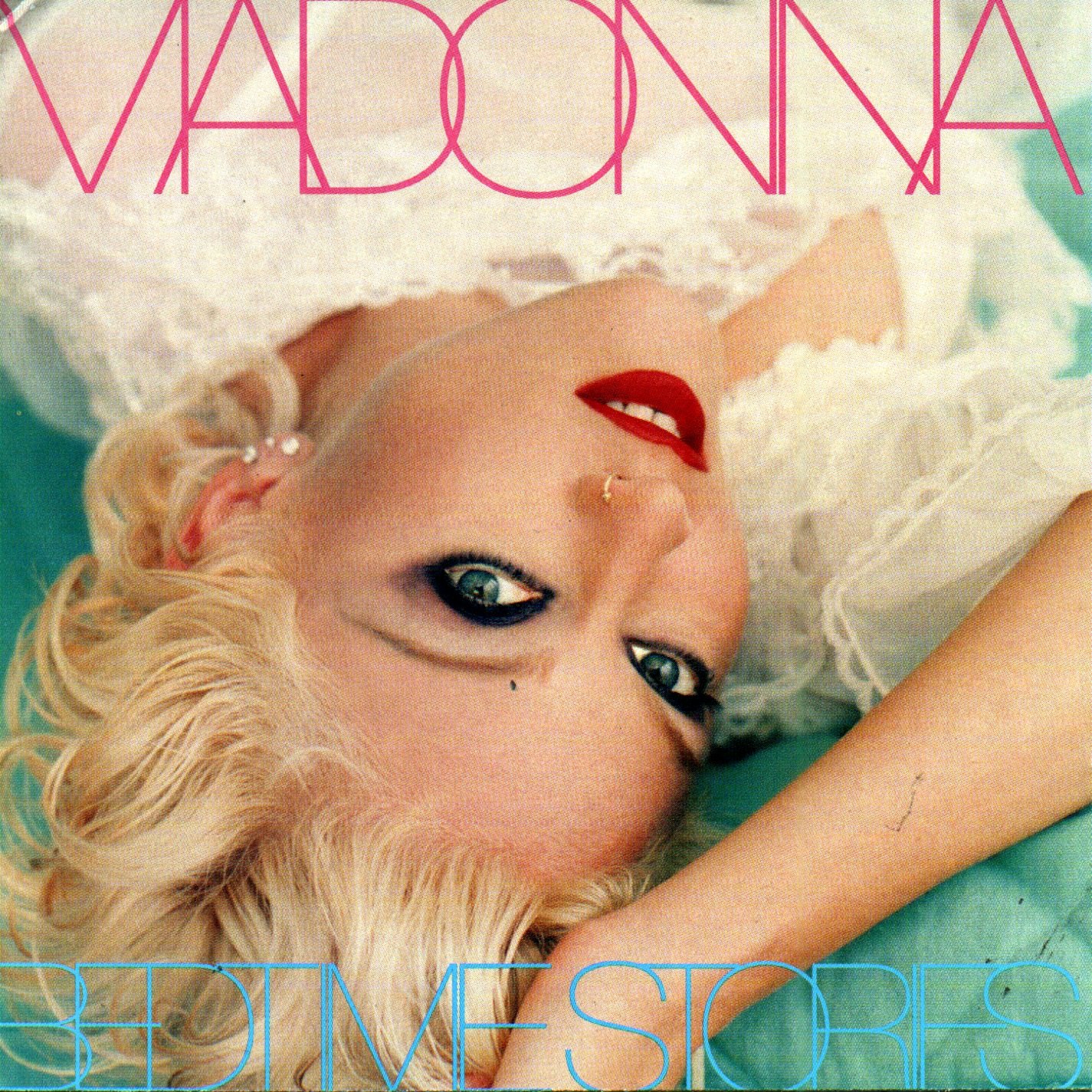
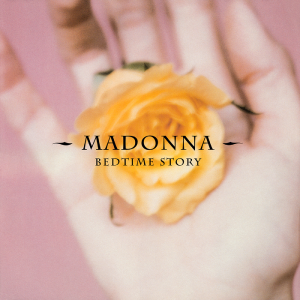
Bedtime Stories was supposed to change all that. Initially marketed on the already overplayed sex angle (‘Madonna would like to tuck you in with her new album,’ ran the press ads at the time. ‘That’s tuck with a ‘t’’), Stories was in fact her most mature, unashamedly romantic and introspective work to date. While songs like Human Nature addressed the backlash directly and pointedly (“I’m not your bitch/Don’t hang your shit on me” runs the hook), the bulk of the set sees Madonna at her most soul-searching, vulnerable even (“loneliness has never been a stranger to me,” she coos on Love Tried to Welcome Me), hinting at a glimpse of the woman behind the icon.
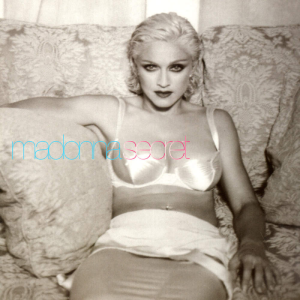
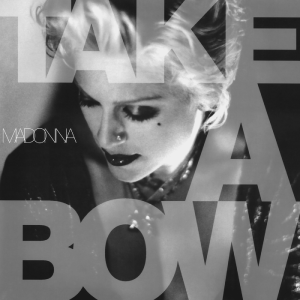
Clearly devoid of the effervescent pop thrill that marked her early work, Stories boasted a lush R&B- and hip hop-inspired musical framework, designed to key in to the heart of American radio. And it succeeded, in part at least. The consecutive US number ones, Secret and Take a Bow, granted Madonna two of her biggest singles not just of recent years, but of her whole career.
Yet the fact that they appealed to the very middle-American audiences she had so outraged with the Sex debacle is the height of irony. It’s interesting to note that Bedtime Story – undoubtedly the most challenging cut on the album – stiffed badly as a single, her first ever to fall short of the US top 40. The moral is that Madonna now snuggles up comfortably with Estefan, Elton et al, as one of contemporary adult radio’s top-rated artists, and a staple of MTV’s older, more sensible sister, VH1. In short, she just ain’t fun anymore.
Though it could be argued that Madonna is just ‘growing up’ with her listeners, this sudden turn from being outlaw ‘Sex Queen of America’ to being embraced as corporate AOR crooner shows how easily Madonna could – if she so wished – rest on her laurels as ‘superstar-as-institution’, churning out lush ballads for the rest of her career. Thankfully, though, it seems that is not part of the Ciccone gameplan.
“I’m really not interested in getting to a higher place or being a megastar,” she says. “I’m only thinking in terms of artistry and experience. And the more you do something the better you get at it. And the more you learn how to do it right.”
Another thing Madonna is determined to do right is to become a proper movie star. Currently absorbed in rehearsals for the film adaptation of the Broadway hit Evita, Madonna’s doggedly pursued desire to be the toast of Hollywood has never been a secret. She announced years ago, “I want to be the biggest movie star in the whole world. Nothing else will do. So watch out Hollywood!” And her ambition for celluloid stardom probably was the next logical step in her rise. But she has suffered from alarming miscasting, ill-conceived star vehicles, and the constant critical refrain that, well, she just can’t act. Would she agree?
“Sure I’ve made some mistakes in terms of my choices in film-making, but I did it when I didn’t know that much about it,” she says in her defence. “I chose to do scripts that weren’t well-written. I just wanted to make movies and I didn’t think.”
Oh come on, be more specific.
“Oh, you want me to name my mistakes? I’ll leave that up to you,” she snaps.
Madonna’s grim determination to prove herself as an actress is almost touching: why else would a celebrity of her stature risk the wrath of New York’s tough theatre critics in a brief, experimental run of Goose and Tom-Tom (a little-known collaboration with Sean Penn in 1986), then go on to be ridiculed on Broadway in David Mamet’s Speed the Plow? Likewise her cameo roles in arthouse projects like Woody Allen’s Shadows and Fog and Bloodhounds of Broadway speak of a desperate desire to be taken seriously as a thespian, rather than an attempt to boost her star status.
To her credit, Madonna has rarely chosen easy roles. While only the most diehard of fans could find any merit in the faux-SM of Body of Evidence, her protestations that Abel Ferrara’s ambitious, but ultimately messy, movie-within-a-movie Snake Eyes (aka Dangerous Game), saw her role hacked to pieces in the editing suite ring true. Madonna handles the dual characterisation of actress/actress-playing-slut (the acting equivalent, as Norman Mailer put it, “of going over Niagara falls in a barrel”) with commendable intensity.
The key to the contrast between La Ciccone’s failure in Hollywood and her success in music is control, or lack of it. She has always freely admitted that she isn’t the world’s best singer or dancer, but her skilful choice of collaborators and tenacious manipulation of the star system took her to the top of the music industry. Movies are, of course, an entirely different proposition, relying on ensemble dynamics and the competing authorities of the director, the studio, producers and agents. As a result, future big-screen endeavours, she insists, will be treated with caution and overseen by her own production company.
Be that as it may, her future as a movie star seems precarious to say the least (one wonders how many more turkeys investors will be prepared to back: Madonna’s name above a movie theatre is no longer a guaranteed box-office draw, even out of morbid curiosity). Nor is she, frankly, getting any younger. While the energy she’s invested in furthering her career is impressive, it’s hardly surprising that she might want to slow down and start investing in herself.
“Being worshipped is far less important to me than before,” she says now. “The more time passes, the more I appreciate taking things easy.”
Madonna the woman has patiently stood aside while Madonna the star has run riot over the past decade. Even her relationships seem inevitably to have been played out for the convenience of the camera (remember the helicopter-infested sham of her open-air wedding with Sean Penn, and her publicity-friendly romance with Dick Tracy co-star Warren Beatty). She’s watched while virtually every friend and ex-lover has sold their story to the tabloids and every fact of her private life has been raked over by hacks. Madonna, the woman, it seems has had enough.
“I can count the friends I have, the real friends in my life, on one hand,” she sighs in an unguarded moment.
Though it is tempting to cast Madonna as a tragic victim of her own success, living alone with the platinum records and staring forlornly from the window of her ivory tower, that’s nonsense. Unlike Judy or Marilyn – wildly charismatic, talented women whose inner demons led them to spectacular declines – Madonna is no loser. As Bette Midler once famously introduced her, she has “pulled herself up by her own bra-straps… and has been known to let them down occasionally”. Madonna has always fought for what she wanted, ever since the day, as Ciccone legend has it, she hitched a ride into Manhattan with five bucks in her pocket and a pair of ballet shoes slung over her shoulder. Though it would be difficult to square the public persona of Madonna with the idea of a white picket fence, 2.5 children and a string of vacuum cleaner attachments, it’s perhaps less of a surprise that the little girl from Detroit who conquered the world now wishes for a life of her own away from the glare of publicity – for sanctuary, a reliable lover and, yes, even for motherhood.
“I can definitely see myself having a child soon. I don’t think you have to be in a long-term relationship with a man to have one, though, but that would be nice,” she says with a laugh. “I’m definitely looking, though, for the chicken before the egg. No pun intended.”
When Madonna goes out incognito in public and gets recognised – “Oh, you look like Madonna” – nowadays she just calmly agrees that she does and is left alone. It saves on hassle. And, in a sense, it’s the truth. Madonna has reached that point where her fame, like a dangerous pet, and she are room-mates, sharing the same apartment. She knows it, and we know it too.
“People in the media think they know me,” she observes incisively. “I think it’s impossible for anybody to say they know me, or write as if they know me, unless they actually do.
“If you’re going to judge my work, then judge my work. A lot of people do psychological profiles of me as if they know who I am, and everybody believes them. When you’re a celebrity or an icon you’re only allowed one personality trait – which is ridiculous because a person is made up of so many things. I’m strong and I’m vulnerable and I’m a million things in between, like everybody else.”
I’m strong and I’m vulnerable and I’m a million things in between, like everybody else.
Songs
Last updated